I get this question five times a week. However, five. For example, a guy walks into my shop holding a box. In fact, shiny, expensive-looking, big “4K” printed on the front in letters you could read from the parking lot. He asks if it’s any good. I flip it over, check the spec sticker, and there’s no sensor name anywhere. That’s my answer right there. He usually knows what I’m about to say before I say it.
Anyway. In addition, front and rear. Furthermore, yes. Moreover, buy both channels. Argue with me all you want — the crash statistics don’t care. Rear-end collisions rank among the most common crashes on the road, and a front-only camera records precisely none of them. Zero frames. You spent money for evidence and then pointed the camera away from half the incidents. Make it make sense.
“Dual-channel” is shop talk for two cameras recording at the same time. In fact, one facing forward through the windshield, one facing back through the rear glass. Also, get rear-ended at a light, backed into in a parking lot by a driver who keeps going: the rear clip is what settles it. Without it, you’re doing the “he said, she said” dance with someone who already lied on their insurance form.
So here’s my rule, the one I give across the counter: buy the best dual-channel setup your budget allows, then stop shopping. Stop. What follows is what I actually tell customers while holding the camera in my hand — the stuff that decides whether your footage is evidence or decoration. Sensor quality. Honest resolution. Parking mode. Whether the thing survives July in a parked car. And the models owners keep recommending in 2026 — not lab scores, just what people report back after a year of daily use.
Why Front and Rear Beats Front-Only
Real crashes are boring. Nobody wants to hear that, but it’s true. They’re not the highway pileup on the evening news. They’re getting rear-ended at a stoplight by a guy checking his phone. They’re the SUV reversing into your fender in a parking lot and driving off. They’re the 2 a.m. bumper clip from a driver who never stopped. Every one of those happens behind your car. Exactly where a front-only camera sees — say it with me — nothing.
And insurance disputes aren’t settled by who shouts loudest. First, they’re settled by video. “He braked for no reason” is nearly impossible to beat. In fact, unless your rear camera has ninety seconds of the guy tailgating you at two feet. Second, the front camera shows the road ahead. However, the rear camera shows what the other driver was doing. For example, together they tell the whole story. In addition, i’ve read owner threads where a single rear clip ended a three-week dispute in one afternoon. One clip. One afternoon. That’s the entire math.
Plus the parking lot. Finally, run parking mode and dual-channel watches both ends of your car while you’re inside buying groceries. Meanwhile, door dings. Nevertheless, bumper taps. Runaway carts. They strike the front or the rear — never the sides, somehow. Draw your own conclusions.
Still not sold on dash cams at all? Our is a dash cam worth it guide does the insurance and legal math. Everyone else: start with dual-channel. Don’t overthink this one.
Best Front and Rear Dash Cam: What Actually Matters
Sensor before resolution. In fact, every time. As a result, a good Sony STARVIS 2 sensor shooting 1440p will read plates at night. In contrast, a bargain “4K” box with a mystery sensor will not. Furthermore, i’ve watched customers burn real money learning this lesson in my shop. In fact, standing there holding their blurry night footage on a phone screen, asking if there’s a setting that fixes it. There isn’t. Moreover, the sensor decides your night footage. And the incidents worth fighting about? They love lousy light.
Also, about that 4K badge — verify it. Similarly, budget dual-channel boxes love printing “4K” while running sensors that can’t resolve it. Specifically, the truth lives in the spec sheet: the actual sensor model. However, sony’s IMX678 is a true 4K dash cam sensor. First, if the listing won’t name the sensor, the 4K is decoration. Move on.
Capacitor, not battery. Memorize this one before the first heatwave. For example, a parked car in July turns into an oven — cabin temperatures you wouldn’t believe. In addition, lithium batteries swell up and die in that heat. Furthermore, supercapacitors shrug it off. Second, any dual-channel camera worth your money in 2026 runs a capacitor. See “battery” in the specs? Keep scrolling. Finally, that camera has a summer expiration date, and you’ll be back in my shop in August buying the real thing.
Meanwhile, parking mode needs a voltage cutoff. Moreover, say it out loud and it’s obvious: parked surveillance means the camera runs with the engine off, and it must never drain your battery past the point where the car still starts. Also, a proper hardwire kit cuts power at a set voltage — around 12.0–12.2V for a standard battery. Our how to hardwire a dash cam guide walks through installation step by step.
Then the unglamorous pair: GPS and the app. First, built-in GPS stamps speed and location onto your footage, and that carries genuine weight as evidence. And the app — picture yourself in a parking lot after an incident, hands shaking, trying to pull a clip. Second, read recent app reviews before you buy. The app’s rating. Not just the camera’s.
Caption: What to check before buying any dual-channel dash cam.
| Feature | What to look for | Why it matters |
|---|---|---|
| Front sensor | Sony STARVIS 2 or equivalent, true resolution | Determines plate readability, day and night |
| Rear camera | 1080p minimum, decent low-light sensor | Rear evidence is the whole point of dual-channel |
| Power design | Supercapacitor, not lithium battery | Survives summer heat inside a parked car |
| Parking mode | Buffered recording + voltage cutoff | Captures hits while parked without draining the battery |
| GPS | Built-in (not an add-on module) | Speed and location stamped on every clip |
| Storage | High-endurance microSD support, 256GB+ | Loop recording wears cards out; endurance cards last |
The Picks Owners Recommend Most
One honest note before the list: I haven’t personally lab-tested every box below, and neither has anyone you can fully trust. What these are — the dual-channel models that keep surfacing in owner communities. Reddit’s dash cam forums, DashCamTalk, those long threads where people report back after a year of daily use. Plus why they keep getting recommended. Verify current specs and prices before you buy. They move.
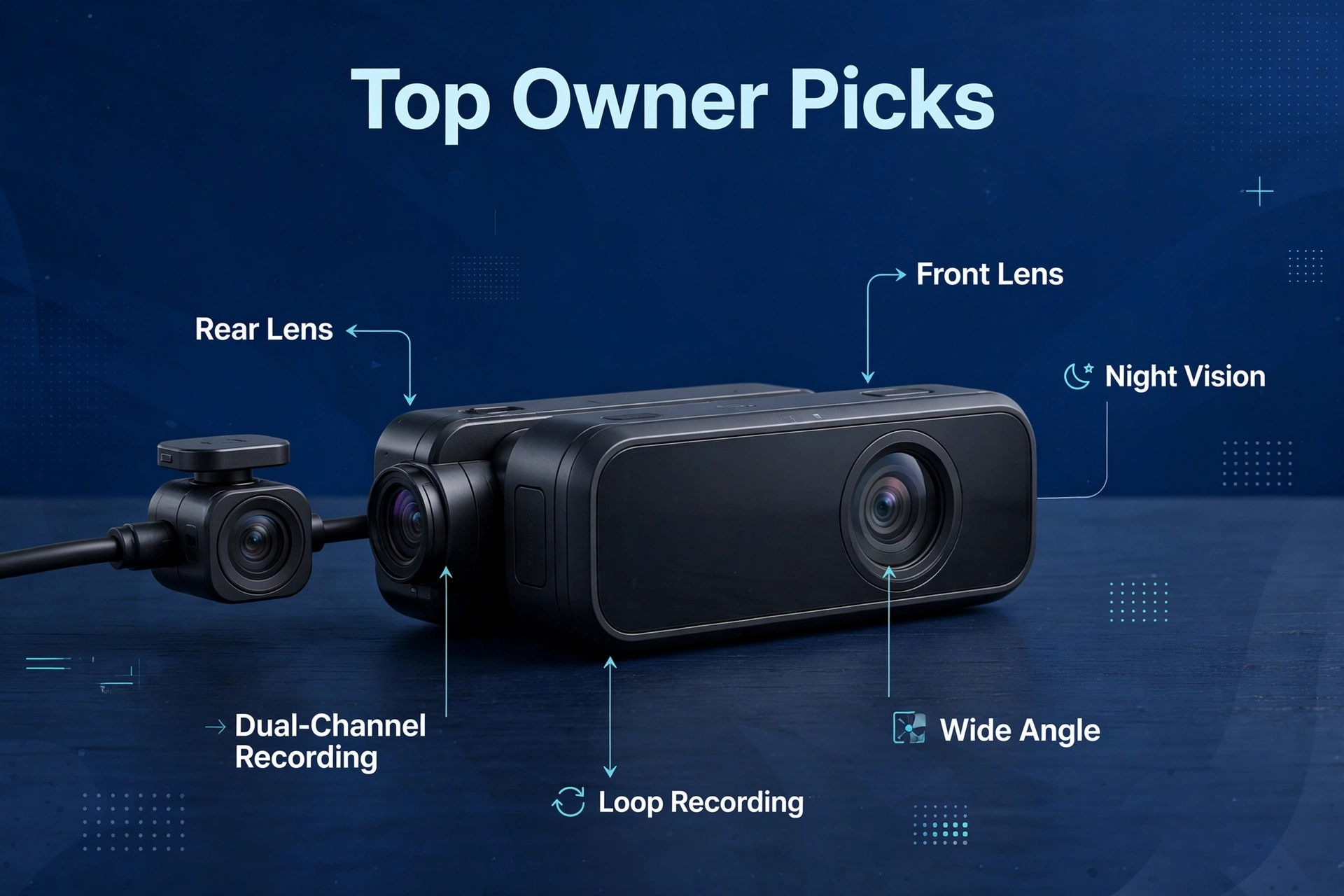
Viofo A229 Pro — the evidence-first pick
This is the community’s answer to “I want the sharpest plates possible.” 4K up front on a Sony STARVIS 2 IMX678 sensor, a strong 2K camera out back. Owners love the image quality and complain about exactly one thing: it runs warm. Completely normal for 4K processing — and one more reason the capacitor thing isn’t optional.
Worth it? If plates-as-evidence is the job and the budget stretches — yes, without much hesitation. The consensus exists for a reason.
Viofo A229 Plus — the value sweet spot
The Pro’s cooler-running sibling. A step down in resolution, a bigger step down in price, same mature Viofo firmware owners have trusted for years. Captures everything that actually matters for most drivers — daylight plates, genuinely usable night footage — without 4K’s heat or price tag.
The Pro is the evidence-maximalist choice. The Plus is the one I’d put in my own family’s cars. Our Viofo A229 Plus vs Pro comparison lays the trade-offs out model to model.
Viofo A129 Duo — the proven budget dual-channel
It’s older. Fine. The A129 Duo earned its reputation the slow way: years of owner reports, reliable loop recording, honest specs, and a price that keeps dropping. It won’t match the newer models after dark — no honest person claims otherwise. As a first step into dual-channel, though? Still a sensible buy.
Especially for a second car that doesn’t deserve premium money. I’ve got one in mine. It sits there. It works. That’s the whole review.
Garmin Mini 3 (with rear cam) — the discreet option
Some people do not want a visible camera. Not negotiable. Garmin‘s Mini line is about the size of a matchbox and pairs with a rear camera for full dual coverage. You trade a little image-processing sophistication for near-invisibility and a genuinely polished app.
When does that trade make sense? Street parking, mostly — drivers who don’t want to advertise a camera to every passerby. Fair deal, honestly.
Vantrue N4 — the rideshare-ready 3-channel
The N4 adds a third camera facing the cabin — which makes it a rideshare pick first and a private-motorist pick second. Drive passengers and the cabin footage settles disputes no road-facing camera can touch. Sometimes the passenger is the dispute.
Read our dash cam for Uber drivers guide for the legal side — recording consent laws differ by state, and that’s a detail you want to know before you install, not after.
Single, Dual, or Triple Channel: Which Do You Actually Need?
“Channels” is just shop talk for how many cameras. More cameras, more coverage, more money — and more card space eaten alive. Here’s the no-overbuying version.
Single channel — front only — is the cheapest way through the door. Finally, it records what’s ahead: the brake-checker, the red-light runner in your path. Cheap, simple. For a second car that barely moves, honestly defensible.
Defensible, with an asterisk the size of your rear bumper. Meanwhile, everything behind you is a blind spot — and that’s where a huge share of real incidents happen, as covered above. Nevertheless, weigh it honestly.
Dual channel — front plus rear — is the sweet spot for a private car. In fact, the full crash story. As a result, both ends covered in the parking lot. And the price jump from single to dual has shrunk to almost nothing. In contrast, if you take exactly one recommendation from this whole guide, take this one. Buy dual-channel.
Triple channel — front, rear, cabin — is a specialist tool. Similarly, the cabin camera has one job: recording passengers. Specifically, no passengers? No point. The third channel just adds cost, complexity, and storage hunger for footage you’ll never watch. Rideshare drivers should read a dedicated dash cam for Uber drivers guide. Everyone else: stop at two channels. Done.
One more thing, because people get this wrong constantly — the storage math. Every channel is another video stream being written nonstop. Triple-channel fills a card roughly 50% faster than dual. Size the card for the channel count, not the camera count.
How to Choose in Five Steps
Step one: channels. Private car, worried about crashes? Front plus rear. Done. Driving passengers? Add the cabin camera. Most of you can stop reading at step one.
Step two: the sensor, not the box. However, look up the actual sensor model — STARVIS 2 for night performance, IMX678-class for true 4K. No sensor named on the listing? Then the “4K” on the packaging is a wish. Move on.
Step three: confirm the capacitor. Search the specs for “supercapacitor.” Says battery instead? Walk away. Summer will kill it within a year. In addition, then you’re shopping twice — once for the cheap one, once for the real one.
Step four: plan parking mode now, not later. For example, want parked surveillance? In addition, budget the hardwire kit with a voltage cutoff at purchase time. The cigarette-lighter socket can’t do parking mode properly, and retrofitting it later is just annoying.
Step five: buy the SD card separately. High-endurance microSD — Samsung PRO Endurance or SanDisk Max Endurance class — 256GB or more. Regular cards die young in dash cams; the constant rewriting eats them alive. A dead card means no footage at the exact moment it counts. The camera is the star. The card is the stage.
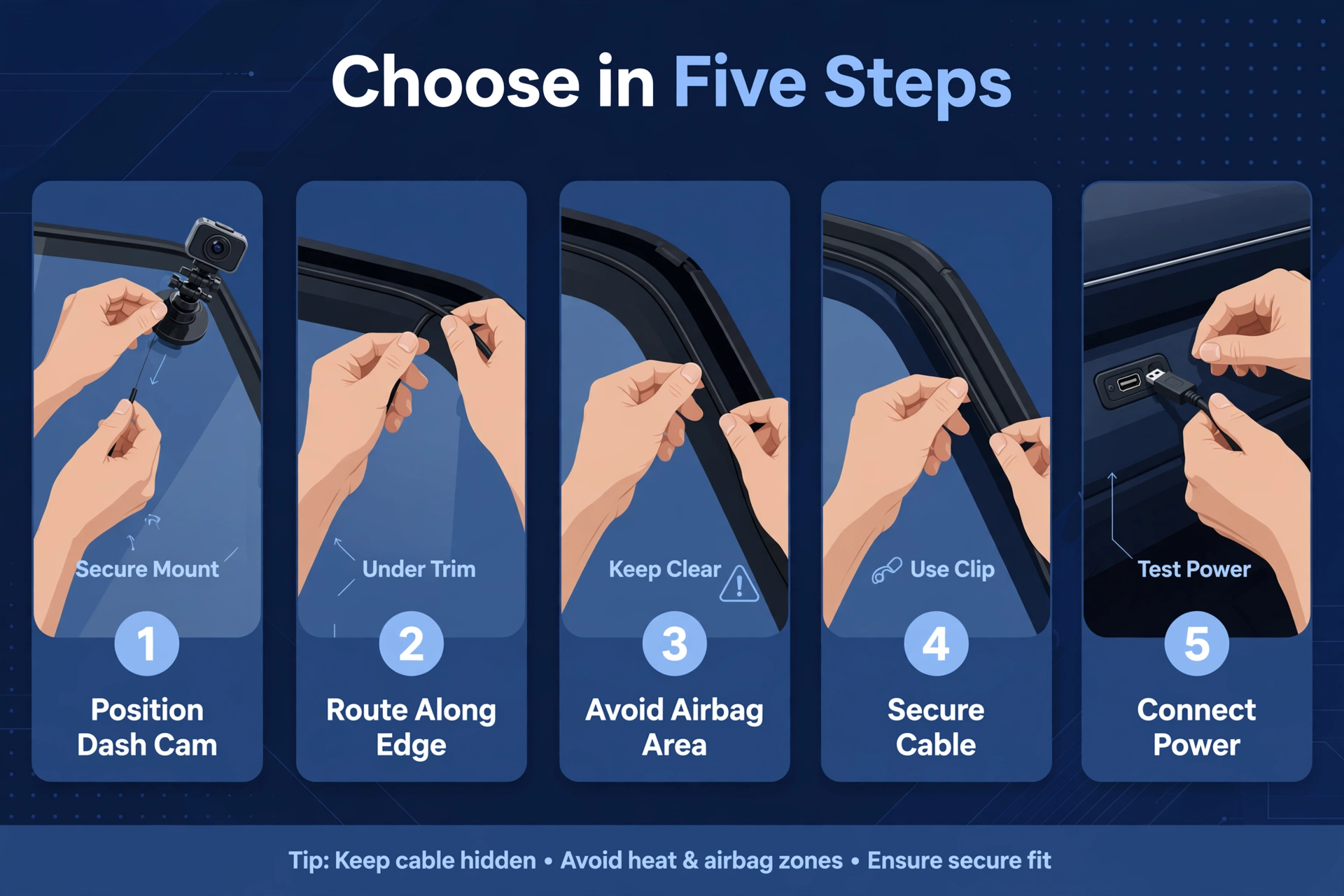
Installation in Brief
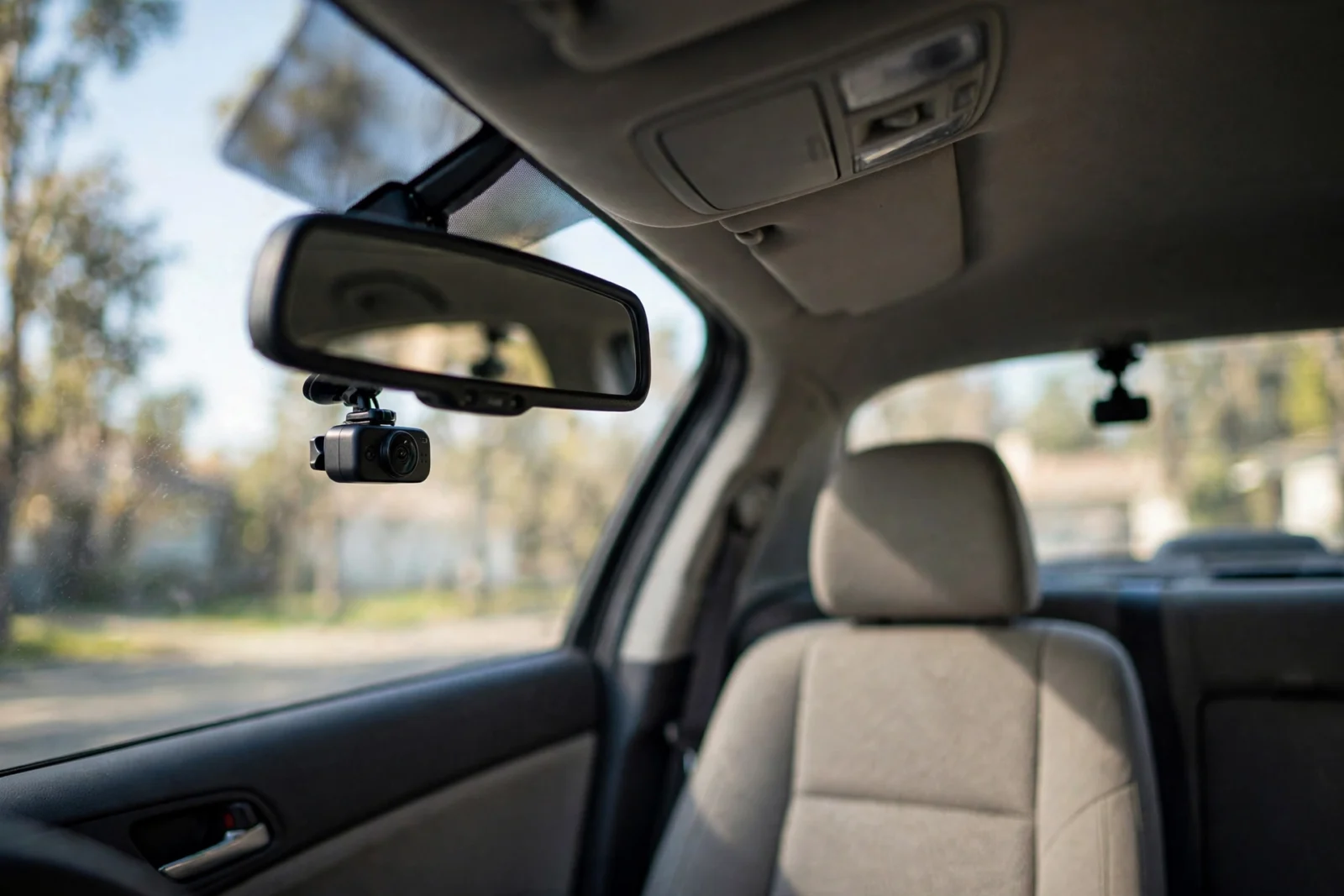
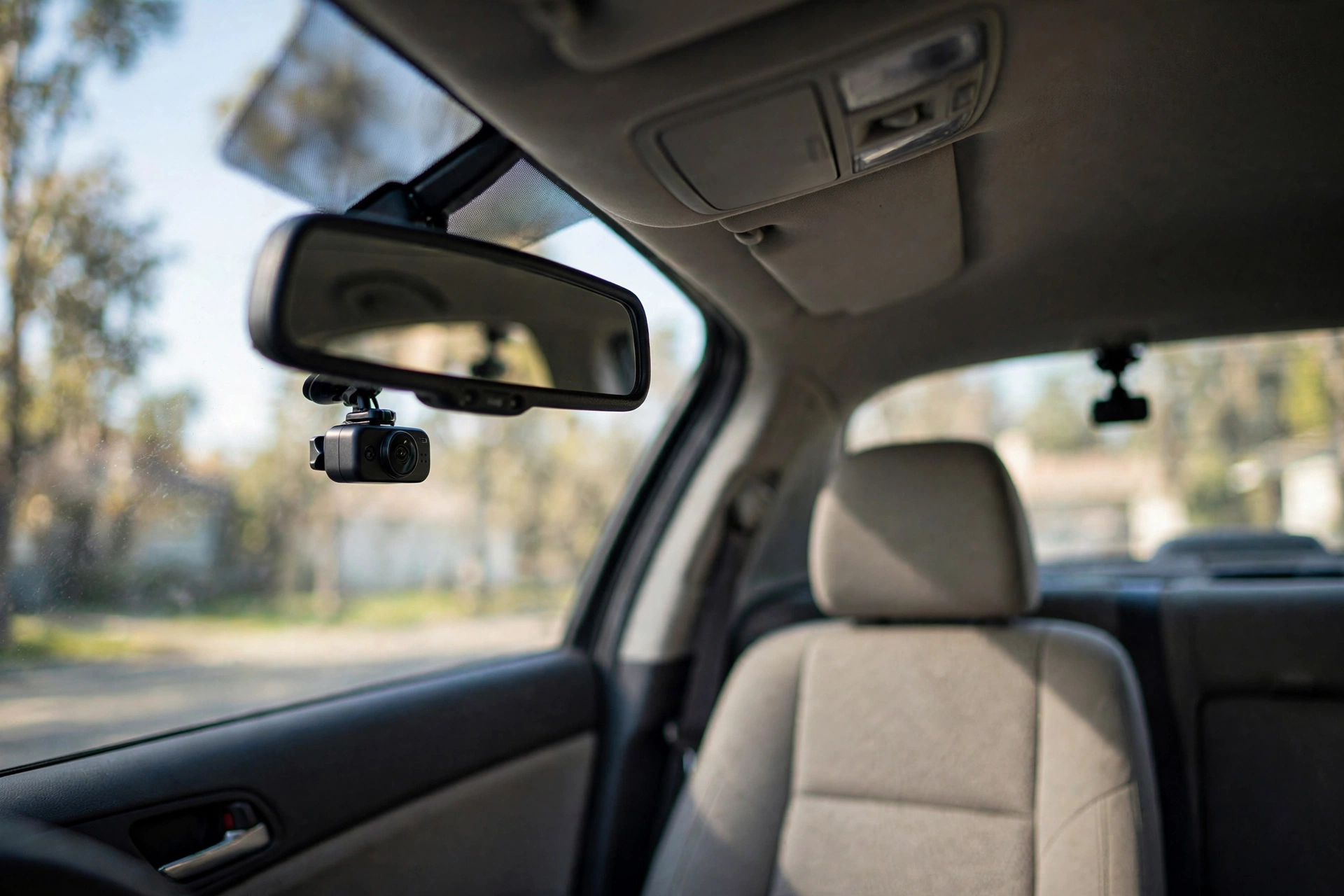
Thirty to sixty minutes for most dual-channel installs. The front cam tucks behind the rearview mirror — you want it invisible from the driver’s seat. The cable runs along the headliner to the back glass. Rear cam goes up, power routes to a USB port or the fuse box. The rear cable is the fiddly part. Tuck it properly under the trim panels instead of letting it dangle across the headliner. Everyone rushes this step. Everyone regrets rushing this step.
Parking mode changes the power plan: hardwire it, don’t run it off the cigarette lighter. A step-by-step hardwire guide covering fuse box and OBD-II methods is the natural next read once you’ve picked a camera.
Frequently Asked Questions
Is a front and rear dash cam worth it over front-only?
For most drivers, yes. Not even close. Rear-end collisions and parking-lot hits happen behind you, where a front-only camera records nothing at all. The single-to-dual price gap has shrunk so far that the extra evidence is basically cheap insurance. Skipping it makes no sense.
Do dash cams record when the car is off?
Only with parking mode on and a power source that stays live — usually a hardwire kit with a voltage cutoff, or an external battery pack. Running off a switched cigarette-lighter socket? Dead the moment the ignition dies. Every single time.
Will a dual-channel dash cam drain my car battery?
Fitted properly, no. A hardwire kit with a voltage cutoff disconnects the camera before the battery drops too low to start the car. The failures come from cheap always-on USB adapters with no cutoff — steer clear of those and you’re fine.
Is 4K necessary for reading license plates?
Helpful. Not required. A good 1440p camera with a quality sensor and high bitrate reads plates reliably in daylight. After dark, the sensor outweighs resolution — which is exactly why our night-driving guide exists.
Can footage from a dash cam be used in court or with insurance?
Generally, yes. Insurers and courts accept dash cam footage routinely, and GPS-stamped video carries the most weight. Rules vary by jurisdiction, though — if a claim gets serious, check your local rules before assuming.
How long does footage stay on the SD card?
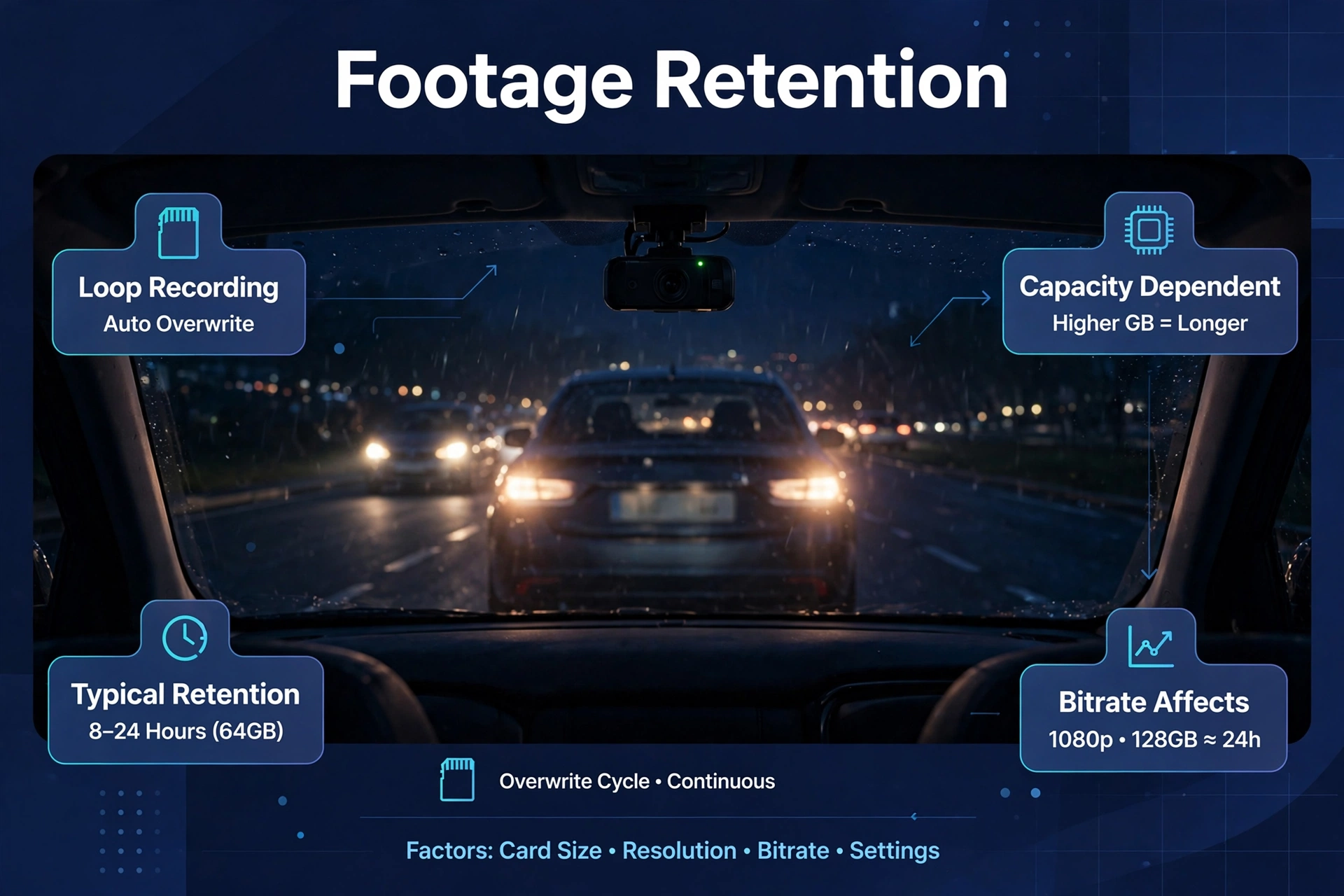
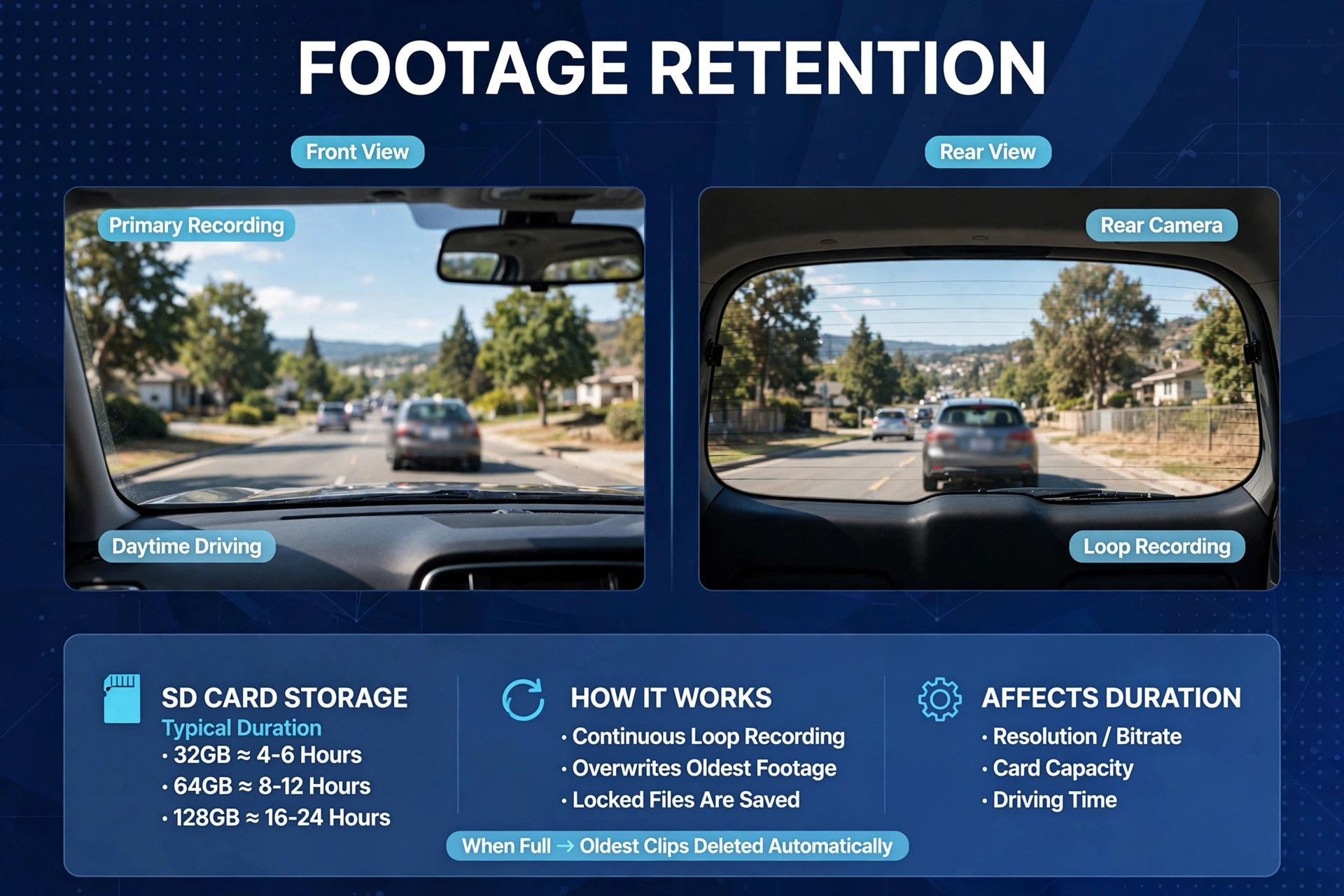
Depends on the card size and the resolution. A 256GB high-endurance card holds many hours of dual-channel footage before loop recording overwrites the oldest clips. Locked event clips — impacts and the like — are protected from overwriting, so the important footage survives.