

What Kelvin Temperature Is Best for Sleep? (Lighting Guide)
If you want the short answer: the best Kelvin for sleep lighting is 2700K and below in the evening — and the warmer and dimmer you can make it in the last hour before bed, the better. Candle-warm light in the 1800–2200K range is ideal for winding down, while a cozy 2700K is a great everyday evening setting.
But Kelvin is only half the story. Brightness matters just as much as color, and timing matters most of all. The same 2700K bulb that helps you wind down at night would feel dim and dingy over your kitchen counter at noon. In this guide, you’ll learn how the Kelvin scale works, what light color has to do with melatonin and sleep, and exactly which settings to use at each part of the day.
What Is the Kelvin Scale?
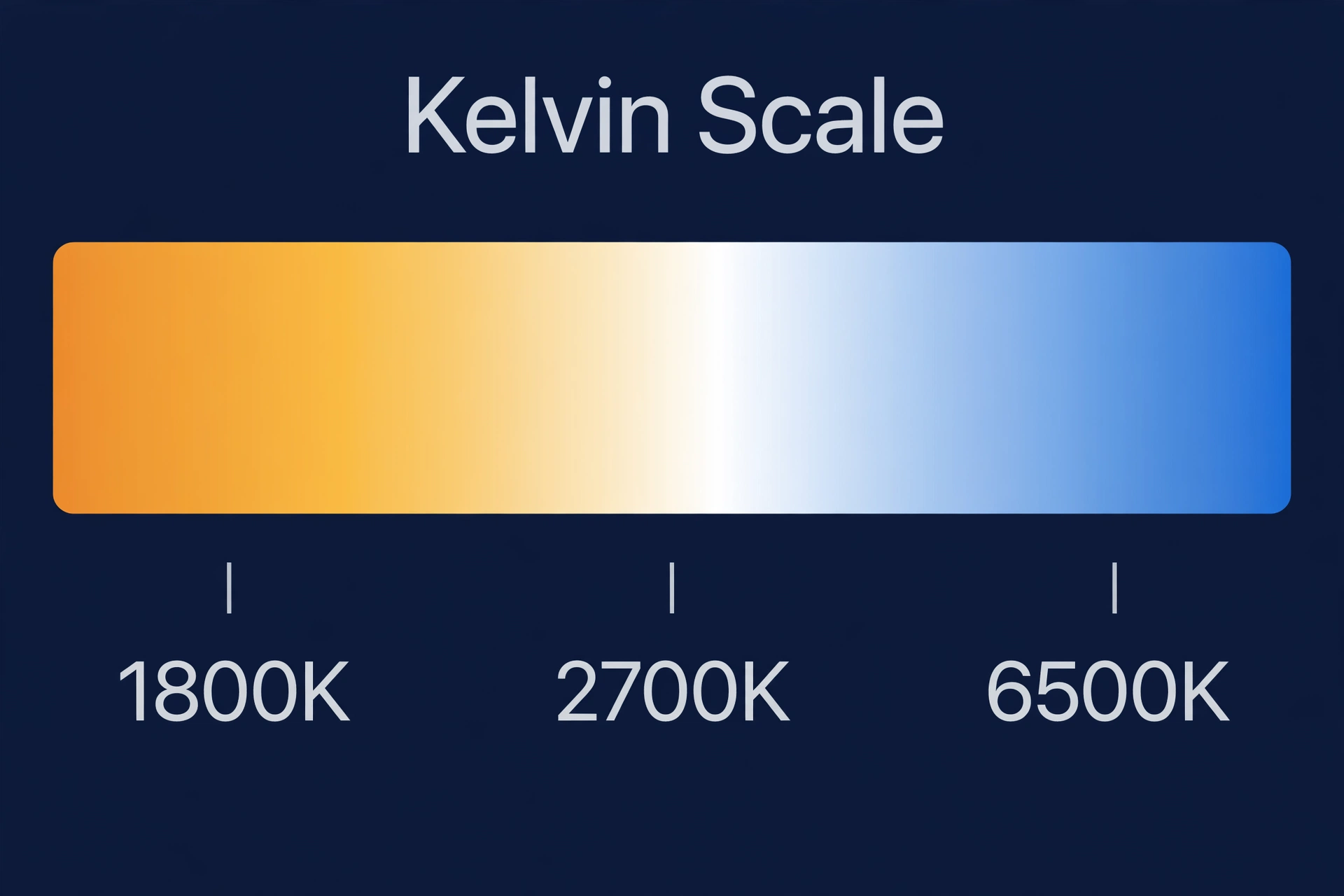
Kelvin (K) is simply the unit we use to describe the color temperature of light. Lower numbers mean warmer, more amber light. Higher numbers mean cooler, more blue-white light. That’s it — Kelvin says nothing about brightness, only about color.
Here’s a quick reference so the numbers feel concrete:
Table: The Kelvin scale — common light sources from warm to cool
| Light source | Kelvin range | What it looks like |
|---|---|---|
| Candlelight / firelight | ~1800K | Deep amber, very warm |
| Sunset / warm candle-style bulbs | 1800–2200K | Soft golden glow |
| Warm white (classic incandescent feel) | 2700K | Cozy, slightly yellow |
| Neutral white | 3500–4000K | Balanced, neither warm nor cool |
| Cool white / daylight bulbs | 5000–6500K | Bright, bluish, like midday sun |
Most people find 2700K perfect for living rooms and bedrooms because it mimics the old incandescent bulbs we all grew up with. Anything above 4000K starts to feel like an office or a hospital — fine for working, terrible for winding down.
One common mix-up: warm vs. cool refers to color, not heat. A “warm” 2700K bulb is amber and relaxing; a “cool” 6000K bulb is blue-white and alerting. It has nothing to do with how hot the bulb gets.
What Research Says About Light Color, Melatonin, and Sleep
Your brain uses light as its main signal for telling time. When bright light — especially the blue wavelengths found in daylight and many screens — hits your eyes, it tells your brain “it’s daytime, stay alert.” When it gets dark, your brain starts producing melatonin, the hormone that makes you feel sleepy.
This is why sleep researchers consistently say the same thing: bright light in the evening delays melatonin and makes it harder to fall asleep, while dim, warm light lets your body’s natural sleepiness arrive on schedule. Cleveland Clinic’s sleep experts explain it plainly — even ordinary overhead room lighting in the evening can suppress melatonin and push your bedtime later; blue-enriched light from screens and cool-white bulbs is the worst offender. For a solid, research-backed overview of how light at night interferes with sleep, that’s a good place to start.
A few well-established takeaways worth knowing:
- It’s mostly about brightness, partly about color. A dim 5000K bulb beats a blazing 2700K one at bedtime. But at equal brightness, warmer light with less blue is friendlier to melatonin.
- Evening light matters more than you think. Ordinary room lighting — not just screens — can be bright enough to shift your internal clock.
- Light keeps helping after dark, too. Any light you sleep under (even dim nightlights) can lighten your sleep, so the goal is less light, warmer light from evening onward.
- Morning light is the flip side. Bright, cool light in the morning reinforces your daytime alertness, which indirectly helps you sleep better the following night.
This is a sleep-hygiene guide, not medical advice. If you have insomnia or a sleep disorder, talk to a doctor — lighting tweaks help a lot of people, but they don’t replace treatment.
Best Kelvin for Sleep Lighting by Time of Day

Here’s the practical schedule. Think of your lighting like the sun: bright and cool during the day, low and amber at night.
Table: Best Kelvin for sleep lighting by time of day
| Time of day | Recommended Kelvin | Why and how to use it |
|---|---|---|
| Morning (wake up – 10 AM) | 5000–6500K, bright | Mimics daylight; boosts alertness and anchors your body clock. Open the curtains, or run bright cool-white bulbs. |
| Daytime (10 AM – 5 PM) | 4000–5000K | Neutral to cool white for working and cooking. Good task lighting without the evening downside. |
| Evening (5 PM – 2 hrs before bed) | 2700–3000K | Warm white everywhere. This is the classic “cozy home” range — easy on the eyes as daylight fades. |
| Wind-down (last 1–2 hours before bed) | 2200–2700K, dimmed | Go as warm and dim as you can while still seeing. This is the sweet spot for supporting melatonin. |
| Overnight (bathroom trips, nightlights) | 1800–2200K, very dim | Amber motion nightlights only. Bright or cool light here wakes your brain up fast. |
The pattern is simple: bright and cool by day, warm and dim by evening. You don’t need to memorize the numbers — just remember “sun in the morning, candlelight at night.”
Setting Up Your Bedroom for Sleep-Friendly Lighting
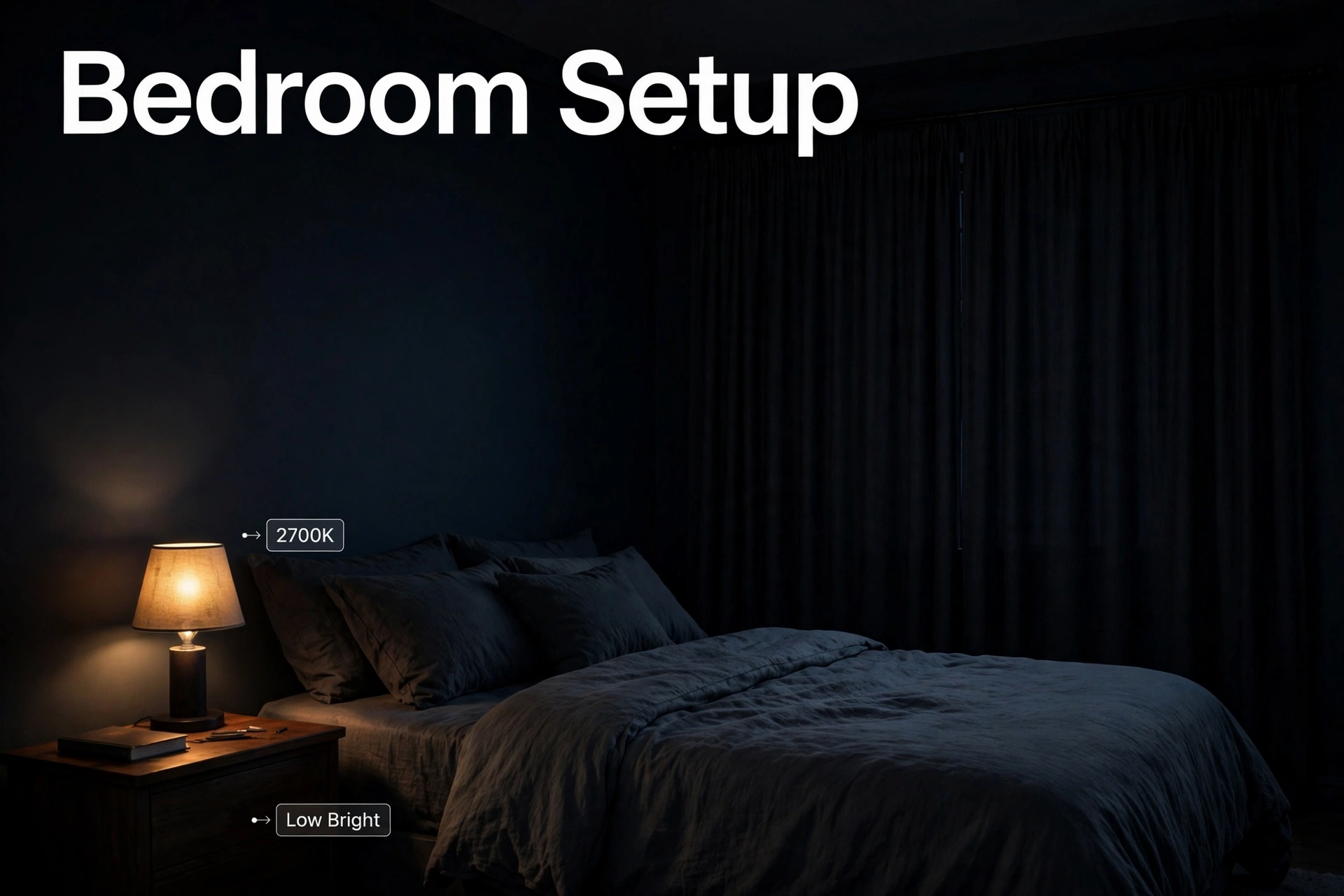
Your bedroom is where the biggest wins are. You don’t need an expensive overhaul — a few small changes do most of the work.
Swap your main bulbs to warm white
If your bedroom lamps are running 4000K or 5000K bulbs, replacing them with 2700K is the single highest-impact change you can make. It’s cheap, it takes five minutes, and your room will immediately feel calmer at night.
Add dimming
Kelvin gets you partway there; dimming finishes the job. Being able to drop your evening lights to 10–20% brightness in the last hour before bed is a bigger deal than shaving a few hundred Kelvin off the color. If your current dimmer makes your smart bulbs buzz or flicker when dimmed low, our guide on the LED flickering smart dimmer fix walks through the fixes that actually work.
Layer low lights instead of overheads
Overhead ceiling lights blast light across the whole room and into your eyes. In the evening, switch to bedside lamps, floor lamps, or LED strips behind furniture instead. Fewer lumens from lower angles is naturally gentler.
Block the light you can’t change
LED indicators on chargers, glowing standby dots on TVs, and streetlight leaking past thin curtains all add up. Tape over the tiny LEDs (or put them on a switched power strip), and consider blackout curtains if outside light reaches your bed.
Keep screens out of the wind-down hour
No bulb choice can outdo a glowing phone six inches from your face. Night mode helps, but the brightness of a screen is still significant. Swap scrolling for a book or a podcast in the last 30–60 minutes if you can.
Automating Sleep-Friendly Lighting with Tunable White Bulbs
The tricky part of sleep-friendly lighting isn’t knowing what to do — it’s doing it every night. That’s where tunable white smart bulbs earn their place: they shift their Kelvin automatically through the day, so your lights follow the schedule above without you touching a switch.
A typical circadian routine looks like this:
- Wake-up: lights ramp up to bright 5000–6500K over 15–30 minutes — a gentler alarm than sound.
- Daytime: settle to 4000–5000K while you’re working.
- Evening: transition down to 2700–3000K around sunset.
- Bedtime: drop to 2200K or below at low brightness, then turn off on schedule.
Most major smart lighting platforms support this kind of routine out of the box. If you’re choosing between ecosystems, our Philips Hue vs WiZ comparison covers which platforms handle white-temperature scenes best and what each one costs.
One honest caveat: automation is only as good as the routine you set. Take ten minutes to configure the sunset transition and bedtime dim once, and then let it run. The whole point is that you never think about Kelvin again.
Nightlights, Bathroom Trips, and 3 AM Wake-Ups
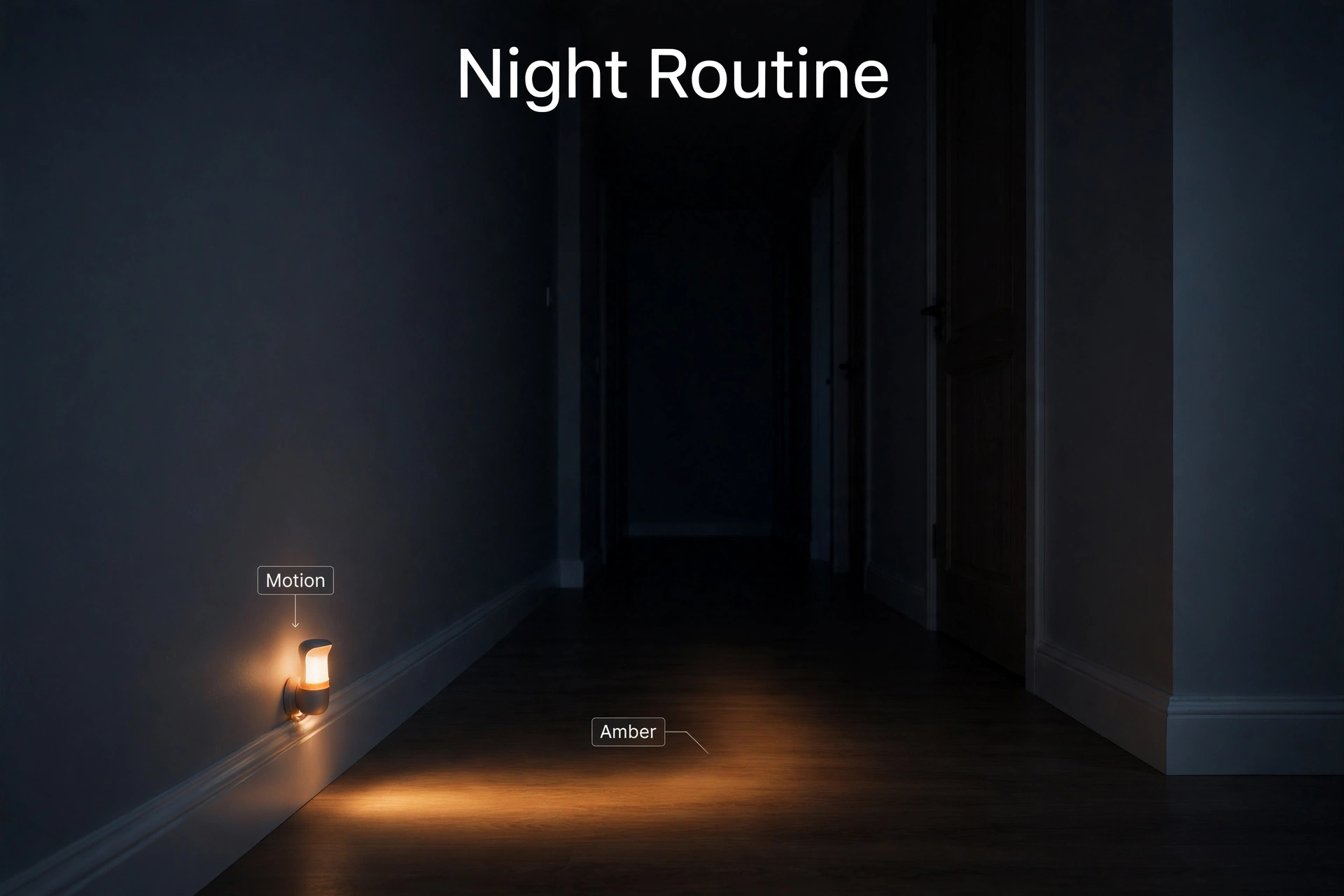
Overnight lighting trips up more people than evening lighting does. You get up to use the bathroom, flip on a bright 4000K overhead, and your brain reads it as “morning.” Falling back asleep takes noticeably longer.
The fix is simple: keep a motion-activated amber nightlight (1800–2200K) in the hallway and bathroom. Amber light gives you enough visibility to move safely without the blue wavelengths that hit melatonin hardest. Keep it dim and low to the floor — plug-in nightlights at outlet height are perfect.
And resist the overhead switch. If your bathroom only has a bright cool-white light, swap that one bulb for a 2700K (or a tunable one parked at its warmest) so the middle-of-the-night trip stays sleep-friendly.
What About Red Light for Sleep?
You may have seen red lights recommended for sleep, and there’s a reason for the hype: red wavelengths sit at the far warm end of the spectrum and have the least effect on melatonin of any visible light color. A dim red bulb or red LED strip in the bedroom is a solid overnight option — some people prefer it over amber nightlights because it feels even gentler.
That said, don’t overthink it. The difference between dim red and dim amber is small compared to the difference between any dim warm light and a bright white one. If you already own amber nightlights, you’re getting nearly all the benefit. Red is worth trying if you’re especially light-sensitive or want an overnight glow you barely notice, but it isn’t a requirement for good sleep lighting.
Shift Workers and Kids’ Rooms
Working nights or rotating shifts
If your “day” runs backwards, the same rules apply — just shifted to your schedule. Get bright, cool light during the first half of your waking hours, wear sunglasses on the drive home in the morning sun, and keep your sleep room warm, dim, and dark. Amber blue-blocking glasses in the hour before your bedtime can help if you can’t dim your whole home.
Kids’ bedrooms
Kids are extra sensitive to light at night, and a dark hallway is a common reason they won’t stay in bed. A very dim warm nightlight (around 2200K) near the floor solves both problems: the room stays sleep-friendly while the dark doesn’t feel scary. Skip the cool-white “night light” bulbs — they glow blue and defeat the purpose.
Best Kelvin for Sleep Lighting FAQs
Is 2700K or 3000K better for sleep?
Both work, but 2700K is the better choice for evening and bedrooms — it’s noticeably warmer and cozier. 3000K is fine for general living spaces, but for the last hour before bed, go warmer and dimmer rather than splitting hairs between these two numbers. If you’re buying new bulbs for the bedroom specifically, look for ones rated 2700K or lower on the box.
Can I use 5000K bulbs if I dim them very low?
Dimming matters more than color, so a dim 5000K is better than a bright 2700K. But at equal low brightness, the warmer bulb is still the friendlier option. If you already own cool-white bulbs, dim them low in the evening — and consider swapping the bedroom ones to 2700K when they need replacing.
What color nightlight is best for sleep?
Amber or red-orange, around 1800–2200K, at the dimmest level you can still navigate by. Avoid white or blue-tinted nightlights entirely.
Do I need special “sleep bulbs,” or will regular warm LEDs do?
Regular warm-white (2700K) LEDs are fine for most people. Special low-blue or tunable bulbs add convenience — automated schedules and extra-warm modes — but a cheap 2700K bulb plus a dimmer gets you most of the benefit.
How long before bed should I switch to warm light?
Aim for the last 1–2 hours before bed. If that feels like too much at once, start with 30 minutes of warm dim light and stretch it longer over a week or two. Consistency beats perfection here.
Will warm lighting fix my insomnia?
Warm, dim evening light supports your natural melatonin rhythm, which helps many people fall asleep more easily — but insomnia has many causes. Think of lighting as one strong lever among several (schedule, caffeine, screens, stress), and see a clinician if poor sleep persists.
The Bottom Line
The best Kelvin for sleep lighting is 2700K and below in the evening, drifting toward 1800–2200K and very dim in the last hour before bed. Keep mornings bright and cool, keep bedrooms dark, and let a tunable white routine handle the transitions for you. Small changes, used every night, beat a perfect setup used once.
