

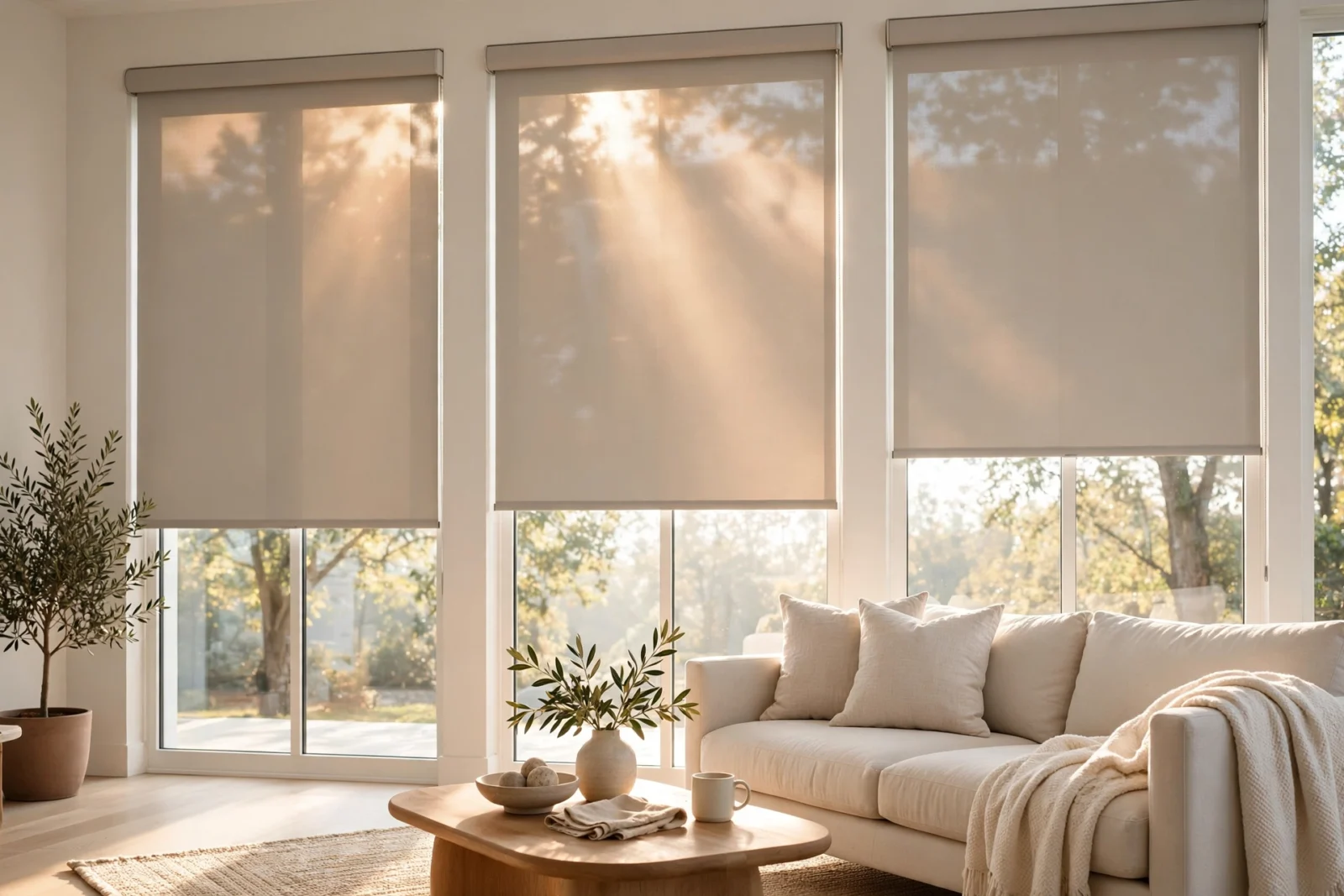
However, if you want a premium, dealer-grade shade with an eight-year warranty and rock-solid Lutron reliability, buy Lutron Serena. If you want custom-sized smart shades at a third of the price with native Matter support, buy SmartWings. That is the honest answer to the lutron serena vs smartwings question, and the rest of this guide breaks down the trade-offs behind it.
Both brands sell motorized shades that open and close on a schedule, by voice, or from an app. But they were built for different buyers. For example, Lutron Serena is the premium end of Lutron’s DIY-friendly lineup. Custom-measured shades running on Lutron’s proprietary wireless tech, priced like a luxury upgrade. In addition, SmartWings is a direct-to-consumer brand that sells made-to-measure motorized shades online, starting under $160 a window, with your choice of smart protocol: Matter, HomeKit, Zigbee, or Z-Wave.
If you are still weighing the wider market, see our roundup of the best motorized blinds for more options.
Lutron Serena vs SmartWings at a Glance
The whole comparison on one screen.
| Feature | Lutron Serena | SmartWings |
|---|---|---|
| Positioning | Premium custom shade from a lighting-control giant | Direct-to-consumer value brand |
| Starting price (per shade) | $486 (honeycomb), $549 (roller), $699 (wood blinds) | $159.99 (roller), $179 (cellular), $189.99 (zebra) |
| How you buy | Online configurator or Lutron dealer; made to measure | Online configurator; made to measure |
| Shade styles | Roller, honeycomb (standard + architectural), wood blinds | Roller, cellular honeycomb, zebra, roman, woven wood, outdoor |
| Power | Replaceable D-cell alkaline or AA lithium batteries | Rechargeable Li-ion battery (USB-C), hardwired DC, or PoE options |
| Battery life | Lutron claims industry-leading battery performance | 4–6 months per charge |
| Smart control | Lutron app + Caséta Smart Bridge (~$80), Pico remote (~$25) | App + remote; smart protocol chosen at checkout |
| Integrations | HomeKit (roller/honeycomb), Alexa, Google, SmartThings, Nest, IFTTT; no Matter | Matter, HomeKit, Alexa, Google, SmartThings, Z-Wave, Zigbee (model dependent) |
| Home Assistant | Native Lutron Caseta integration (shades as cover entities) | Matter, Z-Wave, or Zigbee models via HA integrations |
| Installation | DIY, about 20–30 minutes per shade | DIY, about 10–20 minutes per shade (4 screws) |
| Warranty | 8-year warranty on shades | 3-year warranty on motors and controls |
| Best for | Buyers who want premium build and one Lutron ecosystem | Buyers who want smart shades on every window without the premium bill |
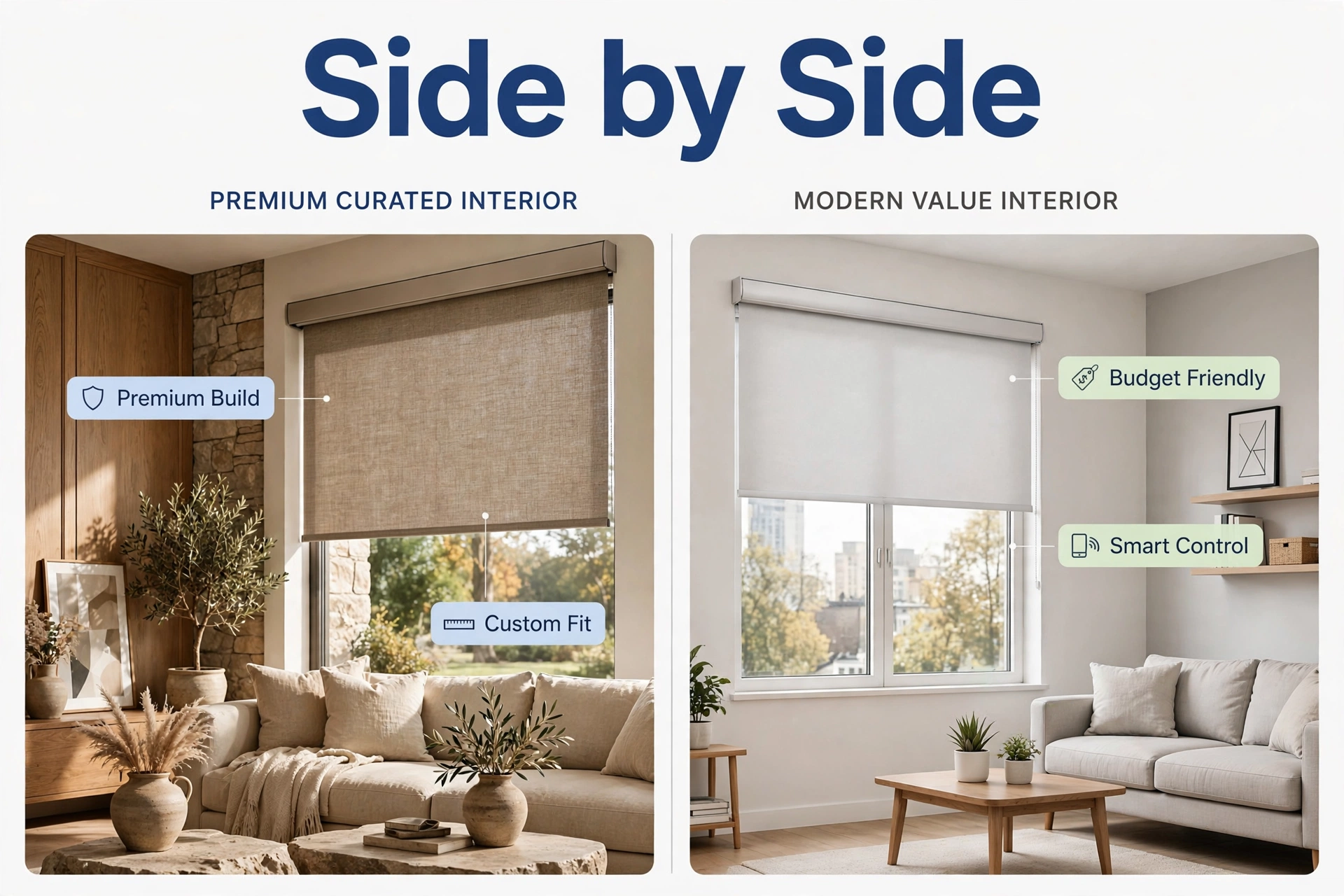
Price and Positioning
Price is the first thing that separates these two brands, and the gap is enormous. A single Serena shade can cost more than three or four SmartWings shades. Understanding what each price actually includes is the key to deciding whether the premium is worth it.
What Lutron Serena Costs
Lutron prices Serena as a custom product. On Lutron’s official Serena page, starting prices are $486 for honeycomb shades, $549 for roller shades, and $699 for wood blinds. Those are starting prices for the smallest sizes — larger windows cost more, and fabric choice moves the number too.
The shade price is not the whole bill. For example, smart features — the Lutron app, schedules, voice control — run through the Caséta Smart Bridge. Costs around $80 if you do not already own one. In addition, a Pico remote for wall or tabletop control runs about $25. So a single Serena roller shade with bridge and remote lands around $655 before you add a second window. On a five-window room, the per-window cost drops because one bridge serves the whole house. You are still looking at roughly $3,000 for the shades alone.
Budget Alternative: Lutron Caséta Shades
Note: Lutron also sells a newer, cheaper Caséta-branded shade line starting at $399 for standard window sizes. It sits below Serena; this guide compares Serena specifically, which remains Lutron’s flagship DIY smart shade.
What SmartWings Costs
SmartWings sells direct, so there is no dealer margin in the price. SmartWings publishes its starting prices on its own site: roller shades from $159.99, cellular (honeycomb) shades from $179, and zebra shades from $189.99. The Matter-over-Thread roller shades — the models reviewers keep recommending — typically run $170–$250 depending on size and fabric. That means you can motorize four or five windows with SmartWings for roughly the price of one Serena roller shade.
There is no bridge tax either. Furthermore, the remote is included, app control is free. The smart protocol you want (Matter, HomeKit, Zigbee, Z-Wave) is chosen as a motor option at checkout. Moreover, you may need a Matter controller — a HomePod, Echo, or Nest Hub — but most smart homes already have one.
The catch with direct pricing is that the price moves with every option: bigger windows, blackout fabric, and hardwired motors all push the number up. A large hardwired blackout roller can approach $320. Still comfortably under Serena territory, but not the headline $159.99.
Style and Fabric Options
Both brands are made-to-measure, so both fit windows that off-the-shelf shades cannot. The difference is in range and feel.
Serena keeps the catalog tight and curated: roller shades, honeycomb shades (standard and architectural). Real wood blinds in a few hundred fabric and finish combinations. Also, the wood blinds are a genuine differentiator — handcrafted North American basswood with painted and stained finishes. Slats that auto-tilt through the day to track the sun. First, nothing in the SmartWings catalog matches that furniture-grade feel.
SmartWings goes wide instead of deep: roller, cellular honeycomb, zebra (dual-layer), roman, natural woven wood, and even outdoor patio shades. Second, fabric choices run from light-filtering to 100% blackout, with widths up to about 110 inches for big openings. Finally, reviewers consistently praise the build quality for the price. The fabrics read as modern and functional rather than luxurious — clean and well made, not heirloom.
Energy note: Serena’s honeycomb shades have cellular pockets that trap air against the glass, which helps insulation — and SmartWings’ cellular shades do the same. If maximum darkness is the goal, both offer true blackout fabrics.
Motors, Batteries, and Power
How a shade gets its power decides how often you touch it after installation, and the two brands take opposite approaches.
Serena runs on replaceable batteries — standard D-cell alkaline or AA lithium — housed in a compartment you can reach without taking the shade down. Meanwhile, lutron’s pitch is simple: when the batteries eventually die, you swap in new ones in seconds. The shade keeps working for years. Nevertheless, there is no charging cable to run and no shade to unmount. In fact, the trade-off is ongoing battery purchases and the environmental cost of disposables.
SmartWings uses rechargeable lithium-ion motors charged over USB-C, rated at 4–6 months per charge, with an optional solar panel that trickle-charges the battery from window light. The motor is quiet — rated around 35–40 dB, roughly a soft hum. For whole-home installs, SmartWings also sells hardwired DC and PoE (power-over-Ethernet) motors, which eliminate charging entirely at the cost of running cable to each window during a renovation.
- Serena: replaceable D-cell or AA lithium batteries; swap-and-go, no charging, no wiring.
- SmartWings battery: rechargeable Li-ion via USB-C, 4–6 months per charge; solar panel add-on available.
- SmartWings wired: hardwired DC and PoE motors for set-and-forget installs where cable can be run.
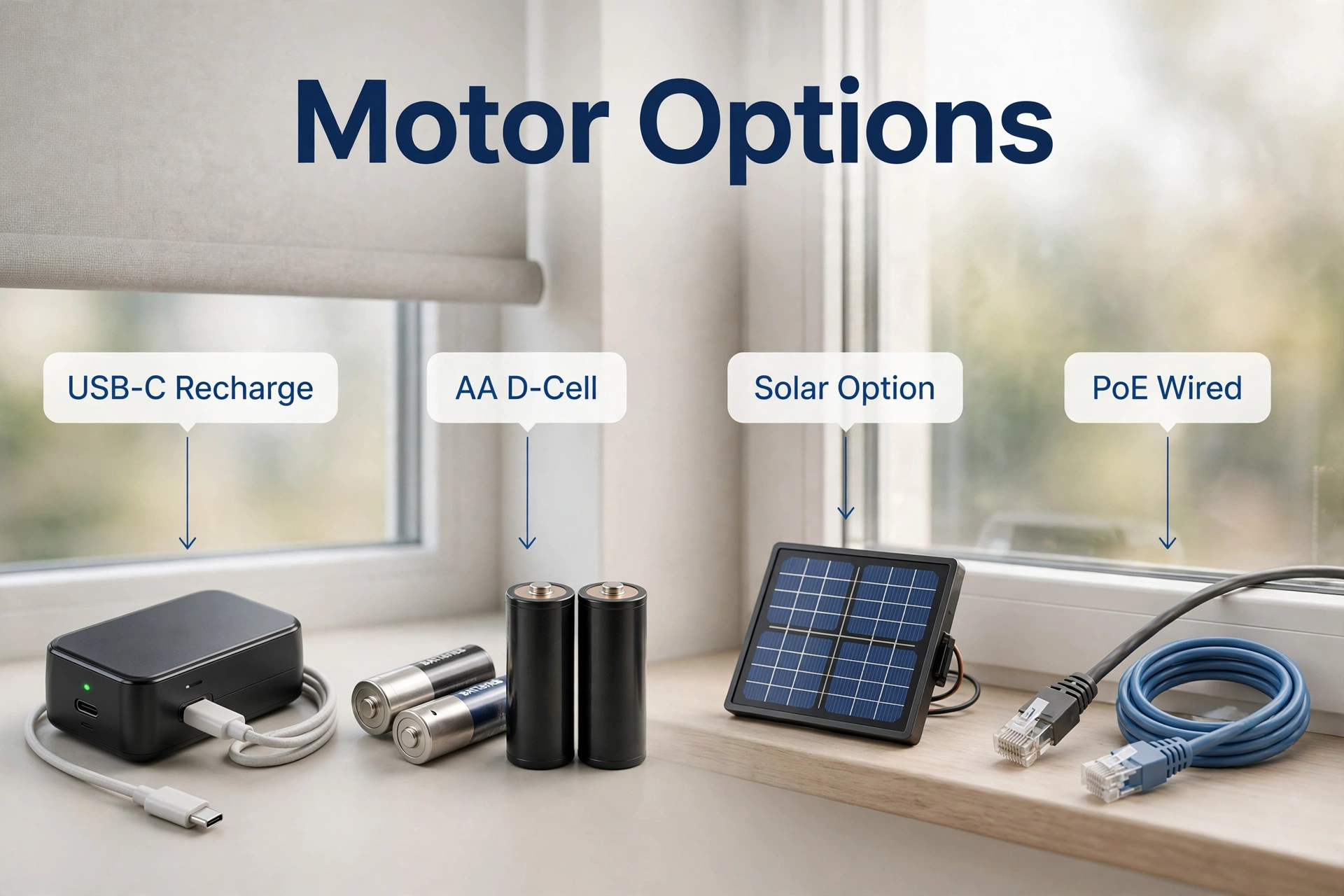
Neither approach is maintenance-free: Serena owners buy batteries, SmartWings owners recharge twice a year. Pick the chore you mind less.
Smart Home Integrations Compared
This is where your existing smart home decides the winner for you. The two brands speak completely different wireless languages.
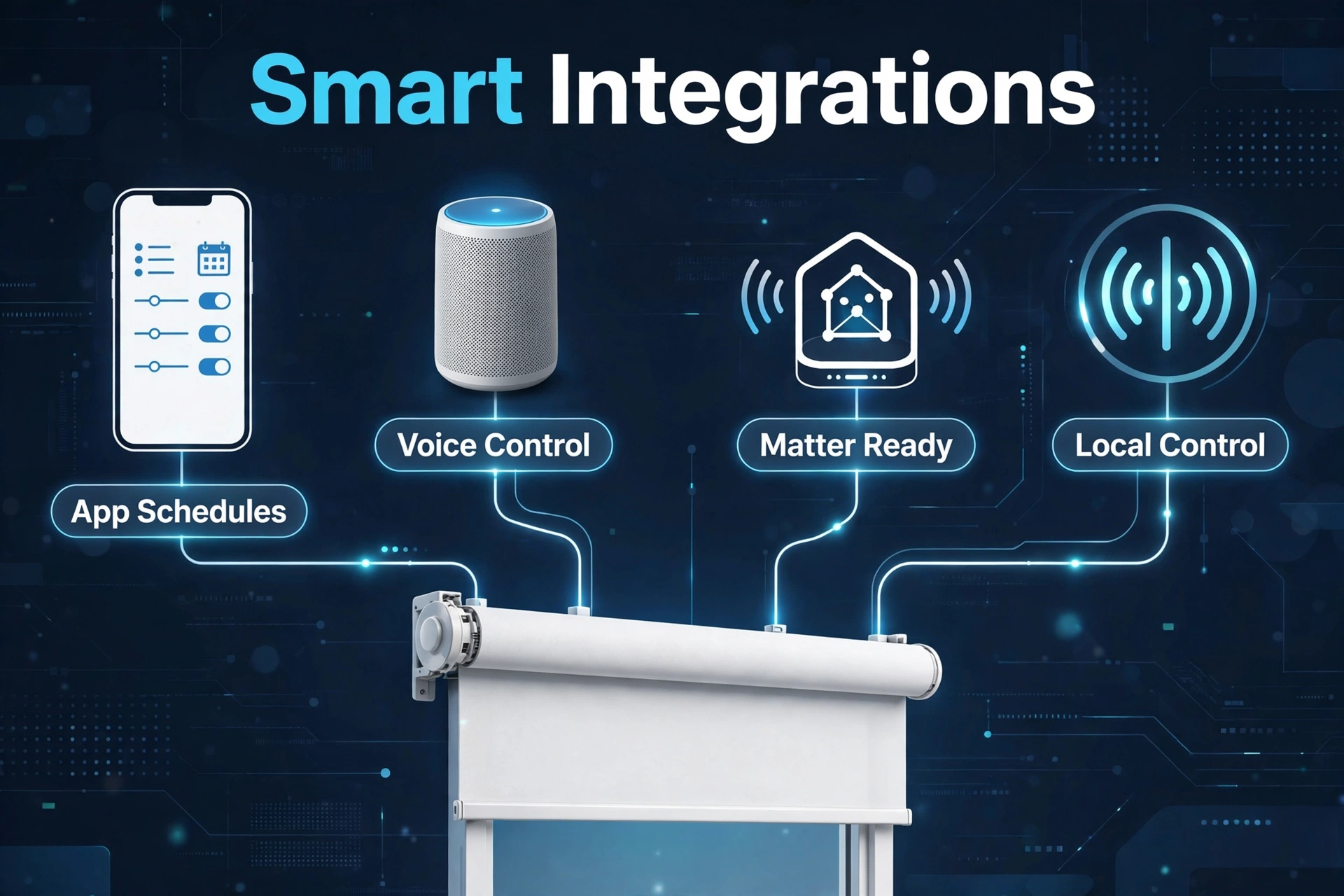
Serena runs on Lutron’s proprietary Clear Connect radio and joins the Lutron app through the Caséta Smart Bridge. As a result, from there it reaches Apple HomeKit (roller and honeycomb shades. Note that the wood blinds do not support HomeKit), Amazon Alexa, Google Assistant, Samsung SmartThings, Nest thermostats and Protect alarms, and IFTTT. In contrast, there is no Matter support on Serena. Similarly, if you are already invested in Lutron Caséta dimmers and switches, Serena slots into the same app and the same Pico remotes. Is a genuine convenience: one “Goodnight” scene can close the shades, dim the lights, and pause the music.
SmartWings takes the opposite approach — it sells you the protocol you want as a motor option:
- Matter over Thread (SW301): pairs with Alexa, Google Home, Apple Home, and SmartThings through any Matter controller. The most future-proof pick.
- HomeKit / Thread (SW501): native Apple Home support for iPhone-first homes.
- Z-Wave (SW401): works with SmartThings and Hubitat hubs.
- Zigbee (SW201): pairs directly with Echo devices that have Zigbee built in.
- Standard (SW101): Alexa and Google via the SmartWings hub.
| Platform | Lutron Serena | SmartWings |
|---|---|---|
| Apple HomeKit | Yes (roller + honeycomb; not wood blinds) | Yes (HomeKit or Matter motor) |
| Alexa | Yes | Yes |
| Google Home | Yes | Yes |
| SmartThings | Yes | Yes (Matter or Z-Wave motor) |
| Matter | No | Yes (Matter-over-Thread motor) |
| Z-Wave | No | Yes (Z-Wave motor) |
| Home Assistant | Yes — native Lutron Caseta integration (shades appear as covers) | Yes — Matter, Z-Wave, or Zigbee motor via HA integrations |
| Voice assistants | Siri, Alexa, Google Assistant | Siri, Alexa, Google Assistant (model dependent) |
Home Assistant Integration
For Home Assistant users, both brands work, but through different doors. Specifically, Serena shades on a Caséta bridge are picked up by Home Assistant’s native Lutron Caseta integration and show up as cover entities you can automate like any other blind. However, SmartWings Matter models pair through Home Assistant’s Matter integration, which keeps everything local. If you are building out a local-first setup, our guide to installing Home Assistant on a Raspberry Pi 5 gets the hub running; then it is a question of which radio your shades speak.
One automation worth planning for either brand: presence sensors can open shades when a room is occupied and close them when it empties — the kind of hands-free behavior that makes motorized shades feel worth the money.
If whole-room scenes matter to you, remember that shades pair naturally with smart lighting. Our Philips Hue vs WiZ comparison covers the lighting side if you are building a coordinated setup.
Installation and Measuring
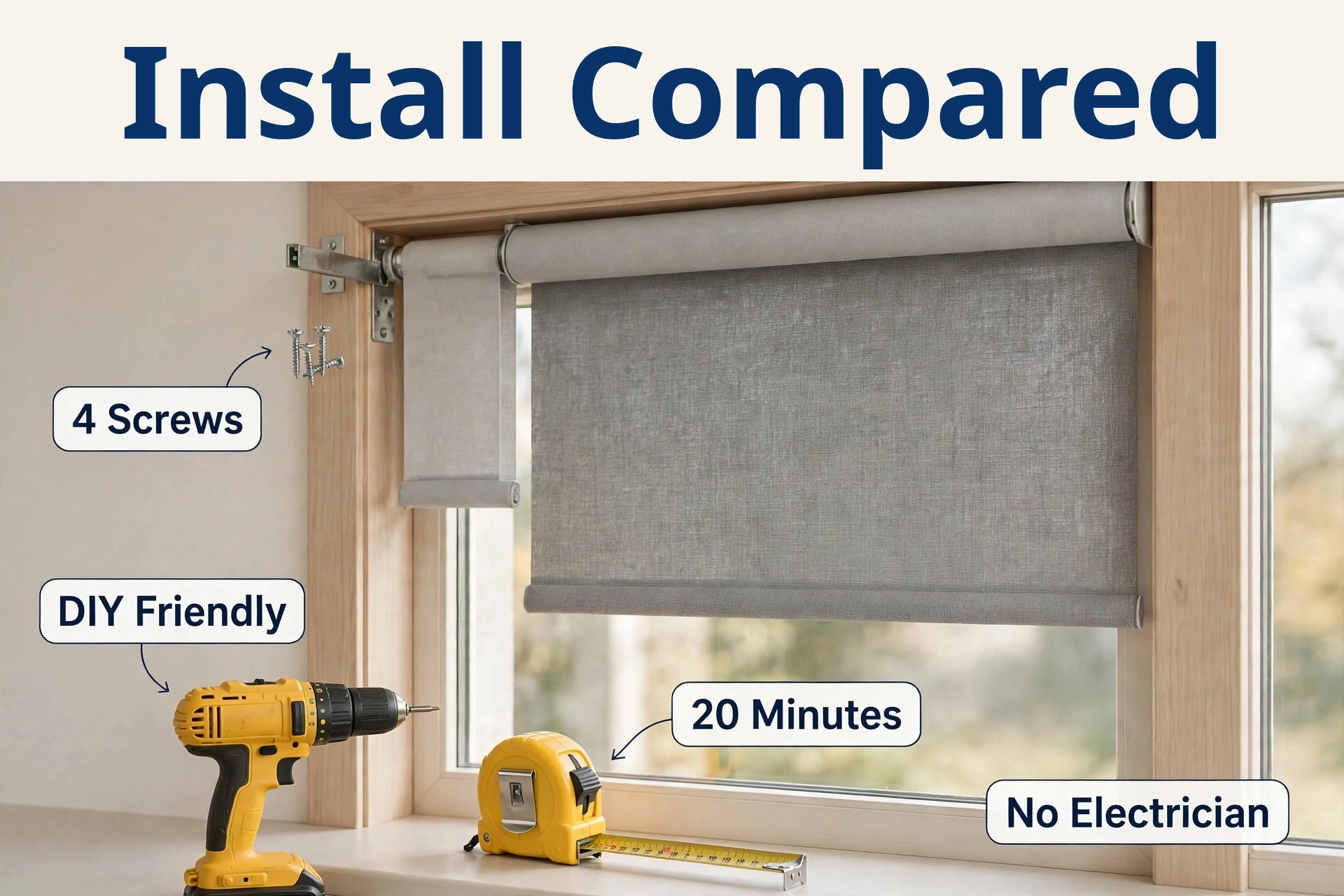
Both brands are DIY installs — no electrician, no dealer visit required. The steps are nearly identical:
- Measure each window (inside or outside mount) using the brand’s measuring guide.
- Order the shade in your size, fabric, and motor choice.
- When it arrives, screw the mounting brackets into the window frame — four screws for SmartWings, a similar bracket set for Serena.
- Snap the shade into the brackets, insert or charge the batteries, and pair it with the app.
SmartWings advertises 10–20 minutes per window, and reviewers land in that range. Serena takes a little longer — plan 20–30 minutes for your first shade, faster after that. Both offer inside-mount (recessed in the frame) and outside-mount (covering the trim) options, and both sell fabric swatches cheaply so you can check colors against your room before committing.
The real difference is lead time. For example, SmartWings ships made-to-order shades from its own pipeline in days to a couple of weeks. In addition, Serena is a custom product with a longer tail — reviewers report around four weeks from order to delivery. Furthermore, if you are furnishing a room on a deadline, order Serena early.
Warranty and Support
Warranty length tells you how much confidence the manufacturer has in its own product, and here the two brands tell very different stories.
Lutron backs Serena shades with an 8-year warranty, plus a dedicated US-based shades support team. Moreover, eight years is exceptional for any smart home product — most connected gadgets are lucky to get two. Also, it reflects Lutron’s position as a decades-old lighting-control company that expects its products to outlive your phone, your hub, and probably your voice assistant.
SmartWings offers a 3-year warranty on motors and controls, with support by phone and email. First, three years is respectable for the price point and covers the part most likely to fail — the motor. Second, it is not Lutron-grade assurance, but it matches or beats most budget smart home brands.
Support differs too. Lutron has a dealer network and US-based phone support; SmartWings is online-first, with responsive phone and email support but no showroom. For a straightforward product like a roller shade, that is usually fine.
Who Should Buy Which
Buy Lutron Serena If…
- You already use Lutron Caséta dimmers, switches, or fan controls and want shades in the same app and scenes.
- You want the most polished product — real wood blinds, curated fabrics, and an 8-year warranty.
- Your smart home runs on HomeKit, Alexa, Google, or SmartThings and you do not need Matter.
- You are furnishing a forever home and would rather pay once for a decade of reliability.
- You want US-based phone support from a company that has been doing this for decades.
Buy SmartWings If…
- You want smart shades on many windows and the budget has to stretch — four SmartWings shades cost about what one Serena does.
- Matter support matters to you, or you want to choose between Matter, HomeKit, Zigbee, and Z-Wave at checkout.
- You run Home Assistant and want shades on a local, open protocol.
- You prefer rechargeable batteries (or a solar panel) over buying disposables.
- You need specialty options — zebra shades, roman shades, woven wood, or outdoor patio shades.
Lutron Serena vs SmartWings: FAQs
Do Lutron Serena shades work with Home Assistant?
Serena shades connect through the Lutron Caséta Smart Bridge, and Home Assistant’s native Lutron Caseta integration discovers them as cover entities — open, close, and set position from dashboards and automations. The bridge is required; the shades cannot join Home Assistant directly.
Do SmartWings shades work with Apple HomeKit?
Yes, if you choose the right motor. The HomeKit/Thread and Matter-over-Thread motors both work with Apple Home — the Matter version pairs through a HomePod or Apple TV. The standard, Zigbee, and Z-Wave motors do not support HomeKit, so pick the motor for your ecosystem at checkout.
Does Lutron Serena support Matter?
No. Serena uses Lutron’s proprietary Clear Connect wireless protocol and connects through the Caséta Smart Bridge. It integrates with HomeKit, Alexa, Google Assistant, and SmartThings, but there is no Matter support on Serena shades.
How long do SmartWings batteries last?
SmartWings rates its rechargeable lithium-ion motors at 4–6 months per charge with typical daily use. Charging is over USB-C and takes a few hours. An optional solar panel mounted behind the shade can trickle-charge the battery and stretch that much further.
Are Lutron Serena shades worth the price compared to SmartWings?
They are worth it for a specific buyer: someone already in the Lutron ecosystem, or someone who values the 8-year warranty, the wood blind options, and Lutron’s reliability record enough to pay three to four times more per window. If your priority is covering the whole house with smart shades on a budget, or you want Matter support, SmartWings delivers most of the daily experience — scheduled, voice-controlled, app-controlled shades — at a fraction of the cost.
Can I install these shades myself?
Yes, both are DIY installs — brackets, four screws, and a drill. Both mount inside or outside the window frame, and neither needs wiring or an electrician — unless you choose SmartWings’ hardwired or PoE motors, which need cable run during installation.
