

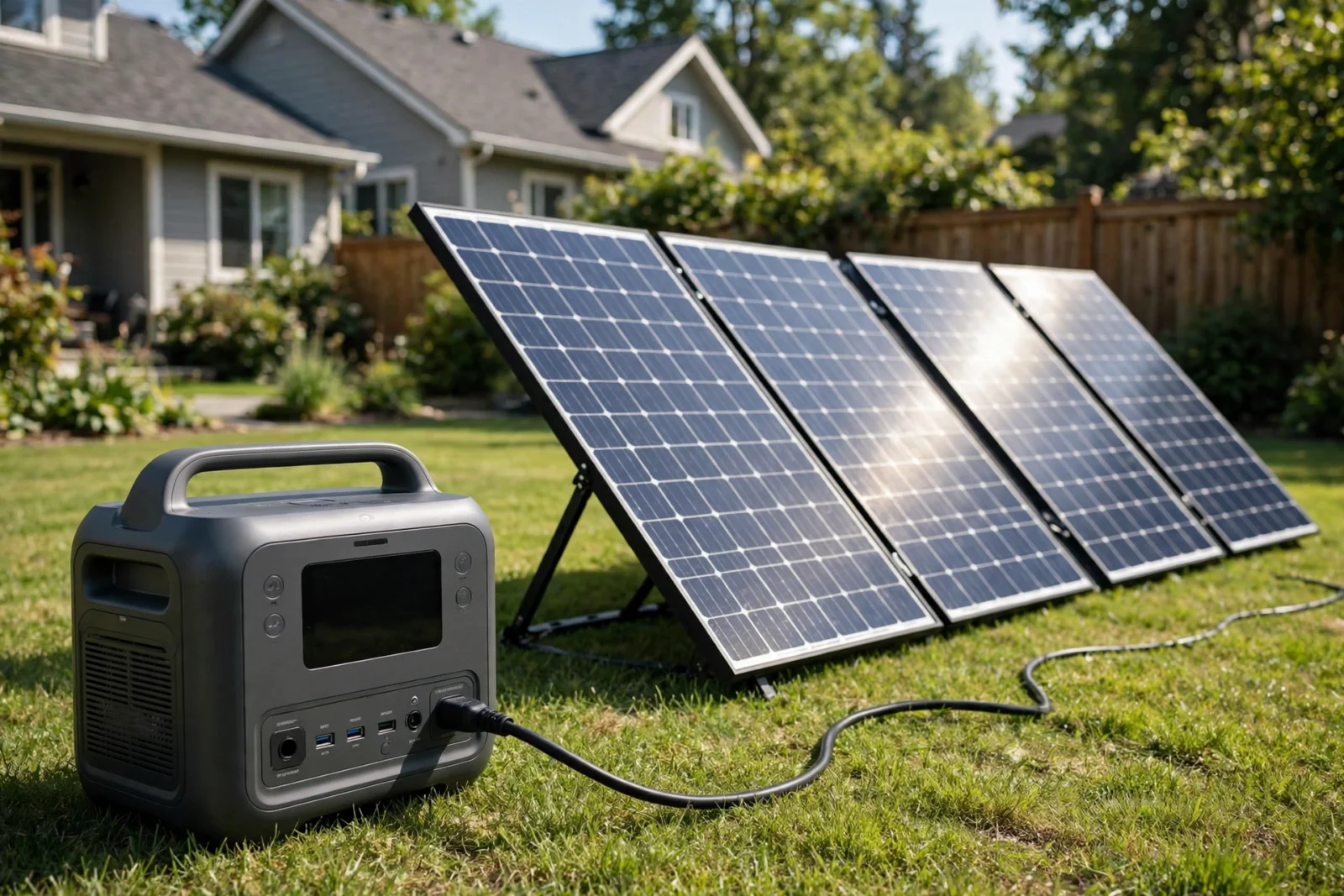
The best solar generator for home backup pairs a high-capacity power station with enough solar input to recharge it daily: the EcoFlow DELTA 3 (1,024Wh, 1,800W, fast solar charging) is the best all-rounder, the BLUETTI Elite 100 V2 (up to 1,000W solar input) is best for maximum sun harvesting, and larger 2kWh+ units suit multi-day outages. This guide explains how solar generators work, how to size one, and which to buy.
What Is a Solar Generator?
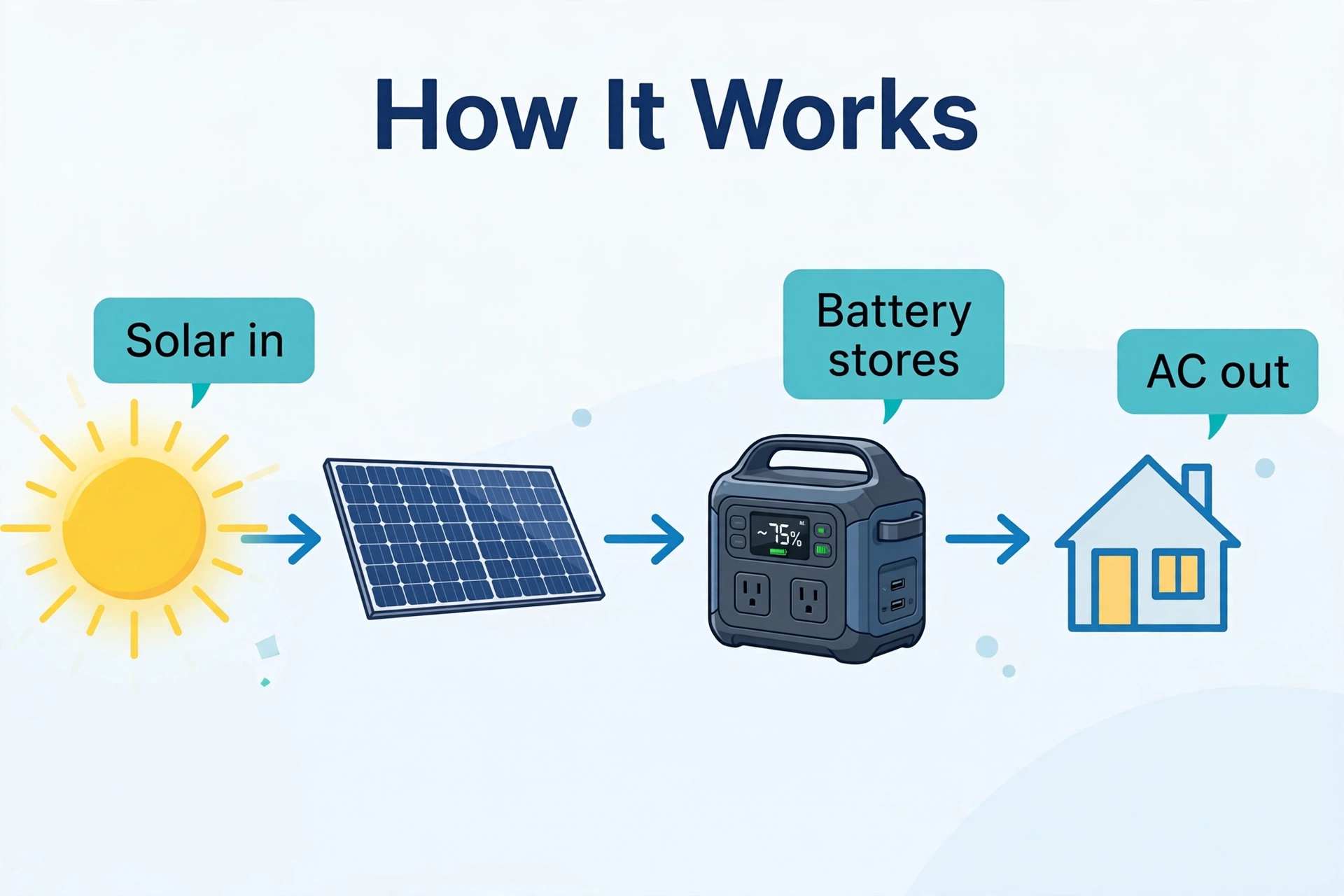
A “solar generator” is not one device — it is a portable power station plus solar panels sold or used together. The station stores energy in its battery; the panels refill it from sunlight. No fuel, no fumes, no noise.
For home backup, this combination matters because a battery alone is finite. A 1,000Wh station without solar dies in hours and stays dead until the grid returns. Add 400W of panels and good sun, and the same station refills itself every day — turning a one-night backup into an indefinite one, as long as the sun cooperates. That daily refill is the entire difference between “backup for tonight” and “backup for the week.”
Pairing solar with storage is exactly what energy experts recommend for resilience: as NYSERDA’s home energy storage fact sheet explains, storing your own solar electricity keeps critical loads like refrigeration and lighting running through outages without a fuel-burning generator.
How Much Power Do You Need for Home Backup?
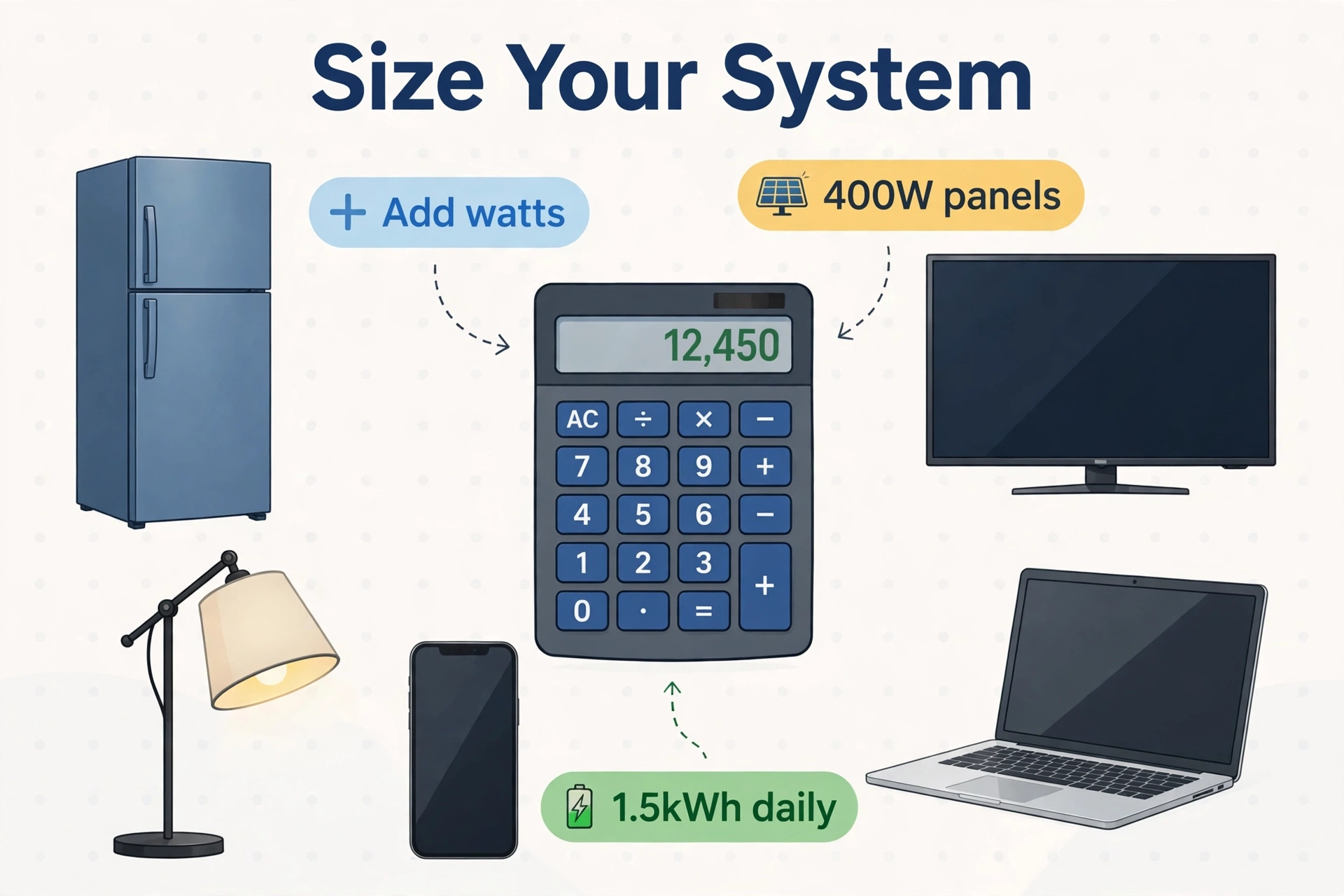
Start with your essentials — the devices that must stay on. A realistic essentials list for most homes:
Table 1: Typical home backup essentials
| Device | Typical Draw | Why It Matters |
|---|---|---|
| Full-size refrigerator | 100–200W | Food safety |
| Wi-Fi router + modem | 10–20W | Internet, smart home control |
| Smart home hub | 5–15W | Automations, alerts |
| Phones + tablets | 20–40W | Communication |
| LED lights (several) | 20–40W | Safety at night |
| Security cameras/NVR | 15–30W | Security during outage |
| Laptop | 50–100W | Work continuity |
Total: roughly 250–400W of simultaneous draw. A 1,024Wh station covers that for about 2.5–4 hours on battery alone — but with 400W of solar refilling it during the day, you can cycle indefinitely through a multi-day outage by running heavy loads in daylight and essentials at night.
One more priority: medical devices. If anyone in the home uses a CPAP (~40–60W without the heated humidifier), an oxygen concentrator, or refrigerated medication, those go at the very top of the list — above the TV and even above the fridge. A 1kWh station runs a CPAP for roughly two nights, which is why medical households should size one tier larger than the table suggests.
The Best Solar Generators for Home Backup in 2026
1. EcoFlow DELTA 3 + Solar Panels — Best Overall
The DELTA 3 (1,024Wh, 1,800W output, <10ms UPS) is the best-balanced backup station, and EcoFlow sells it bundled with 160W–400W portable panels. Fast AC charging refills it from the grid in under an hour when power flickers back, while solar keeps it alive when it does not.
Best for: most homes wanting one do-everything backup system.
Keep in mind: for multi-day whole-home backup, consider the 2,048Wh DELTA 3 Max Plus instead.
2. BLUETTI Elite 100 V2 + Solar — Best Solar Harvesting
With up to 1,000W of solar input on a 1,024Wh / 1,800W station, the Elite 100 V2 converts sunlight to stored energy faster than most rivals. In strong sun, it can refill from empty in about 1–1.5 hours of peak conditions.
Best for: sunny regions and off-grid-leaning households.
Keep in mind: you need enough panel wattage to use that 1,000W ceiling — budget for 600W+ of panels.
3. Jackery Explorer 1000 v2 + SolarSaga Panels — Easiest for Beginners
Jackery’s 1,070Wh / 1,500W station pairs with its folding SolarSaga panels in simple plug-and-play bundles. Lighter than most 1kWh rivals and very simple to operate — ideal if solar is new to you.
Best for: first-time solar generator buyers, renters, campers.
Keep in mind: 1,500W output limits the hungriest appliances.
4. Anker SOLIX C1000 Gen 2 + Solar — Best High-Output Value
1,024Wh with 2,000W continuous output handles microwaves and power tools that stall smaller stations. A strong pick when your backup plan includes cooking or workshop loads.
Best for: households that need to run heating appliances during outages.
Keep in mind: high-draw cooking drains any 1kWh station fast — plan panel wattage accordingly.
5. EGO Nexus + 200W Solar Panel — Best for EGO Owners
The Nexus PST3042 (2,000W continuous) runs on swappable EGO 56V batteries, and EGO’s 200W SP2000 panel can trickle-charge the system during the day. EGO tool owners get backup power from batteries they already own.
Best for: EGO ecosystem households.
Keep in mind: 200W of solar is a trickle, not a refill — treat it as range extension.
Table 2: Best solar generators for home backup compared
| System | Station Capacity | Output | Solar Input | Best For |
|---|---|---|---|---|
| EcoFlow DELTA 3 + panels | 1,024Wh | 1,800W | Up to 500W | Best overall |
| BLUETTI Elite 100 V2 + panels | 1,024Wh | 1,800W | Up to 1,000W | Max solar harvest |
| Jackery 1000 v2 + SolarSaga | 1,070Wh | 1,500W | Up to 400W | Beginners |
| Anker C1000 Gen 2 + panels | 1,024Wh | 2,000W | Up to 600W | High-draw loads |
| EGO Nexus + SP2000 | ~420Wh+ (kit) | 2,000W | 200W | EGO owners |
How Many Solar Panels Do You Need?
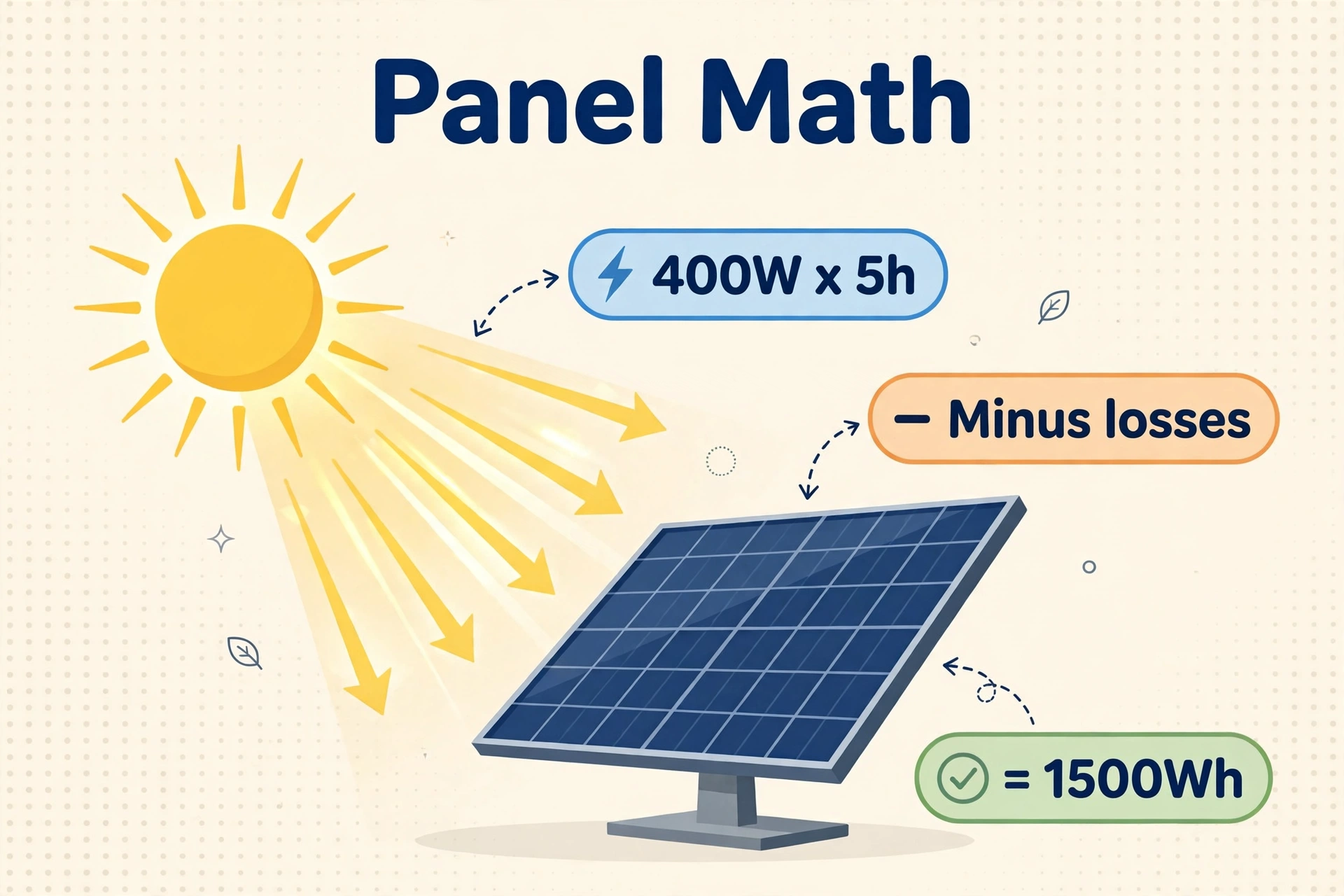
Use this simple formula: panel watts × peak sun hours × 0.75 (for real-world losses) = daily watt-hours harvested.
Example: 400W of panels × 5 sun hours × 0.75 = 1,500Wh per day — enough to fully refill a 1kWh station and run daytime loads simultaneously. In winter or cloudy climates, double the panels or halve your expectations.
Table 3: Panel sizing quick reference
| Daily Backup Need | Suggested Panels | Notes |
|---|---|---|
| Phones, lights, router (~500Wh) | 200W | One portable panel |
| + laptop, cameras (~1,000Wh) | 400W | Two portable panels |
| + fridge (~2,000Wh) | 600–800W | Rigid or multiple portable panels |
Portable folding panels are convenient but pricey per watt; rigid rooftop-style panels cost less per watt if you have a place to mount them semi-permanently. Either works — the station does not care where the DC comes from. One practical tip: buy panels with a bit more wattage than your station’s solar input ceiling suggests, because real-world output rarely matches the label. A “400W” panel typically delivers 280–340W in good conditions, so oversizing by 25% gets you to the station’s actual charging rate.
Solar Generator vs Gas Generator for Home Backup
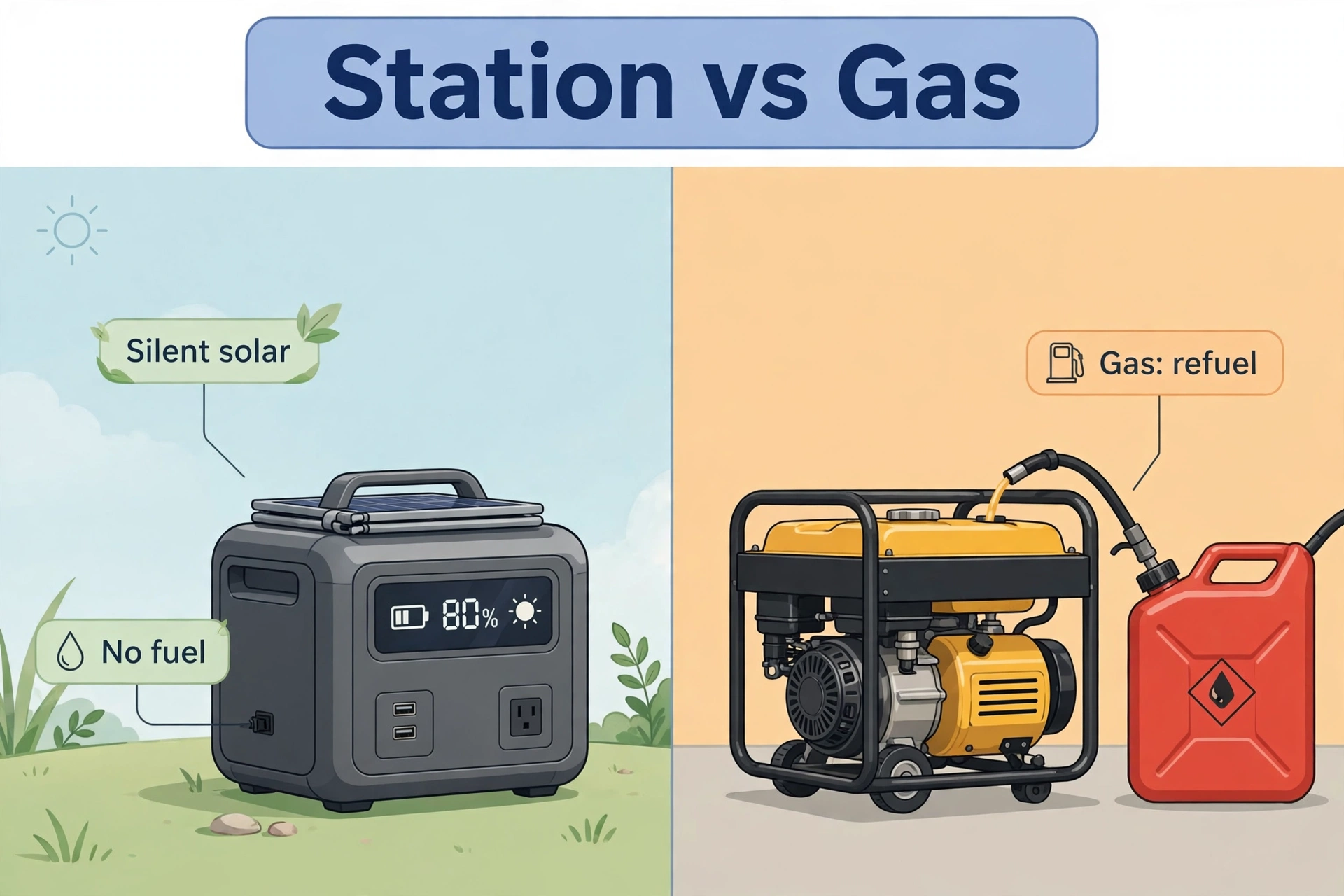
Table 4: Solar generator vs gas generator
| Feature | Solar Generator | Gas Generator |
|---|---|---|
| Fuel cost | Free (sunlight) | Ongoing (gasoline/propane) |
| Noise | Silent | Loud |
| Indoor use | Safe | Never (carbon monoxide) |
| Multi-day runtime | Weather-dependent | As long as fuel lasts |
| Maintenance | Minimal | Oil, filters, fuel care |
| Upfront cost | Higher per watt | Lower per watt |
The honest answer: solar generators win for outages up to a few days in decent weather; gas wins for week-long blackouts in storm season. In hurricane and wildfire country, many households keep a solar generator for silent nightly essentials and a small gas unit for daytime heavy loads.
Setting Up Your Solar Generator Before Storm Season
Do not wait for the outage warning to unbox everything. A proper setup takes an afternoon:
- Charge the station to 100% from the wall while the grid is healthy.
- Test every essential device on the station — fridge, router, hub, cameras — and confirm the total draw on the display stays within output limits.
- Unfold and test the panels in your yard. Find the spot with the least shade between 10 AM and 3 PM, and mark it. Note the actual watts on the station’s display versus the panel rating.
- Label your priority plugs. Put colored tape on the devices that get power first (router, hub, fridge) so nobody plugs in a space heater during the outage.
- Store cables together — panel extension cables, AC charging cable, and adapters in one bag next to the station.
- Write down your runtime plan: which devices run at night on battery, which run in daylight on solar. Tape it to the station.
Households that do this once never scramble. The outage becomes a drill you have already rehearsed.
Keep Your Smart Home Alive on Solar Backup
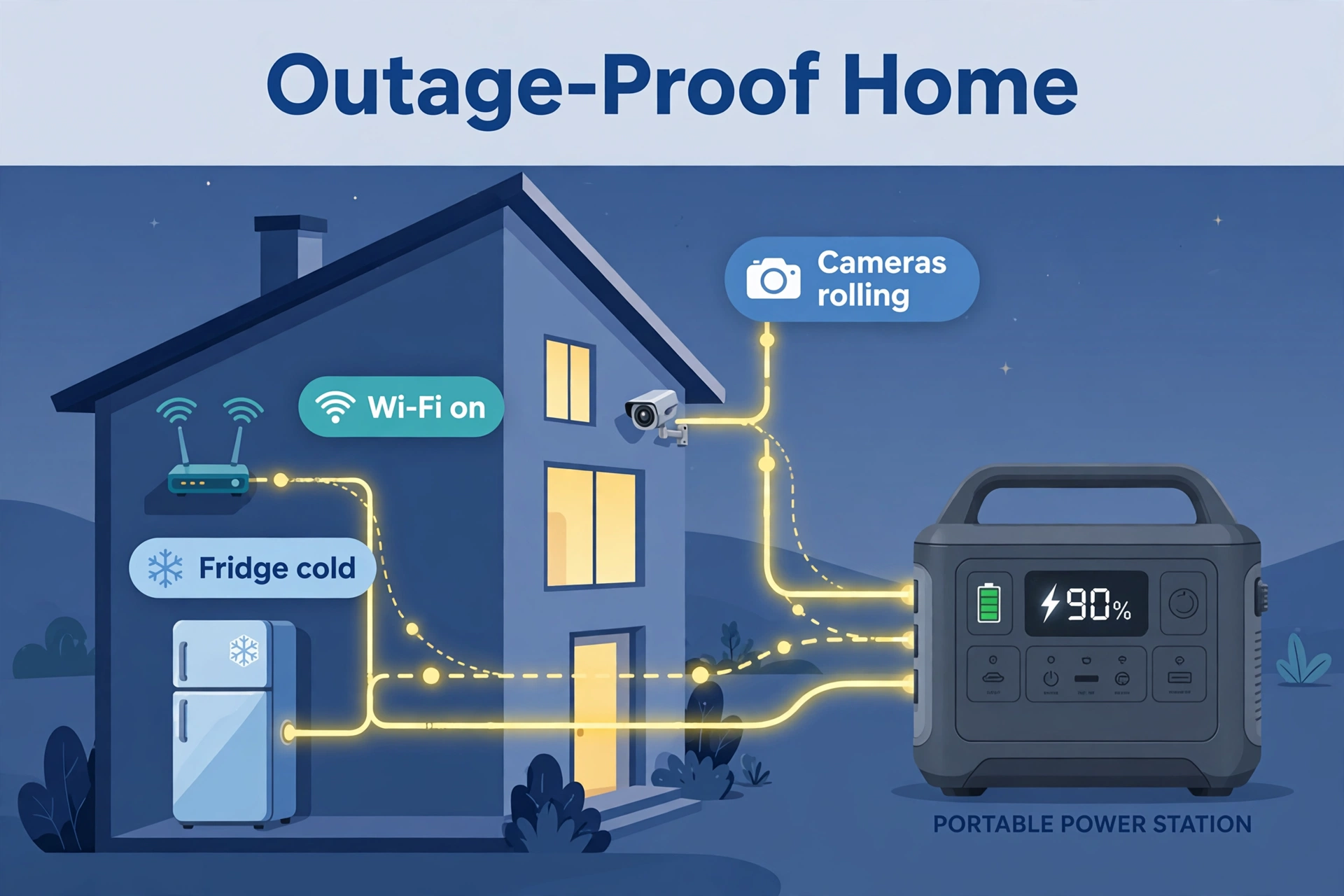
A solar generator is the missing piece in most smart home outage plans. Your automations are only as reliable as their power supply — and grid power is the least reliable part.
Put your router, Home Assistant hub, and camera system on the station. If you install Home Assistant on a Raspberry Pi 5, the Pi sips so little power that even a modest station runs it for days, and the <10ms UPS switchover on stations like the DELTA 3 means it never reboots. Our best mini PC for Home Assistant guide helps if your hub needs more muscle.
For security, cameras with local storage keep recording with no internet at all — pair them with the station and review our home security upgrade guide for a layered outage-proof setup. Daytime solar refills the station; nighttime battery carries the cameras. That is a genuine 24/7 security loop with zero grid dependence.
Storing Panels and Station Between Outages
Nine months of the year, your solar generator sits waiting. Store it right and it will be ready:
- Station at 50–80% charge in a cool, dry indoor spot — not a freezing garage or a baking attic.
- Recharge to 80% every 3–6 months to counter self-discharge and keep the battery management system calibrated.
- Fold panels dry. Wipe them down before storage; grit trapped in folds scratches the surface over time.
- Keep firmware updated on app-connected stations for the latest charging and battery-care improvements.
- Run a test cycle each spring: discharge to 50% running real loads, then recharge fully on solar. If anything underperforms, you have months to fix it before storm season.
Frequently Asked Questions
Can a solar generator power a whole house?
Not a typical portable one. A 1–2kWh solar generator powers essentials (fridge, router, lights, devices) but not central AC, electric stoves, or water heaters. Whole-home backup needs a permanently installed battery system (10kWh+) with rooftop solar — a different product category and budget.
How long does it take to charge a solar generator with panels?
Divide station capacity by panel output, then add ~25% for losses. A 1,024Wh station with 400W of panels takes about 3–3.5 hours of strong sun. Clouds, panel angle, and heat all slow it down — morning and evening sun barely counts.
Do solar generators work at night or on cloudy days?
The battery works anytime — it is just stored energy. But recharging needs sunlight; heavy clouds can cut panel output by 70–90%. Size your battery for at least one sunless day if outages in your area come with storms.
How long do solar generator batteries last?
LiFePO4 stations typically last 3,000–4,000 cycles (about 10 years). Solar panels degrade slowly too — about 0.5% per year — and usually carry 25-year performance warranties. The system ages gracefully, not all at once.
Are solar generators worth it for home backup?
For short-to-medium outages, yes: silent, indoor-safe, zero fuel cost, and minimal maintenance. The math weakens if your area sees week-long outages with no sun — then a gas generator or hybrid approach makes more sense. Match the tool to your actual outage history.
Can I use a solar generator while it is charging?
Yes — this is called pass-through charging, and most modern stations support it. You can run your fridge from the station while panels refill it simultaneously. Just keep the combined load sensible so the battery still gains charge overall.
Final Thoughts
The best solar generator for home backup is a right-sized station plus enough panels to refill it daily: the EcoFlow DELTA 3 for most homes, the BLUETTI Elite 100 V2 for maximum solar harvest, and 2kWh+ units for multi-day resilience. Start by listing your must-run essentials, size the battery for one sunless day, and buy 25% more panel wattage than the math says — real-world sun is never as generous as the label. Do the one-afternoon setup before storm season, and the next outage becomes a quiet demonstration of your planning, not an emergency.
