

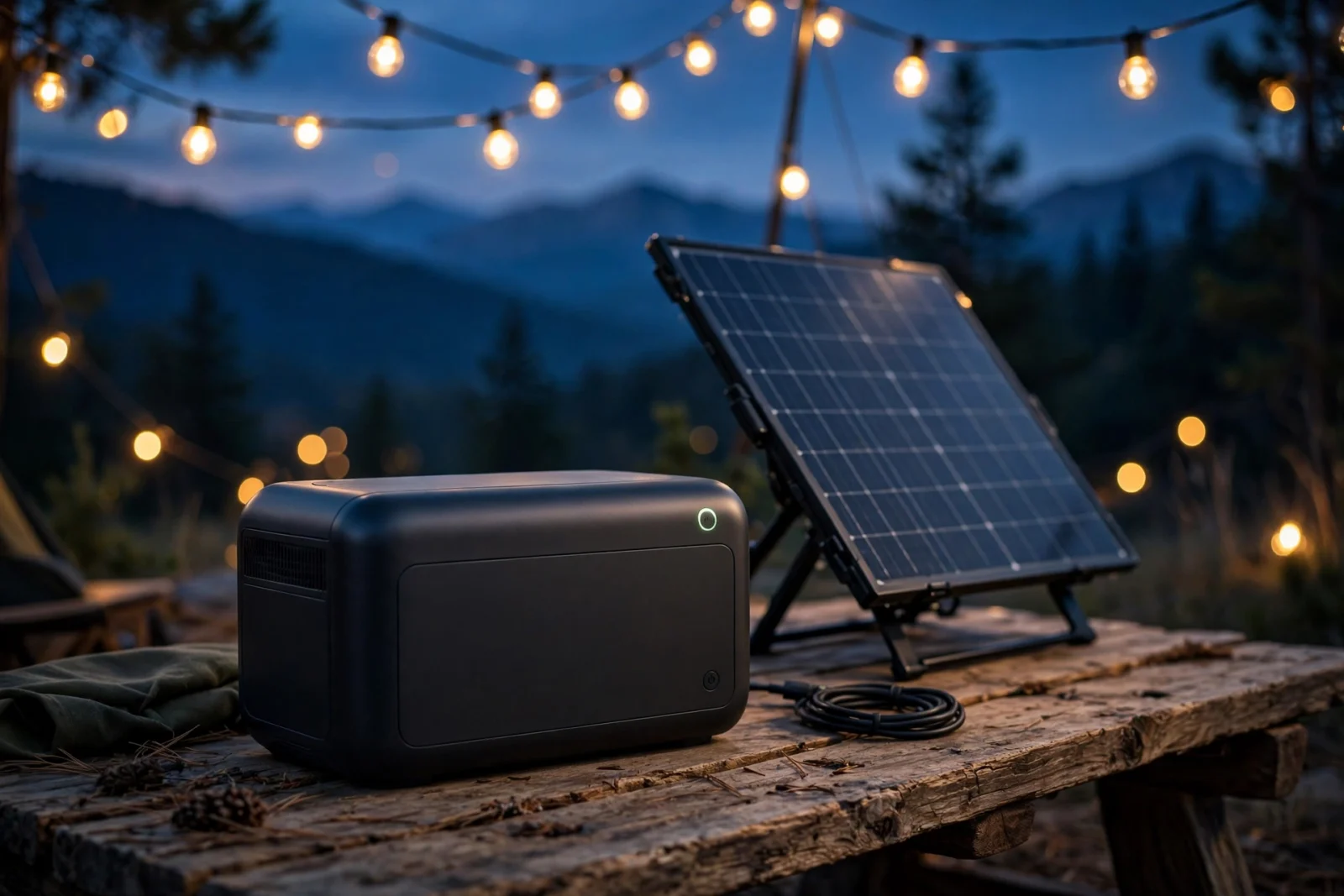
The Bluetti AC180 solar portable power station is one of the best-balanced mid-size stations you can buy: a 1,152Wh LiFePO4 battery, a true 1,800W pure sine wave inverter (2,700W surge via Power Lifting mode), up to 500W of solar input, and 1,440W turbo AC charging that refills it from empty in about an hour. However, it weighs around 35 pounds, runs silently, and covers the classic camping and outage-backup loads — 12V fridge, laptops, phones, lights, CPAP — with real headroom to spare. For example, its honest weaknesses: no expandable battery, and 16kg is not a one-hand carry. If you want a do-everything station in the 1kWh class without paying flagship money, the AC180 belongs at the top of your shortlist.
Bluetti AC180 Solar Portable Power Station: Specs at a Glance
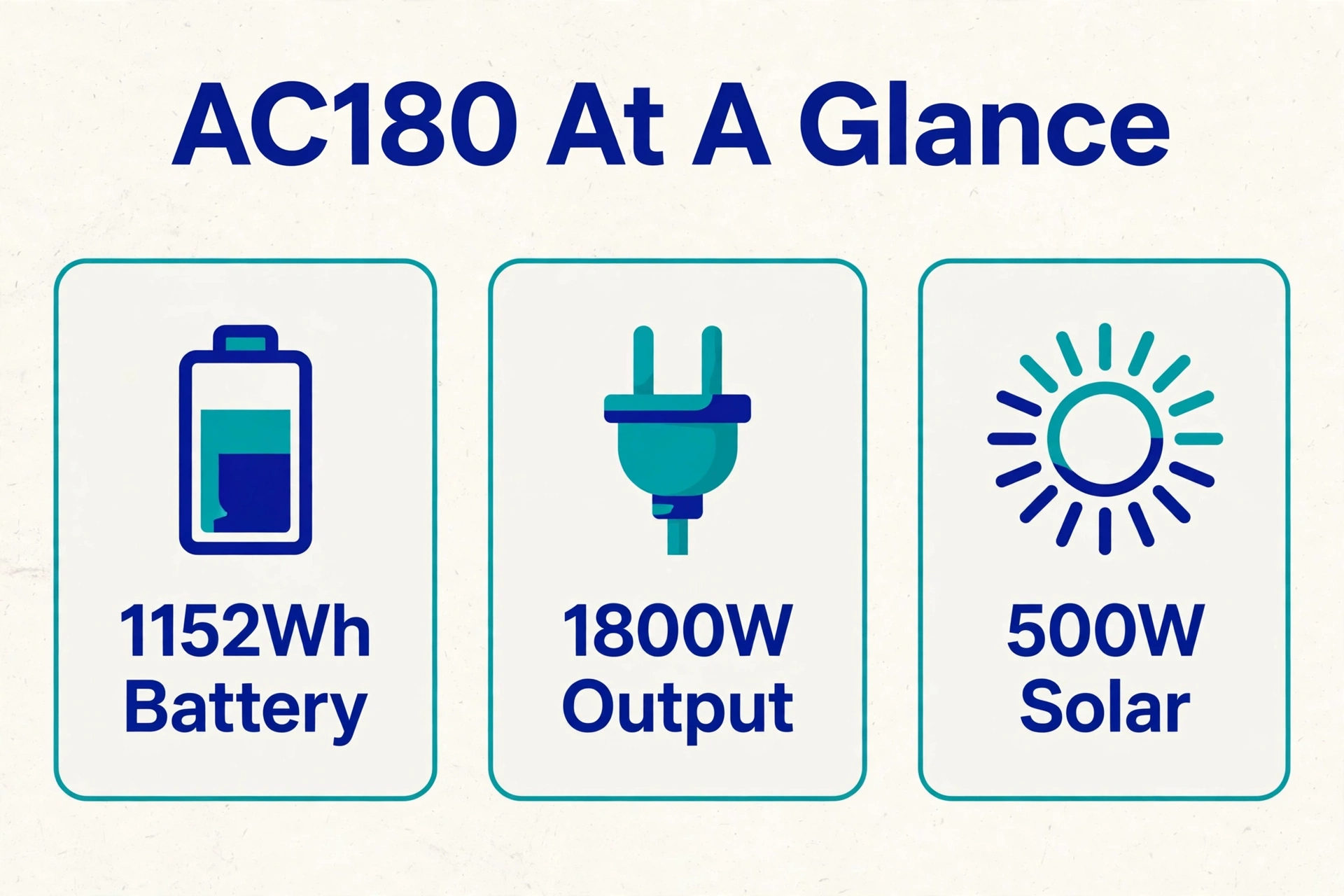
Before the analysis, the numbers Bluetti publishes for the AC180 — so every claim below has a foundation.
Table: Bluetti AC180 key specifications (manufacturer-stated)
| Feature | Bluetti AC180 |
|---|---|
| Battery capacity | 1,152Wh LiFePO4 (lithium iron phosphate) |
| AC output | 1,800W continuous, 2,700W surge (Power Lifting mode) |
| Output waveform | Pure sine wave |
| Battery lifespan | 3,500+ cycles to 80% capacity |
| AC charging | Up to 1,440W turbo (0–80% in ~45 min, full in ~1 hour) |
| Solar input | Up to 500W MPPT, 12–60V, 10A max |
| Car charging | 12V/24V supported |
| AC outlets | 4 (US version) |
| USB ports | 1× 100W USB-C, 4× USB-A |
| Other outputs | 12V/10A car port, 15W wireless charging pad |
| UPS switchover | ≤20ms |
| App control | Yes, via Bluetooth (Bluetti app) |
| Weight | ~16kg (~35.3 lbs) |
| Dimensions | 340 × 247 × 317 mm |
| Warranty | 5 years |
| Typical street price | Around $500–$700 — check current price |
Battery and Output: What 1,152Wh and 1,800W Gets You
The headline pairing is the whole story: enough inverter to run genuinely useful loads, enough battery to run them for a meaningful time. In addition, the LiFePO4 chemistry matters more than most buyers realize — 3,500+ cycles to 80% means a decade of weekend camping before noticeable degradation, versus roughly 500–800 cycles for older lithium-ion designs. Furthermore, this is a buy-it-for-years battery, not a buy-it-for-seasons one.
In practical terms, 1,800W of pure sine wave output covers everything in the 1000W-class playbook plus a tier above: a 12V fridge and a laptop simultaneously, a 700W microwave in short bursts, a full-size fridge through an outage (150W running with compressor surges the inverter absorbs), power tools like drills and sanders, and a CPAP for multiple nights. The 2,700W Power Lifting mode — enabled in the app — handles resistive loads like kettles and heaters up to that ceiling by adjusting voltage, which is genuinely useful though not a substitute for a bigger inverter on motor-heavy tools.
Runtime follows the standard math: 1,152Wh ÷ load watts × ~0.85 for inverter losses. Moreover, that works out to roughly 48 hours for a 12V camping fridge at a 20W average, 13–16 hours for a 60–70W laptop, and about 1.4 hours for a 700W microwave. For campers, the meaningful translation is two to three days of the classic fridge-plus-devices kit per charge — and our portable power station camping guide shows how a solar panel stretches that indefinitely.
Charging: Turbo AC, Solar, and Car
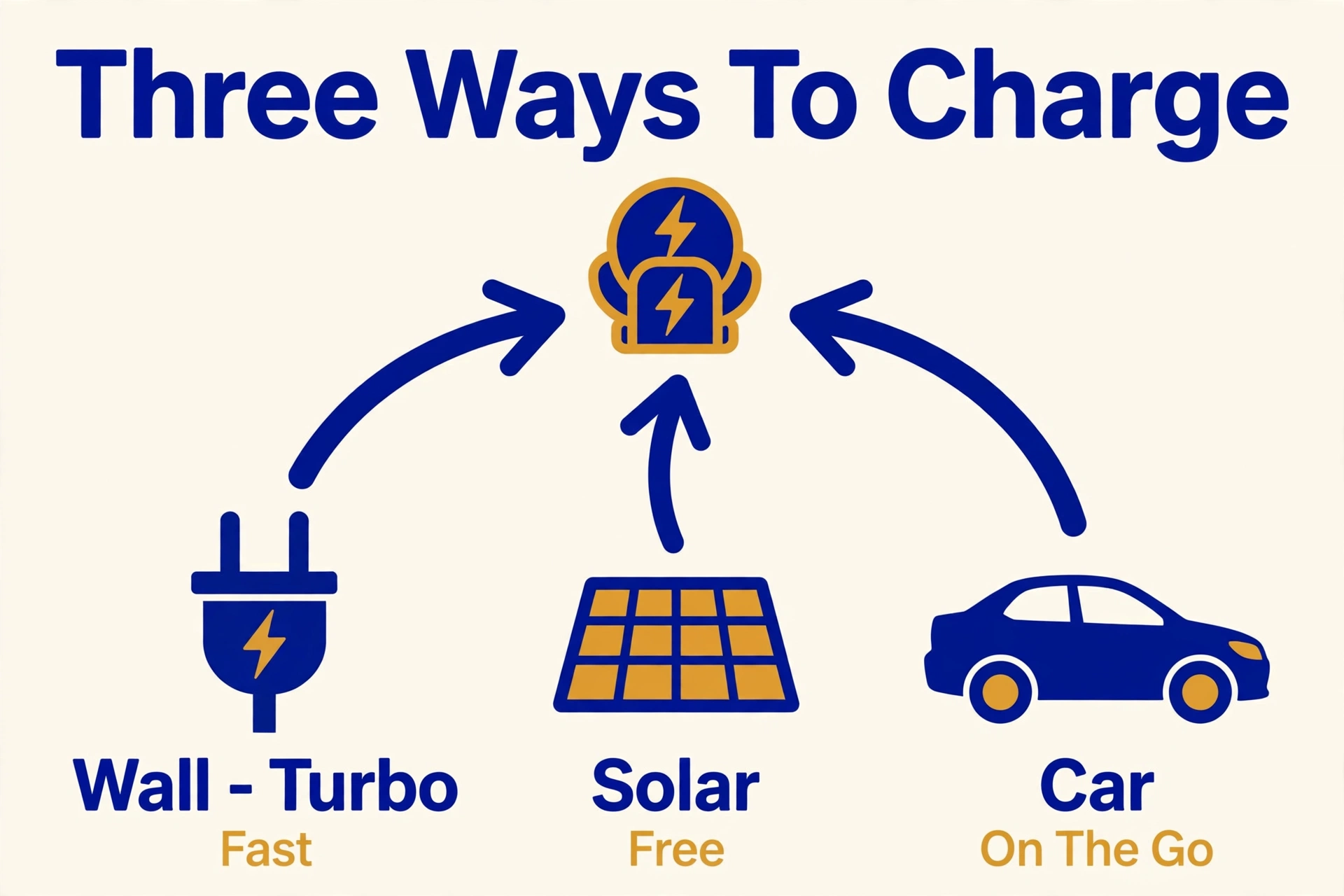
Charging speed is the AC180’s quiet superpower. The 1,440W turbo AC mode refills the 1,152Wh battery from empty in about an hour (0–80% in roughly 45 minutes, per Bluetti) — dramatically faster than the 6–8 hour trickle of older or smaller stations. That changes how you use it: top up at a lunch stop, recharge between outage waves, or refill at home before a trip without planning the night before. A quieter standard mode charges slower for overnight top-ups when speed does not matter.
Solar input maxes at 500W through the built-in MPPT controller (12–60V range, 10A max). First, in good sun, a 400–500W array refills the station in roughly 3–4 hours of real-world output — a comfortable single-day recharge at basecamp. Second, the 60V ceiling means most single residential-style panels and all portable camping panels pair fine, but check any panel’s open-circuit voltage before wiring odd combinations. Bluetti’s own portable panels are the zero-guesswork pairing.
Car charging from a 12V/24V outlet works for road-trip top-ups, though at modest wattage — think maintenance charging between camps, not a fast refill. The station also supports pass-through charging, so you can run loads while it charges without the battery-cycling penalty that plagued older designs.
Ports, Display, and App Control
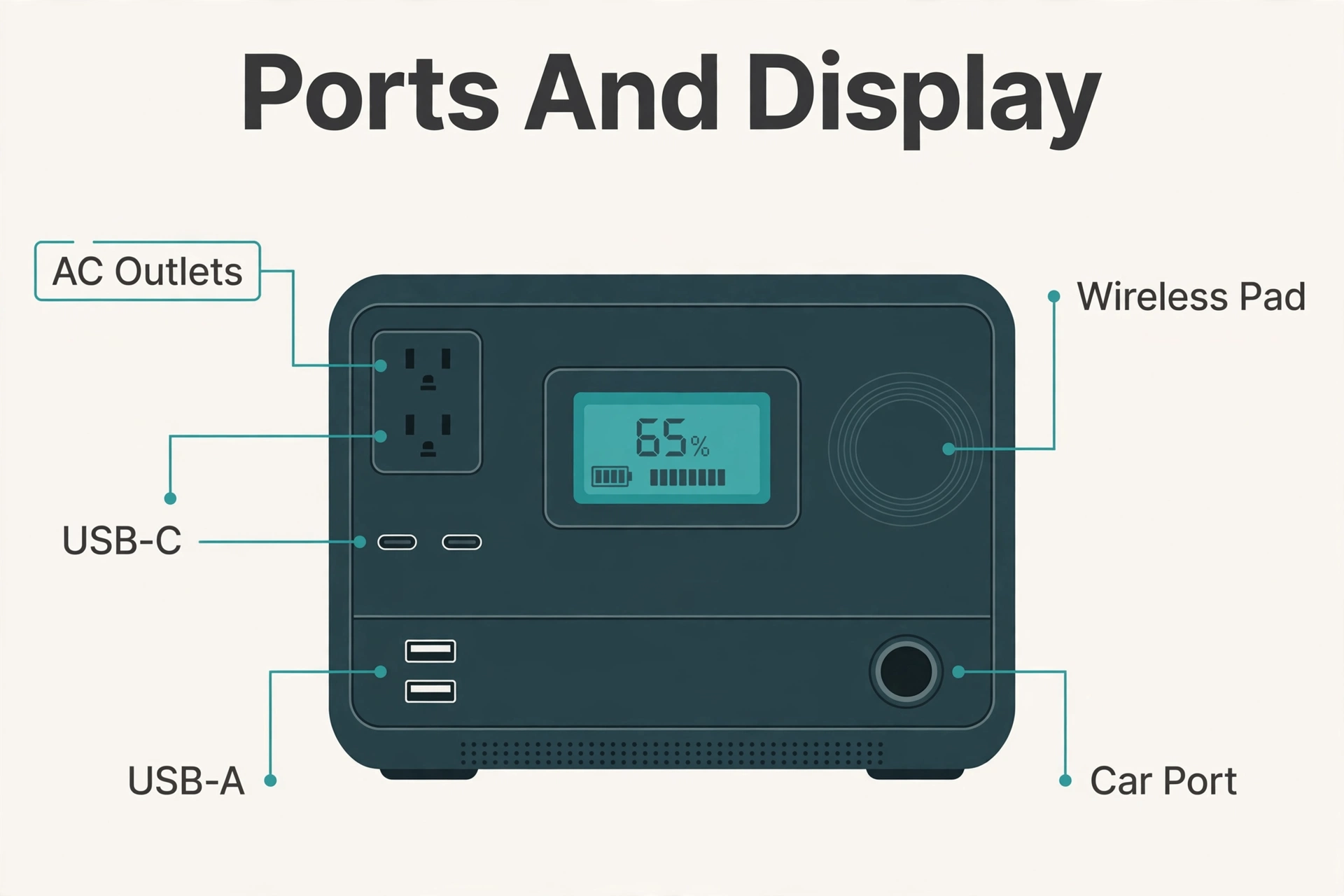
The port selection is generous for the class: four AC outlets, a 100W USB-C port that fast-charges modern laptops directly (no brick needed), four USB-A ports for the small stuff, a 12V car port for the fridge, and a 15W wireless pad on top for dropping your phone onto at night. Eleven outputs total means the whole family’s devices charge simultaneously without a power strip.
The front LCD shows the essentials — remaining capacity, input/output wattage, and time-to-empty/full estimates — in a layout you can read at a glance from across the campsite. Finally, the Bluetooth app adds remote monitoring, output toggling, charging-mode switching (turbo vs standard vs silent), and Power Lifting control. Meanwhile, bluetooth range is the limitation: it is a near-field remote, not a check-from-town monitor. For most users the screen covers 90% of needs and the app covers the settings.
UPS Mode: Legitimate Home Backup
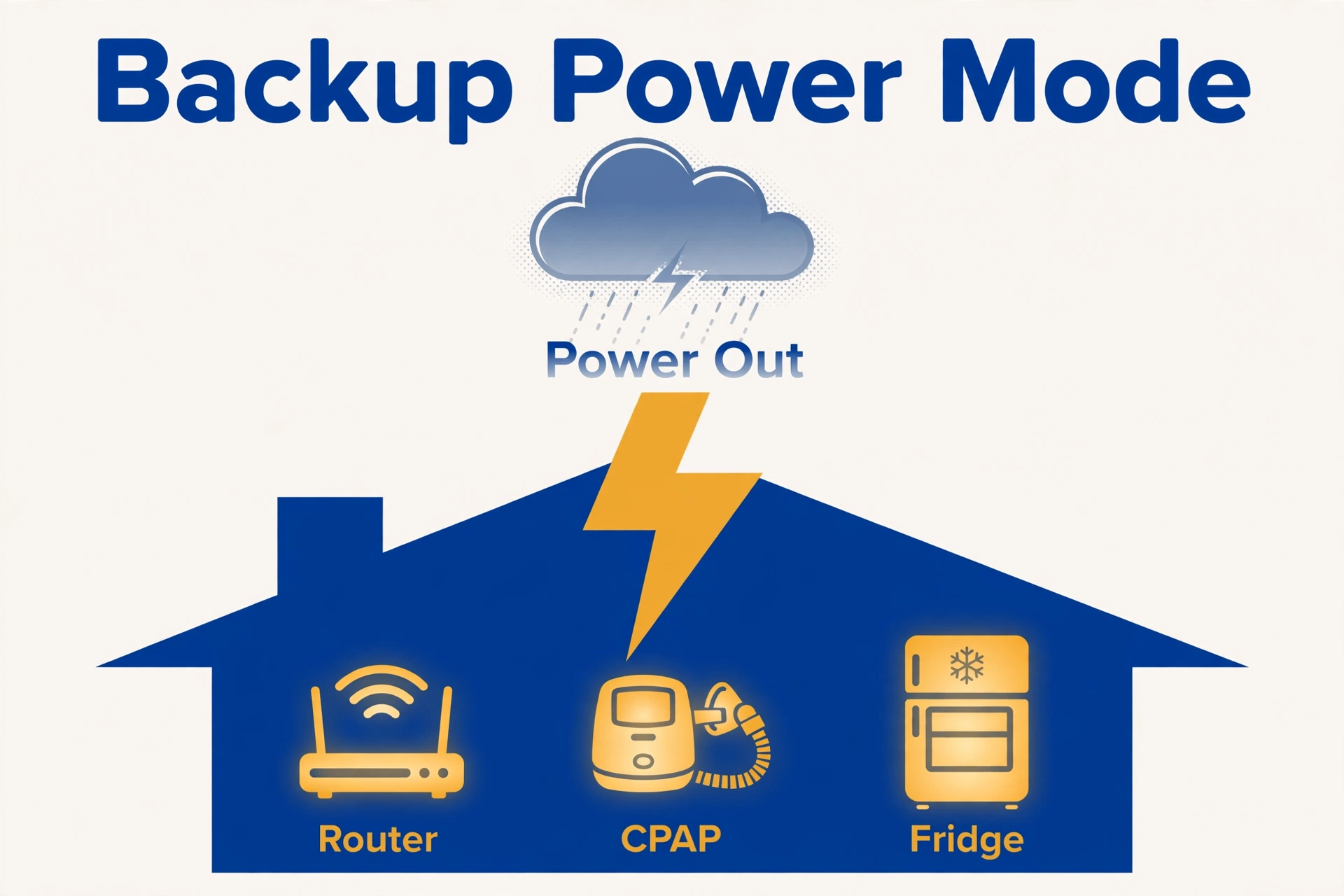
The AC180 doubles as an uninterruptible power supply with a ≤20ms switchover — fast enough that a desktop computer, Wi-Fi router, or CPAP rides through a blackout without rebooting. Plug critical loads through the station permanently and it sits at full charge, silently guarding against outages.
Be realistic about the limits: 1,152Wh keeps a router, a laptop, some lights, and a phone farm alive for many hours, and can carry a full-size fridge through a typical 4–6 hour outage. Nevertheless, it will not carry a house, run central HVAC, or survive a multi-day blackout alone. As a bridge that keeps essentials alive while you assess the situation — or while solar refills it the next day — it is exactly the right size for apartment and suburban outage prep.
Size, Weight, and Portability
At roughly 16kg (35 pounds) and 340 × 247 × 317mm, the AC180 sits in the “two-hand carry, vehicle-transported” tier. In fact, it is genuinely portable — the top handle is comfortable and the footprint fits a car trunk, RV bay, or tent vestibule easily — but nobody is backpacking with it. As a result, compared to older 1kWh-class stations it is compact for its capacity; compared to the 500Wh class it is a commitment.
Noise is a non-issue for most use: the fans stay quiet under light loads and only become audible during turbo charging or heavy sustained output. At a campsite it is effectively silent next to any gas generator, and indoors the fan is easy to ignore.
AC180 vs the Competition
The 1kWh LiFePO4 class is crowded, and the AC180’s rivals each trade something away. In contrast, jackery’s Explorer 1000 v2 plays in the same capacity band with a strong brand and retail presence, but typically costs more per watt-hour and charges slower from AC. Similarly, ecoFlow’s Delta 2 counters with famously fast AC charging and an expandable battery ecosystem — at a higher price and with a smaller base capacity.
The AC180’s pitch against both is value balance: 1,800W output (higher than most class rivals), 500W solar input, turbo charging, and a 5-year warranty, usually street-priced around $500–$700 — check the current price — which undercuts the big-brand flagships. Specifically, what you give up: no battery expansion (EcoFlow owners can add capacity later; AC180 owners cannot), and Bluetti’s app and display polish, while good, trails EcoFlow’s slightly.
For the full competitive field with current pricing, see our best portable power station roundup, where the AC180 sits alongside every serious alternative in this class.
Long-Term Ownership Notes
A few things that only become apparent after months of ownership. First, store the AC180 at 40–60% charge if it will sit unused for months — LiFePO4 is forgiving, but every lithium chemistry ages slowest at partial charge in a cool room. Second, the turbo-charging fan is the loudest thing about this station; if you charge overnight in a bedroom, switch to silent mode and let it trickle. Third, firmware updates via the app have historically added small refinements, so connect the app at least once after unboxing. None of these are drawbacks — they are the habits that separate owners who get a decade from the battery from owners who get five years.
Who Should Buy It — and Who Shouldn’t
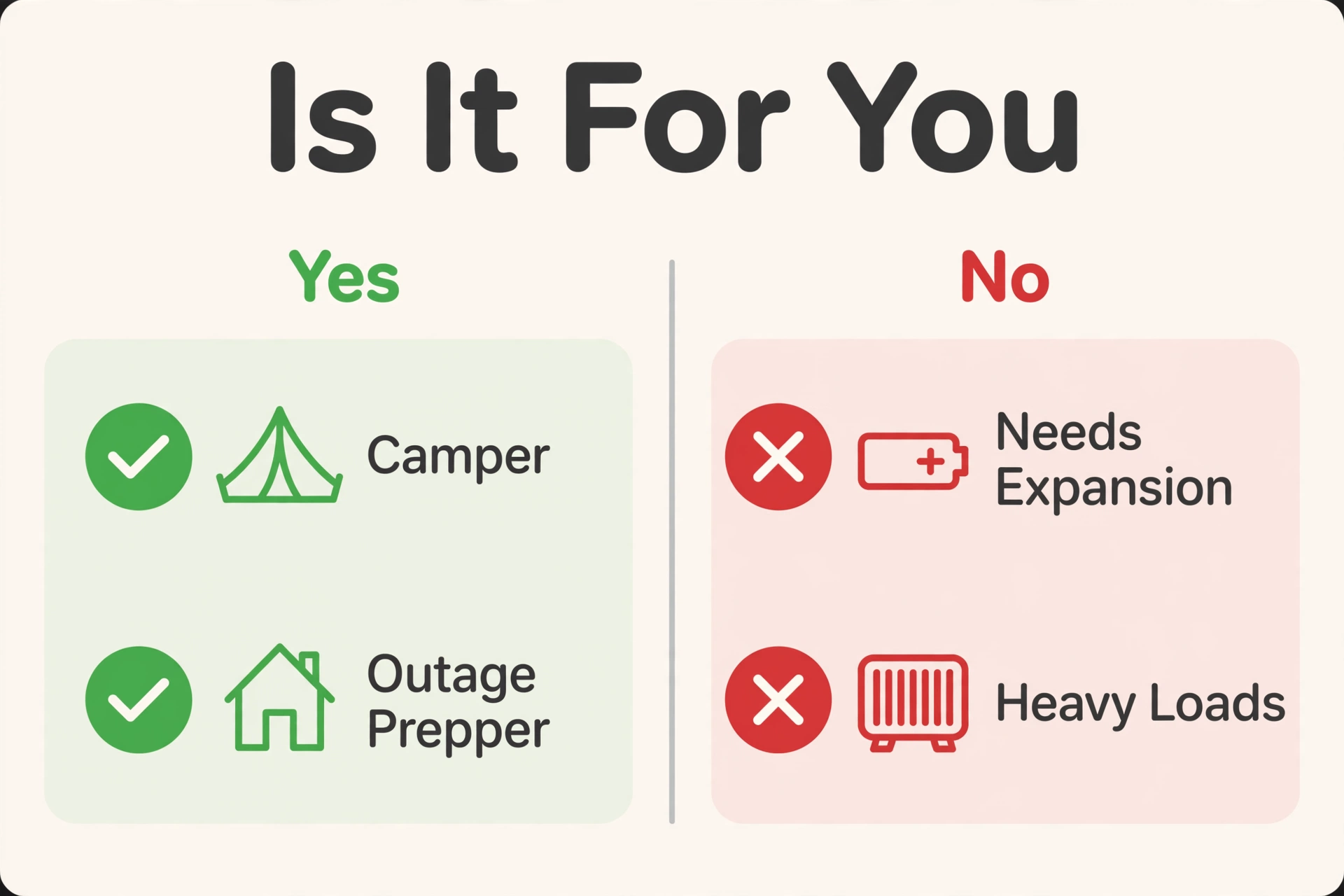
Buy it if: you camp or road-trip with a 12V fridge and want 2–3 days per charge; you want silent outage backup for essentials (router, fridge, CPAP, laptops); you value fast AC recharging and strong solar input; or you want LiFePO4 longevity with a 5-year warranty at a mid-range price.
Skip it if: you need expandable capacity for multi-day off-grid living (look at expandable ecosystems instead); you regularly run 1,800W+ loads like big heaters or full electric kitchens (size up to the 2kWh class); or every pound matters and your loads are phones-and-lights only (a 500Wh station saves weight and money).
Price and Value
The AC180 typically sells for around $500–$700 depending on sales and bundles — check the current price before buying, as Bluetti runs frequent promotions and solar-panel bundles that change the value math significantly. However, at that street price it is one of the cheapest ways into a true 1,800W LiFePO4 station from a major brand, and the 5-year warranty is a full tier above the 2-year coverage many budget rivals offer.
Value judgment: you are paying mid-range money for upper-mid-range specs, with the non-expandable battery as the one structural compromise. For example, for buyers who know 1,152Wh is enough — campers, outage preppers, van weekenders — that compromise never bites, and the AC180 is simply a lot of station for the money.
Frequently Asked Questions
How long does the Bluetti AC180 last on a charge?
It depends on the load: roughly 48 hours running a 12V camping fridge, 13–16 hours on a laptop, 8–10 hours on a 100W TV, or about 1.4 hours on a 700W microwave (using 1,152Wh ÷ watts × 0.85). In addition, Bluetti rates the battery for 3,500+ cycles to 80% capacity, so lifespan is measured in years of regular use.
Can the AC180 run a refrigerator?
Yes — both kinds. Furthermore, a 12V camping fridge is effortless (days of runtime). Moreover, a full-size home fridge (around 150W running) runs fine through typical outages, with the 1,800W inverter absorbing compressor startup surges; expect roughly 6–8 hours depending on the fridge’s efficiency and ambient temperature.
How fast does the AC180 charge with solar?
Up to 500W of solar input through its MPPT controller. Also, with a 400–500W array in good sun, Bluetti’s math works out to roughly 3–4 hours from empty in real-world conditions. First, a single 200W portable panel needs a full long solar day.
Does the Bluetti AC180 work as a UPS?
Yes. Second, it switches to battery in ≤20ms during an outage — fast enough for computers, routers, and CPAP machines to ride through without interruption. Finally, keep critical loads plugged through it permanently for always-on protection.
Can the AC180 charge while powering devices?
Yes — it supports pass-through charging, so you can run your fridge and charge phones while the station itself recharges from AC or solar. Meanwhile, the battery is bypassed for the load where possible, which avoids unnecessary charge cycles and keeps everything running through long solar days at basecamp.
Is the AC180 expandable with extra batteries?
No — the AC180 has no expansion battery option. Nevertheless, the 1,152Wh capacity is fixed. If you think you will need more storage later, consider an expandable platform instead; if 1,152Wh covers your loads, the AC180’s lower price is the reward for committing.
The Bluetti AC180 solar portable power station earns its popularity the honest way: a big LiFePO4 battery, a genuinely strong 1,800W inverter, fast charging on both AC and solar, and a price that undercuts its brand-name rivals — with the single real compromise being fixed, non-expandable capacity. In fact, for camping, road trips, and essential-load outage backup, it is one of the easiest recommendations in the 1kWh class. Compare it against the full field in our best portable power station roundup before you decide.
