

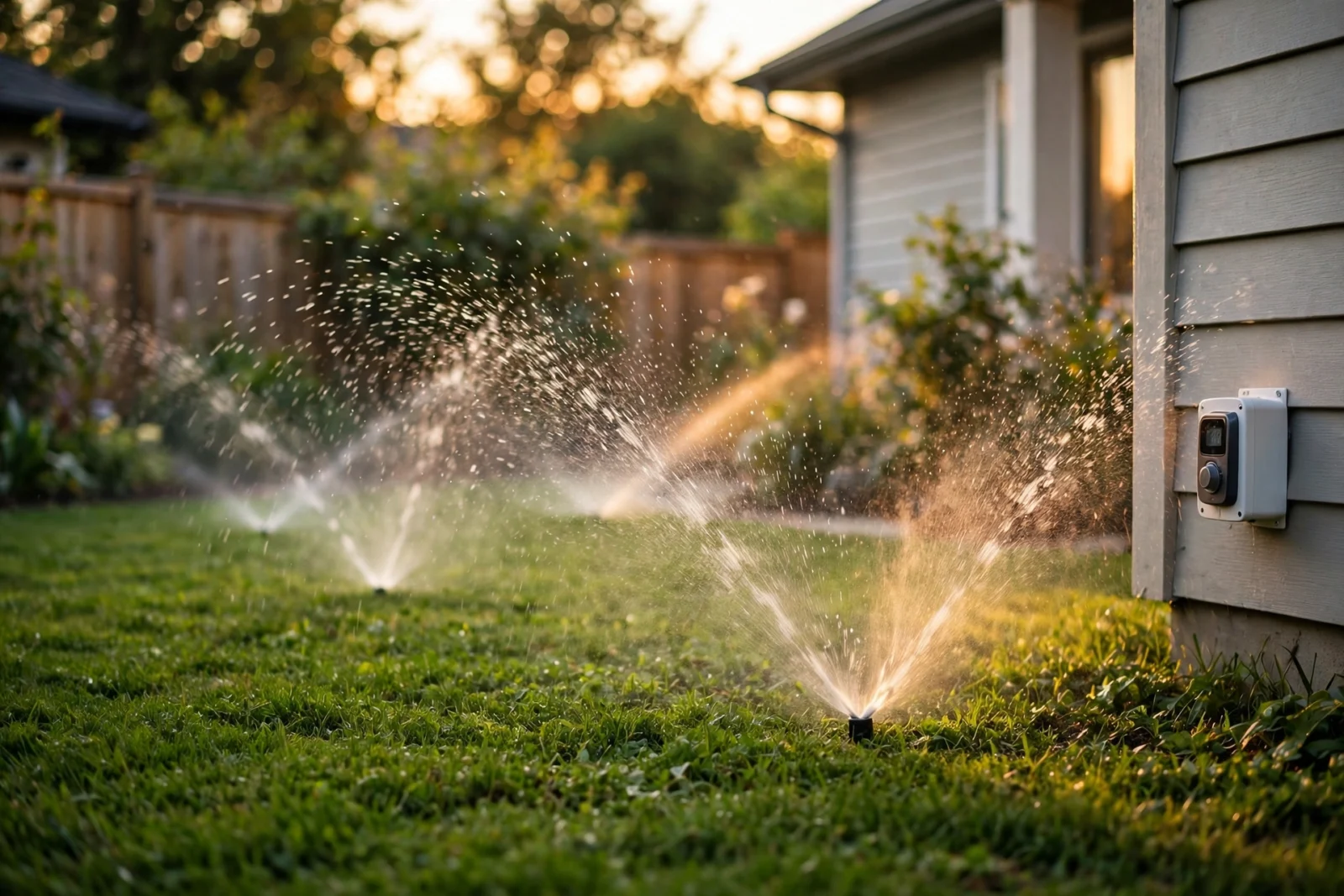
The best smart irrigation system for most homes in 2026 is the Rachio 3. Its ET-based weather intelligence waters each zone only what it needs, the app is the best in the category, and it pays for itself through lower water bills. On a budget, the Orbit B-hyve delivers most of the smarts for roughly half the price. Here are the five controllers worth buying, and how to pick the right one for your yard.
How to Choose a Smart Irrigation Controller
All smart controllers replace your old timer and adjust watering based on weather. Four things separate the good from the great:
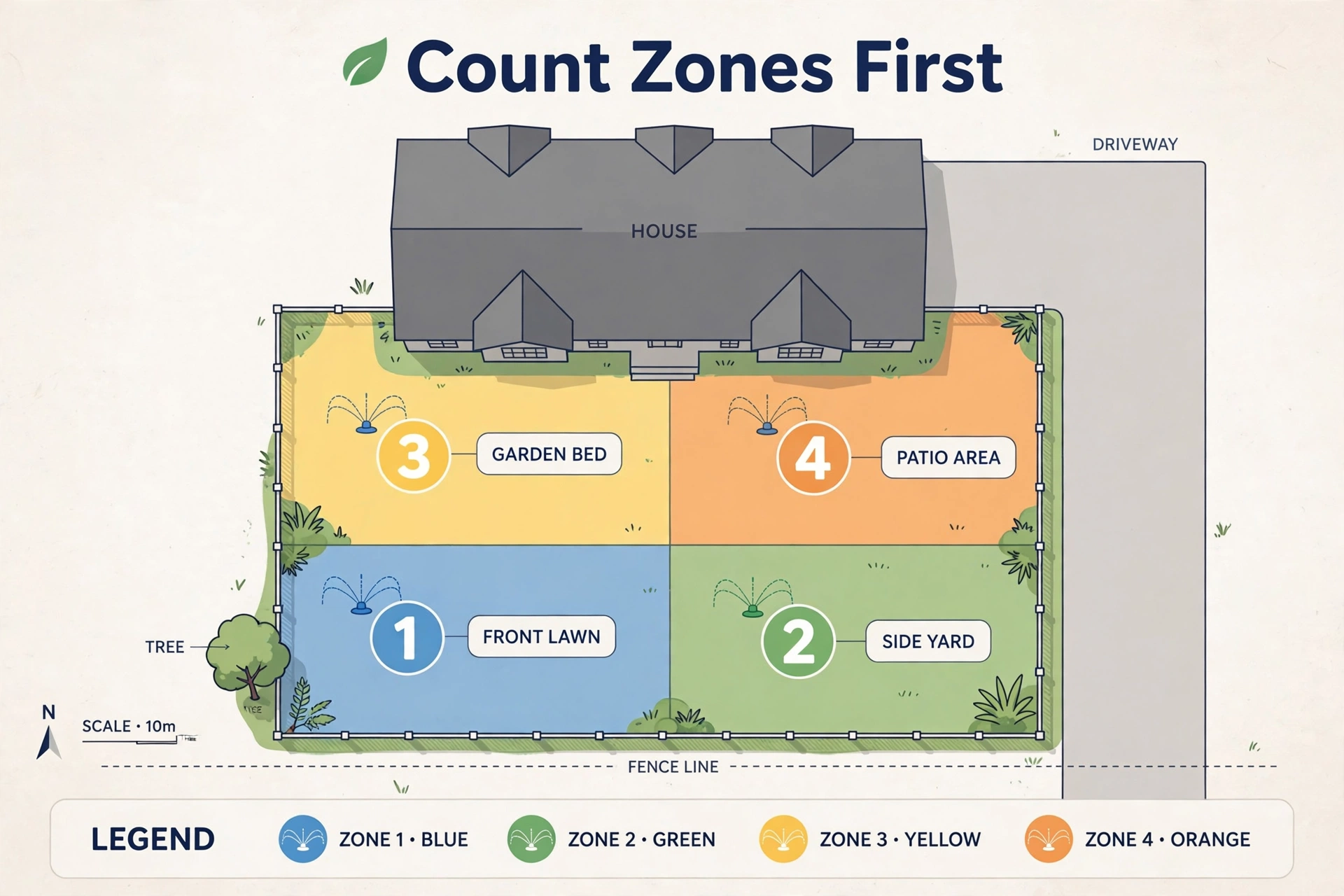
Count Your Zones First
A “zone” is one independently controlled watering circuit — front lawn, back lawn, flower beds, drip lines. Count them on your old controller before shopping. Most suburban homes need 4 to 8 zones; large properties need 12 to 16. Buying a 16-zone controller for 5 zones wastes money, and daisy-chaining two controllers is a headache you don’t want.
Weather Intelligence Quality
Basic controllers skip watering when rain is forecast. Better ones calculate evapotranspiration (ET) — how much moisture your soil actually lost — and adjust each zone’s duration accordingly. ET-based scheduling (Rachio’s Flex Daily is the benchmark) saves noticeably more water than simple rain-skip, especially in spring and fall.
App and Reliability
You will live in this app every week of the watering season. Look for clear zone setup (soil type, plant type, sun exposure), honest watering history, and reliable scheduling. Owner reviews are the best signal here — a pattern of missed runs or app crashes is a red flag no feature list can offset.
Rebates Change the Math
EPA WaterSense certified controllers qualify for utility rebates in many districts — often $50 to $100 or more. A rebate can make a budget controller nearly free or knock a premium one down to mid-range money. Check your water district’s qualifying-products list before you buy.
The Best Smart Irrigation System for Most Homes: Our 5 Picks (2026)
1. Rachio 3 — Best Overall
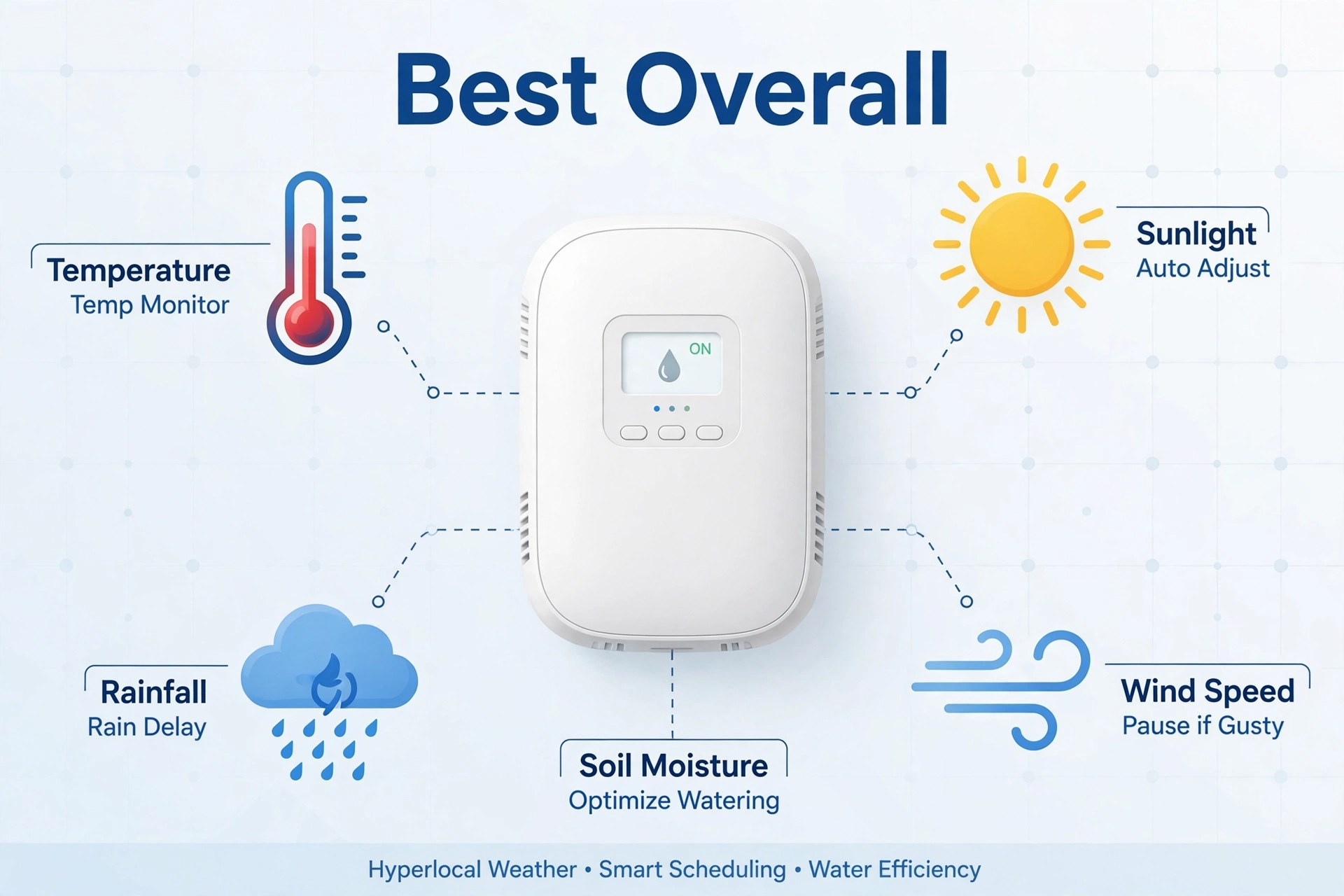
The Rachio 3 is the best smart irrigation system for most homeowners because it does everything well: 8 or 16 zones, Weather Intelligence Plus with hyperlocal ET calculations, the category’s best-rated app, and native Alexa, Google Home, and Apple HomeKit support. Setup takes most people under an hour, and the Flex Daily schedules genuinely run themselves after that.
It costs around $180 to $250 for the 8-zone model. The free tier covers everything most people need; an optional Premium subscription (around $49 a year) adds extras like heat-wave boosts. Note it needs a separate enclosure for outdoor mounting and only speaks 2.4 GHz WiFi. For the head-to-head detail, read our Rachio vs Orbit B-hyve comparison.
Best for: Most homeowners who want the smartest watering with the least fuss.
Watch out for: Premium price; outdoor enclosure sold separately; 2.4 GHz WiFi only.
2. Orbit B-hyve XR — Best Value
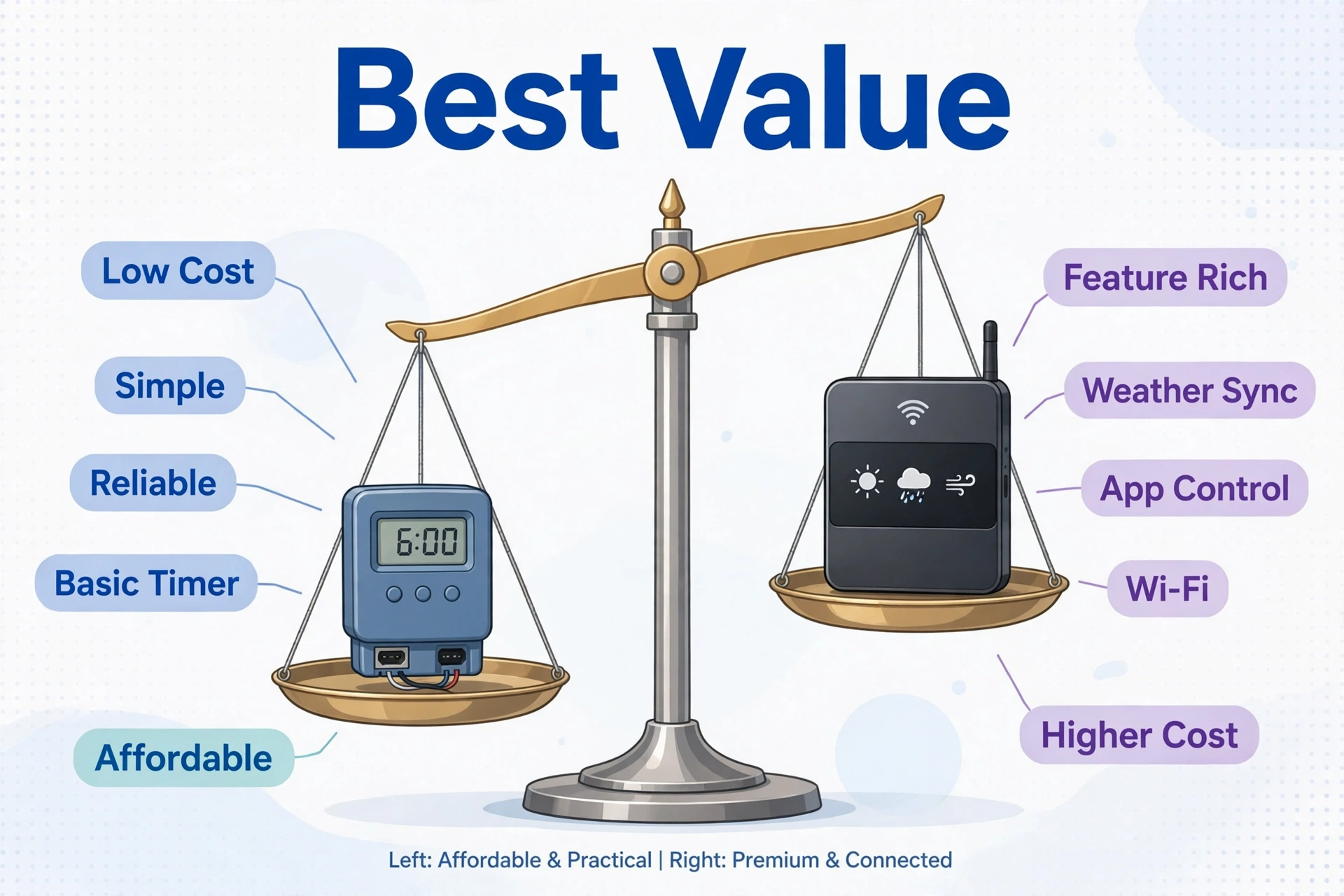
The Orbit B-hyve XR delivers roughly 80% of the Rachio experience for about half the money — around $90 to $130 for 8 zones. You get weather-based skips, app control, EPA WaterSense certification, dual-band WiFi plus Bluetooth, and a weatherproof locking cabinet included in the box.
The trade-offs are real but fair at this price: the weather logic is simpler rain-skip rather than ET-based, there is no HomeKit support, and owner reviews report more app hiccups than Rachio’s. Still, for a first smart controller or a rental property, it is hard to argue with the price — and the included weatherproof cabinet means zero hidden costs.
Best for: Budget buyers and outdoor mounting with no accessories.
Watch out for: Simpler weather logic; no HomeKit; app reliability is a step below Rachio.
3. RainMachine Touch HD-12 — Best for Privacy / No-Cloud
The RainMachine is the pick for anyone who dislikes cloud dependency. It downloads weather forecasts and computes everything locally on the device — if your internet goes down, your schedules keep running. The 12-zone Touch HD model has a color touchscreen on the unit itself, a rarity in this category.
It costs around $260 to $290, putting it at the premium end, and the app is functional rather than delightful. But for the privacy-minded or the rural homeowner with flaky internet, local processing is a killer feature nobody else offers. It also means your schedules survive even if the manufacturer ever discontinues cloud support — a quiet long-term advantage.
Best for: Privacy fans and homes with unreliable internet.
Watch out for: Premium price; app less polished than Rachio’s.
4. Netro Sprite — Best Budget
The Netro Sprite is the cheapest credible smart controller — typically the lowest-priced option in this roundup, so check the current price. It covers the essentials: weather-based scheduling, app control, and EPA WaterSense certification, in 6- and 12-zone versions.
Expect a simpler app and fewer integrations than the big two. But if your goal is “stop watering the sidewalk during rainstorms” for minimum money, the Sprite gets it done — and its WaterSense certification keeps rebate options open.
Best for: Minimum spend for genuinely smart watering.
Watch out for: Basic app; fewer smart-home integrations.
5. Rain Bird ST8I-WiFi — Best for Existing Rain Bird Systems
If your valves, heads, and rotors are already Rain Bird, the ST8I-WiFi (around $150 for 8 zones) slots into that ecosystem neatly with solid app control and reliable weather skips. It is a well-built, no-drama controller from the biggest name in irrigation hardware.
It won’t out-smart the Rachio on weather intelligence, but for brand-loyal yards it is the path of least resistance — same app family as Rain Bird’s other gear, pro-installer friendly, and widely stocked at home improvement stores. If you ever hire an irrigation contractor, chances are they already know this controller inside out, which makes service calls simpler down the road.
Best for: Homes already running Rain Bird hardware.
Watch out for: Weather logic is good, not best-in-class.
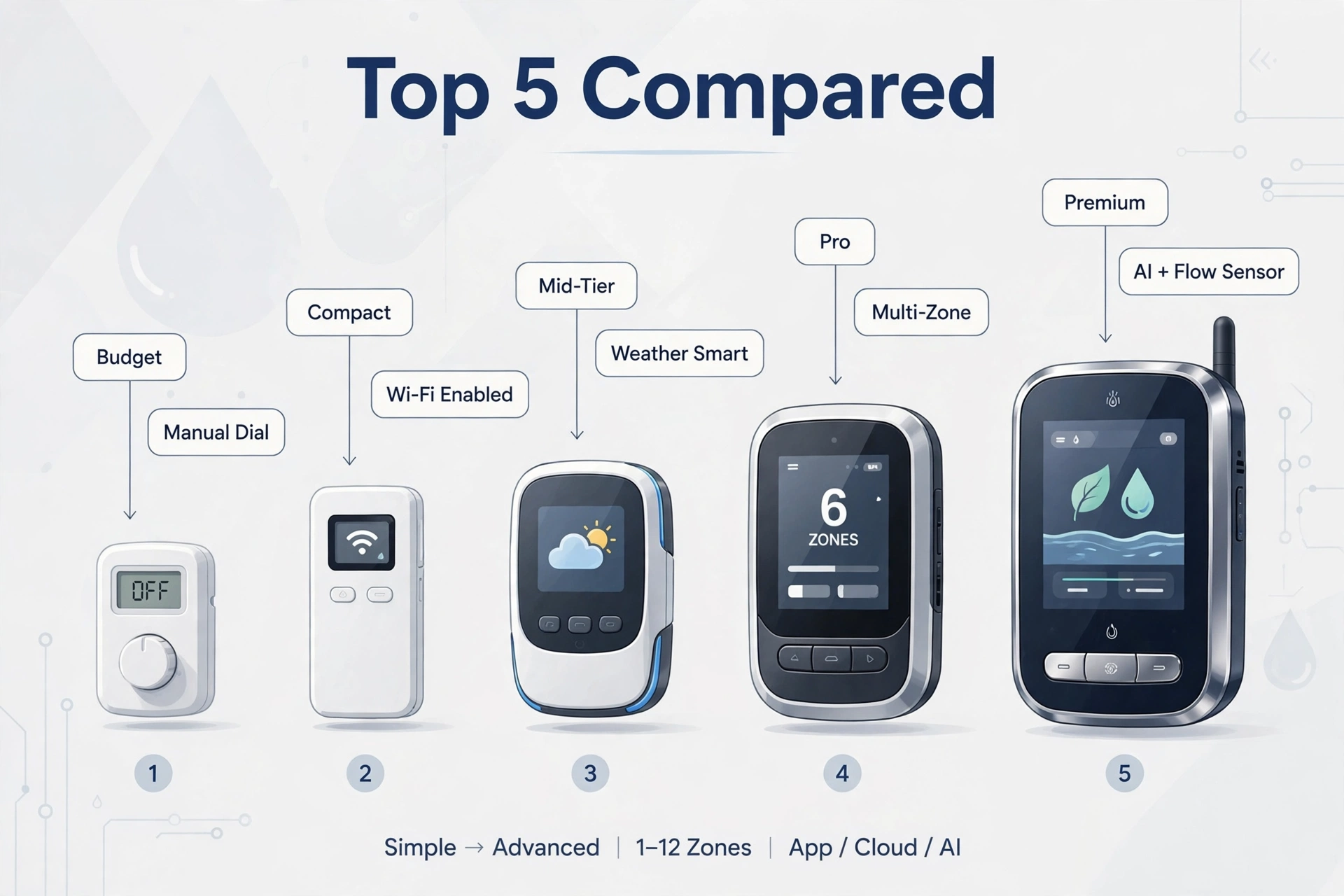
Table: The 5 best smart irrigation systems compared (2026)
| Feature | Rachio 3 | Orbit B-hyve XR | RainMachine HD-12 | Netro Sprite | Rain Bird ST8I |
|---|---|---|---|---|---|
| Zones | 8 / 16 | 8 / 16 | 12 | 6 / 12 | 8 |
| Price range | Around $180–$250 | Around $90–$130 | Around $260–$290 | Budget pick | Around $150 |
| Weather approach | ET-based Flex Daily | Forecast rain-skip | Local forecast processing | Weather-based | Cloud weather skips |
| Cloud dependency | Full | Full (Bluetooth local) | None (local) | Full | Full |
| Outdoor ready | Enclosure extra | Cabinet included | Outdoor rated | Enclosure extra | Outdoor rated |
| Voice assistants | Alexa, Google, HomeKit | Alexa, Google | Alexa, Google | Alexa, Google | Alexa, Google |
| WaterSense certified | Yes | Yes | Yes | Yes | Yes |
Features Worth Paying For (and Gimmicks to Skip)
Not every “smart” feature earns its keep. Worth paying for: ET-based scheduling (the core water saver), flow monitoring (alerts you to broken heads and leaks — available natively on some controllers, add-on for others), and good zone customization (soil, plant, sun, slope inputs).
Nice but optional: voice control (fun to demo, rarely used weekly), touchscreen on the unit (handy during setup, then ignored), and premium subscriptions (Rachio’s free tier covers the essentials; only enthusiasts need the extras).
Marketing fluff to ignore: “AI-powered” labels on basic rain-skip, zone counts far beyond your yard, and app screenshots showing features locked behind subscriptions. Judge a controller on its watering logic and app reliability, not its buzzwords — those two things determine your experience every single week.
Winterization and Seasonal Care
If you live where pipes freeze, winterization is non-negotiable: blow out the lines with compressed air (or hire it out — usually $50 to $100), then put the controller in standby or rain-delay mode for the season. Smart controllers make spring startup easier with guided zone tests.
In warm climates, do a seasonal audit instead: check each zone’s runtime against actual plant needs twice a year, clean filter screens on drip zones, and walk the yard monthly for broken heads. A smart controller can’t fix a cracked sprinkler head — but flow monitoring can tell you about it before your water bill does.
Do You Even Need to Replace Your Controller?
Before spending money, check whether your current timer is the real problem. If your lawn has brown spots in a pattern, the issue is usually coverage — misaligned heads, clogged nozzles, or mismatched zones — and no smart controller fixes bad hydraulics. Walk the yard during a manual run first.
Replace the controller when: your timer can’t do odd/even day restrictions your city requires, you want rain skips without thinking about them, or you’re tired of reprogramming after every power outage. Keep the old timer if the lawn looks great and your water bill is already reasonable — smart features solve specific pains, not imaginary ones.
Installation Tips
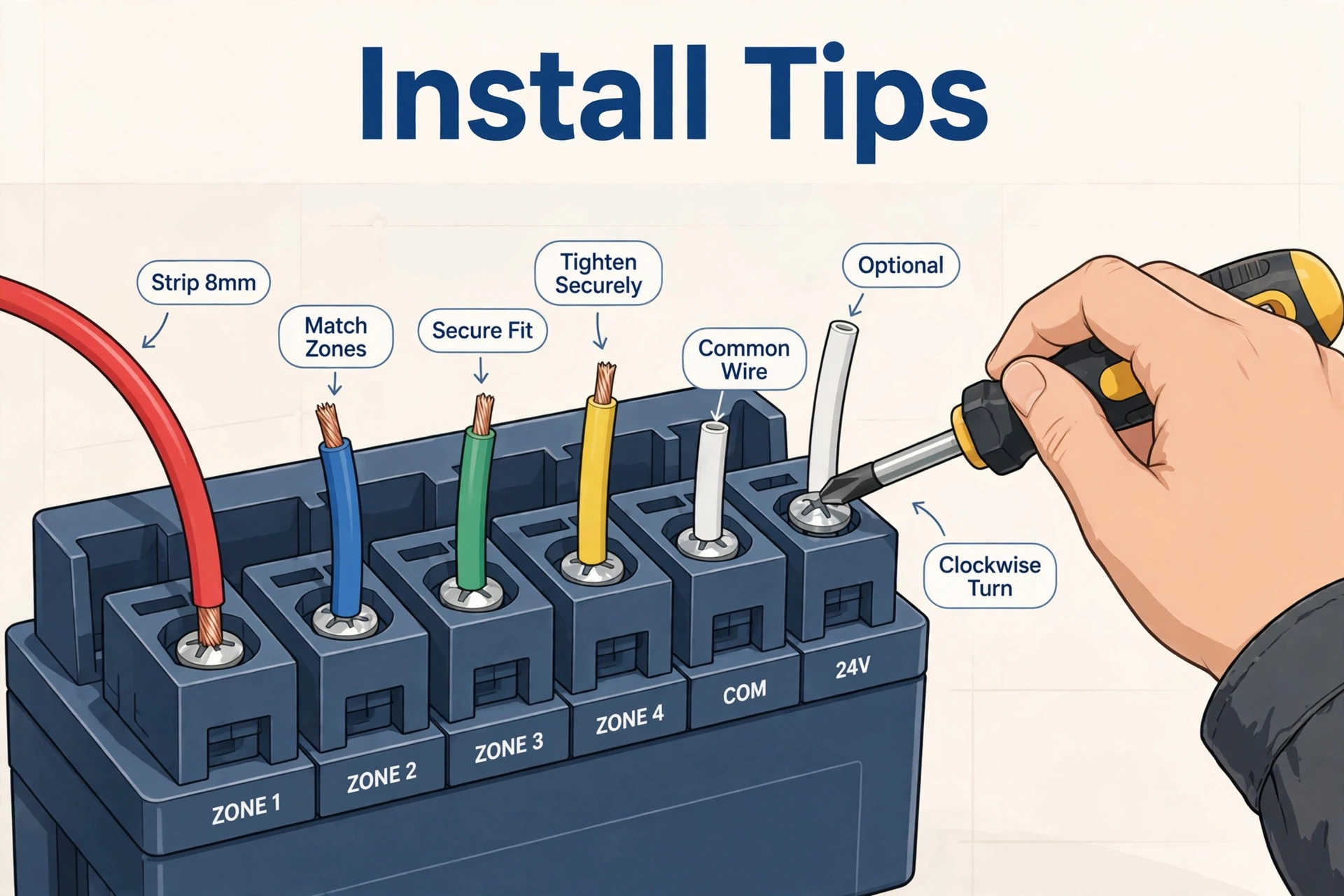
- Photograph the old wiring first. Label every zone wire before you disconnect anything — this one photo saves more headaches than any other step.
- Kill the power. Unplug the old transformer’s power before touching terminals. 24V AC is low voltage, but a short can still fry hardware.
- Test WiFi at the mounting spot. Controllers live in garages and on exterior walls — classic dead zones. Walk out there with your phone and check signal strength before mounting. If it is weak, a mesh WiFi system built for smart homes fixes the controller’s connection along with everything else.
- Set soil and plant types honestly. The smart schedules are only as good as the data you feed them. Take five minutes per zone to set soil type, sun exposure, and slope — this is what makes ET scheduling accurate.
- Run each zone manually once. After setup, trigger every zone from the app and walk the yard. You will catch broken heads, misaligned rotors, and wiring mistakes in one pass.
Frequently Asked Questions
Are smart sprinkler controllers worth it?
Yes, for most homeowners. They typically cut outdoor water use by 20 to 30% versus a fixed timer, and with utility rebates many pay for themselves within one or two watering seasons. The convenience of never adjusting for rain alone is worth it.
How many zones do I need?
Count the zones on your existing controller — most suburban homes have 4 to 8. Each independently controlled circuit (lawn front, lawn back, beds, drip) is one zone. Buy the controller size that matches; oversizing wastes money.
Do smart controllers work without internet?
Most need internet for weather data and remote control, though stored schedules usually keep running during short outages. The RainMachine is the exception — it processes everything locally and doesn’t depend on the cloud. The Orbit B-hyve’s Bluetooth also allows local phone control without internet.
Can I install one myself?
Yes. They replace a standard 24V AC timer with the same wiring. Label wires, photograph the old setup, and most DIYers finish in 30 to 60 minutes with a screwdriver.
Will it work with my existing valves and sprinklers?
Yes. Nearly all residential systems use standard 24V AC valves, and every controller here drives them. You are replacing the timer brain, not the plumbing.
Which is better for a large property?
The Rachio 3 (16-zone) or RainMachine HD-12 (12-zone) for ET-based or local smarts at scale. For very large properties over 16 zones, you may need two controllers or a pro-grade system like Hunter Hydrawise.
Do smart controllers work with drip irrigation?
Yes. Set the zone type to drip (or emitter) during setup so the controller uses long, slow watering durations instead of spray-head timing. Drip zones benefit enormously from ET-based scheduling since overwatering is the most common drip mistake.
Conclusion
The best smart irrigation system in 2026 is the Rachio 3 for most homes — the smartest watering, the best app, and real water-bill savings. The Orbit B-hyve XR is the value king at half the price, the RainMachine suits the privacy-minded, the Netro Sprite covers basics on a budget, and the Rain Bird ST8I is the natural pick for Rain Bird yards. Check your utility rebates, check the current price, and buy before the spring rush — your lawn (and your water bill) will thank you by July.
