

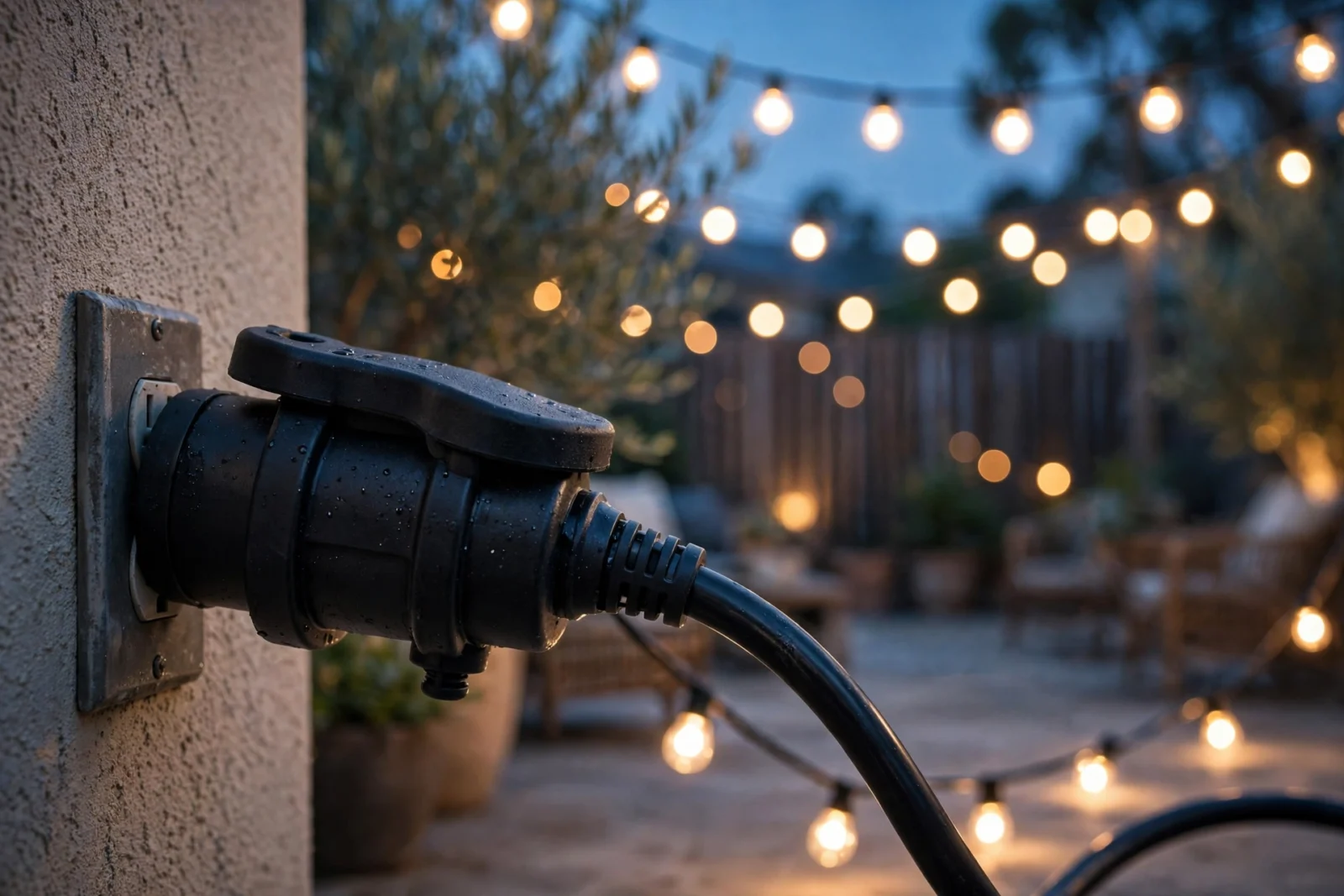
Need a smart plug that can handle a real appliance — not just a lamp? The best heavy duty smart plug is rated for a full 15 amps (1,800 watts at 120V), has a relay built for motor loads, and carries a real safety certification like UL or ETL. For example, for most homes, that shortlist is: the Leviton Decora Smart Wi-Fi Outlet for a clean in-wall install, the GE Cync Outdoor Smart Plug for anything outside, the Kasa KP401 as the budget outdoor pick, and the Eve Energy Outlet if you want Matter, Thread, and energy monitoring in one.
That sounds simple, but the smart plug shelf is full of 10-amp mini plugs that look tough and are not. Plug a 1,500-watt space heater into one of those and you are gambling with the relay inside it. This guide explains what “heavy-duty” really means, compares the four genuinely heavy-duty options I verified today, and walks through the safety math that keeps your house standing.
What “Heavy-Duty” Actually Means for a Smart Plug
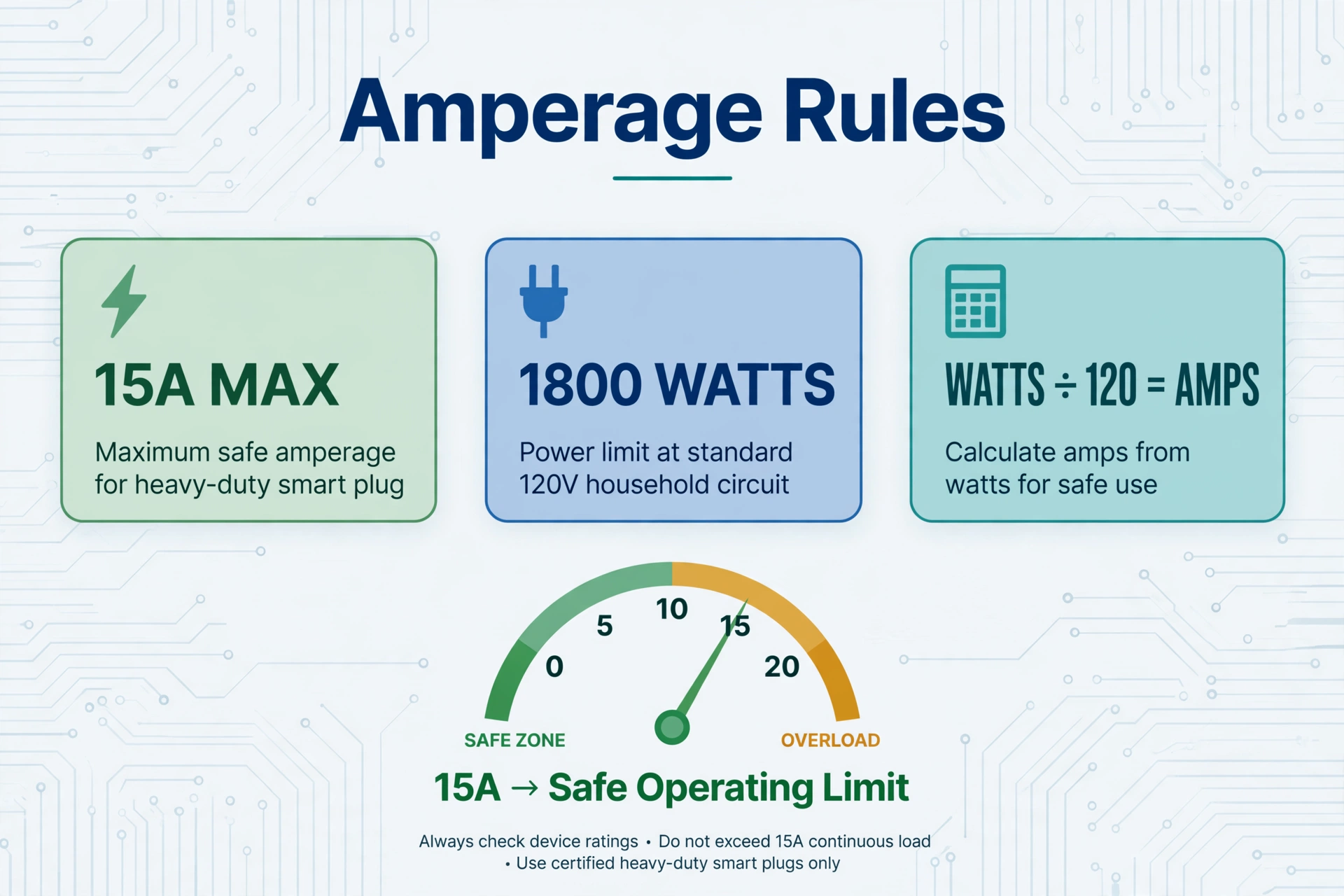
Every smart plug has three numbers that matter. The first is the amperage rating — the maximum current the plug’s internal relay can switch. The second is the wattage rating, which is just amps × volts. The third is the motor (horsepower) rating. Tells you whether the relay can survive the inrush current when a compressor or pump kicks on.
A true heavy-duty smart plug hits all of these marks:
- 15A / 1,800W general-use rating at 120V — the same ceiling as a standard US wall outlet, so the plug is never the weak link in the circuit.
- A stated motor or horsepower rating (for example, 1/2 HP or 3/4 HP) — this is what separates appliance-safe plugs from lamp-only plugs, since motors draw several times their running current for a split second at startup.
- A real safety listing — UL, ETL, or cULus marks on the product, not just a “CE” sticker or vague marketing copy.
- Built for the job site — a weather-resistant enclosure and cover for outdoor use, or a proper in-wall outlet form factor that replaces the receptacle instead of hanging off it.
Most cheap mini smart plugs are rated 10A — fine for a lamp or coffee maker, but 600 watts short of a full outlet’s capacity. If the product page does not clearly state the amperage, shop elsewhere for appliances.
Best Heavy-Duty Smart Plug: The 4 Picks Compared
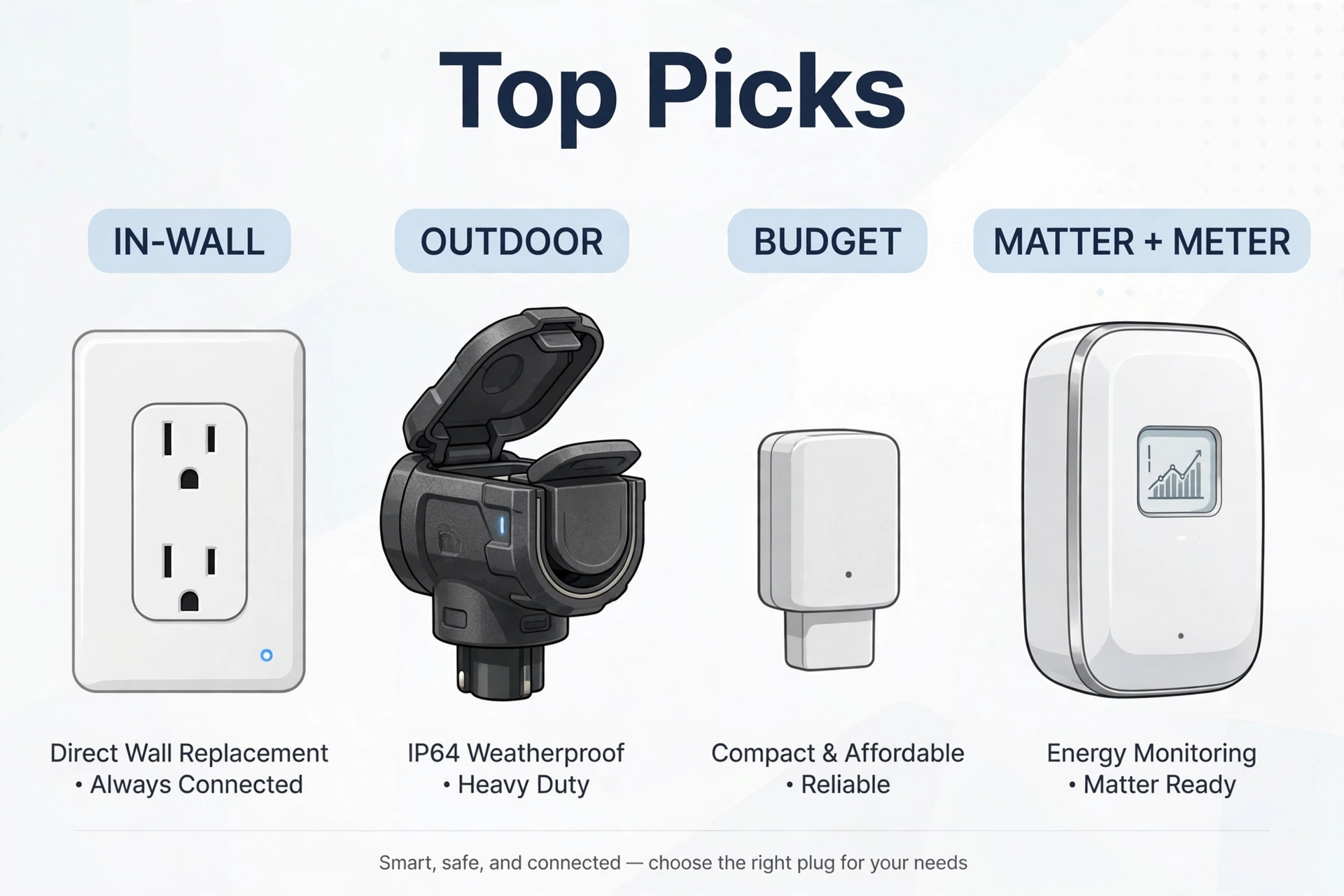
Every product below was verified against the manufacturer’s current specs on 2026-10-02. Prices are US street prices — re-check before you buy, since smart home gear goes on sale constantly.
| Model | Max amps / watts | Indoor / outdoor | Price |
|---|---|---|---|
| Leviton Decora Smart Wi-Fi Outlet (D215R) | 15A / 1,800W; motors up to 3/4 HP | Indoor, in-wall | $34.99 |
| GE Cync Outdoor Smart Plug | 15A / 1,800W; motors up to 1/3 HP | Outdoor (wet-rated) | $29.99 |
| Kasa KP401 Outdoor Smart Plug | 15A / 1,875W; motors up to 1/2 HP | Outdoor (IP64) | ~$20–$25 |
| Eve Energy Outlet (Matter) | 15A / 1,800W; motors up to 1/2 HP | Indoor, in-wall | $49.95 MSRP |
Leviton Decora Smart Wi-Fi Outlet (D215R) — Best In-Wall Pick
The Leviton D215R is the heavy-duty pick that disappears into your wall. It is a genuine Decora-style receptacle — the top outlet is app-controlled while the bottom stays always-on — rated for a full 15 amps of general use with a motor rating up to 3/4 HP, the strongest motor rating in this roundup. It is tamper-resistant, UL-listed, and works with Alexa, Google Assistant, Apple Home, and SmartThings with no hub.
Why it wins for appliances: because it replaces the receptacle, there is no bulky plug sticking out behind the washing machine or garage freezer. In addition, the relay was designed for real plug loads, not lamps. The My Leviton app gives you schedules, sunrise/sunset timing. In addition, an auto-shutoff feature — genuinely useful for a garage heater or holiday lighting circuit you want to forget about safely.
Two honest caveats. It needs a neutral wire in the box, so older wiring may rule it out — our guide on how to identify a neutral wire walks through checking before you buy. And at $34.99 on the official Leviton store page for the D215R, you are paying for the form factor and the 3/4 HP motor rating.
GE Cync Outdoor Smart Plug — Best Outdoor Pick
For the porch, patio, or yard, the GE Cync Outdoor Smart Plug is the straightforward choice. It is wet-rated with a weatherproof cover, IP64-rated against dust and splashing water, and handles 15A / 1,800W across two individually controlled outlets. That dual-outlet design is the practical win: run the string lights and the fountain on separate schedules from one plug.
The manual states general use up to 15A total and motor loads up to 1/3 HP, which covers landscape lighting, pond pumps, holiday displays, and most outdoor fans. In addition, control is over 2.4 GHz Wi-Fi through the Cync app with Alexa and Google Assistant voice support — no hub needed. At $29.99 on GE Lighting’s product page for the Cync outdoor plug, it is the cheapest 15-amp outdoor plug from a major brand.
The trade-offs: there is no energy monitoring, and the Cync ecosystem is Wi-Fi-only — if you are building a Thread/Matter home, this plug will not join that mesh. For pure outdoor switching duty, neither matters much.
Kasa KP401 Outdoor Smart Plug — Best Budget Pick
TP-Link’s Kasa KP401 does almost everything the GE Cync does for less money — street price is around $20–$25 at US retailers. The headline specs are genuinely heavy-duty: 15A / 1,875W max load, IP64 weather resistance, a 1/2 HP motor rating, ETL certification, and a 300-foot Wi-Fi range claim that matters when the plug lives at the far end of the yard.
It is a single-outlet design (versus the Cync’s two), but it adds SmartThings compatibility alongside Alexa and Google Assistant. In addition, the Kasa app’s scheduling is simple enough for anyone. Kasa also has a well-earned reputation for plugs that stay connected. In fact, the 2.4 GHz-only radio and long-range antenna design are clearly built for outdoor distance.
The one catch is availability: stock moves in and out at third-party sellers, so if it is backordered, the GE Cync at $29.99 is the easy substitute. Like the Cync, there is no energy monitoring — you are buying a rugged remote switch, not a meter.
Eve Energy Outlet (Matter) — Best for Energy Monitoring
The Eve Energy Outlet is the premium in-wall option: a duplex receptacle replacement with Matter over Thread, a 15A / 1,800W resistive rating, a 1/2 HP motor rating, and UL certification. Each of the two outlets is individually controlled, and — the reason it is here — it reports real energy consumption per outlet through the Eve app, Apple Home, or SmartThings.
That makes it the only pick in this roundup that both switches a heavy load and tells you what that load costs. Pair it with our best energy-monitoring smart plug guide to see how plug-level metering compares, and our whole-home energy monitor roundup if you want the full-panel picture instead.
The price is the premium part: $49.95 MSRP, with street prices usually landing between $40 and $55. You also need a neutral wire and a Thread border router (a HomePod mini, recent Echo, or SmartThings hub covers this) plus a Matter controller. Moreover, if you are already in the Matter/Thread world, this is the heavy-duty outlet to get. If you are not, the Leviton gives you the same 15A rating over plain Wi-Fi for less money.
Note: the iDevices Wall Outlet, a decent 15A in-wall option in its day, is now listed as discontinued by Hubbell — buy the Leviton or Eve instead of hunting leftover stock with no firmware future.
Safety First: The Amperage Rules You Cannot Skip
Read this section before you plug anything in. Also, it is the most important part of this guide.
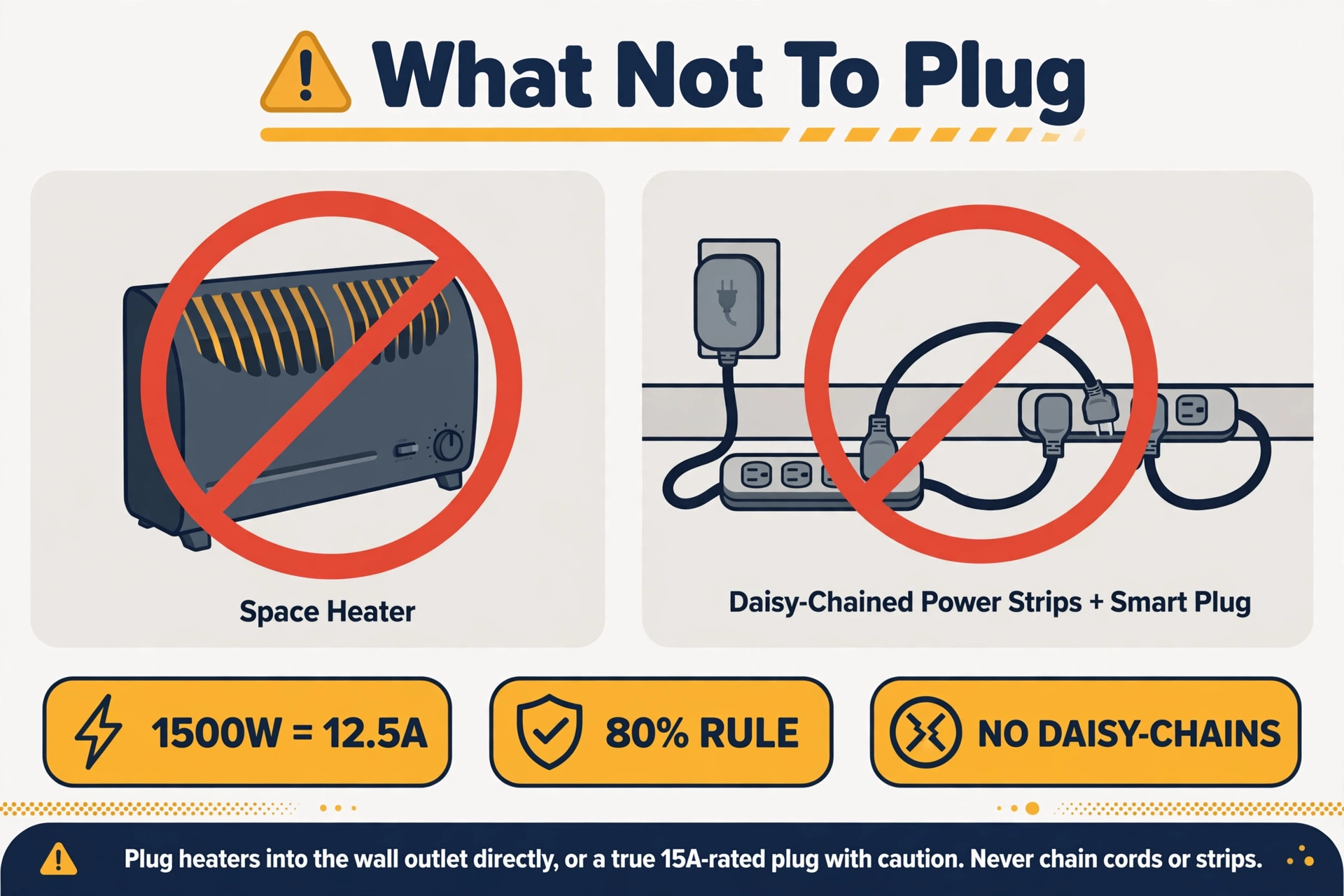
Do the math first. First, amps = watts ÷ volts. Second, in the US, that is watts ÷ 120. A 1,500-watt appliance draws 12.5 amps. A 1,000-watt appliance draws about 8.3 amps. If the result is higher than the plug’s rating, do not plug it in — full stop.
Respect the 80% rule for continuous loads. Finally, electrical code treats anything running for 3+ hours as a “continuous load” and wants it at 80% of the circuit rating or less. Meanwhile, on a 15A plug, that means about 12A / 1,440W for all-day use. A 1,500W space heater at 12.5A technically fits a 15A rating — but running it at that edge for hours, unattended, is exactly how relays overheat. If your appliance runs continuously near the limit, use a dedicated smart switch wired for the job, or run the appliance directly and use the smart plug only for monitoring elsewhere.
Motors and compressors are special. Nevertheless, anything with a motor — window AC units, shop vacs, pool pumps, refrigerators, power tools — draws a brief inrush current at startup that can be several times its running draw. In fact, that is why the horsepower rating matters: a plug rated “15A general use” but with no motor rating was not tested for that spike. Only use plugs that state a motor/HP rating for motor loads, and check the appliance’s nameplate amps against it.
Never daisy-chain. As a result, do not plug a smart plug into a power strip, an extension cord into a smart plug, or two smart plugs into each other. In contrast, every connection adds resistance and heat, and the ratings assume a direct wall connection.
Know what these plugs cannot do. No 15A/120V smart plug can run a 240V appliance — electric dryers, ranges, and central AC units are on a different circuit entirely and need dedicated 240V smart controls installed by a professional. And when in doubt about any of this — old wiring, aluminum wiring, a breaker that trips often — consult a licensed electrician before adding smart control to a heavy load. A $150 service call is cheaper than a fire.
Indoor vs Outdoor: Pick the Right Enclosure
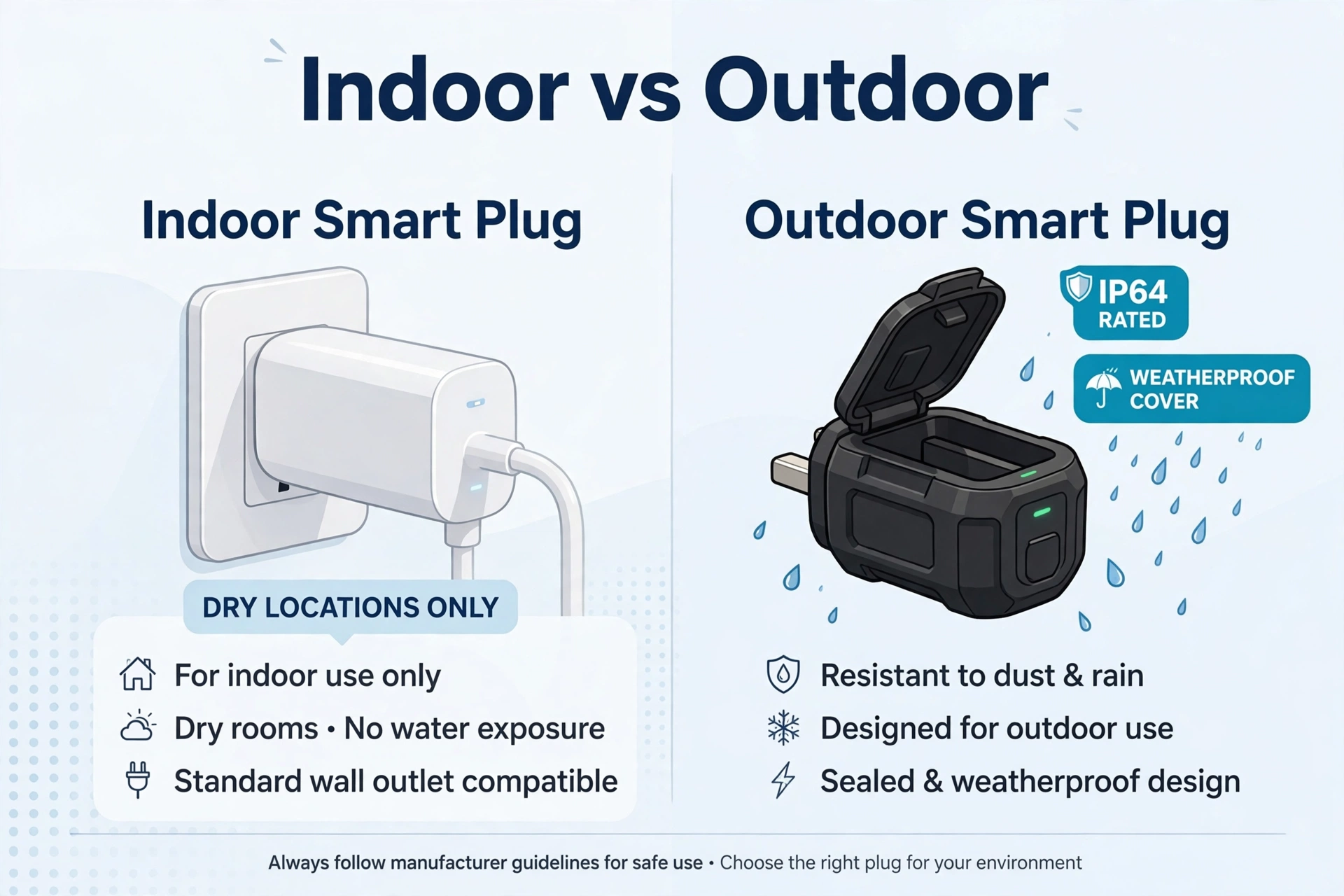
A heavy-duty rating means nothing if rain gets inside the housing. Similarly, indoor plugs (the Leviton and Eve) belong in dry locations only — garage, laundry room, workshop, behind the entertainment center. Specifically, the moment a plug might see rain, sprinklers, or heavy condensation, it needs an outdoor rating.
For outdoor use, look for two things. First, an IP rating: IP64 (both the GE Cync and Kasa KP401 carry it) means dust-tight and protected against water splashing from any direction — enough for rain and sprinklers. Second, a weatherproof cover over the sockets when not in use, which both outdoor picks include. Mount the plug with outlets facing down and never use an indoor-rated plug outside “just for the holidays”. In fact, that is the most common way these fail.
Temperature matters too. The Kasa KP401 is rated from -20°C to 50°C, covering most North American winters and summers. If your winters drop below -20°C, check the manual’s operating range — relays get sluggish in extreme cold.
Heavy-Duty Plugs and Energy Monitoring: Where They Overlap
Most heavy-duty plugs are built for switching, not measuring — the GE Cync and Kasa KP401 report on/off state only. That is fine if your goal is scheduling the patio lights. But if you bought a heavy-duty plug to understand what a big appliance costs to run, you need metering.
The Eve Energy Outlet is the crossover pick: full 15A switching plus per-outlet energy data. Once you know an appliance’s real draw, you can run the numbers in our phantom-power savings calculator to see what that load costs per month — and whether a schedule or an upgrade would pay for itself. For lighter plug loads, our energy-monitoring smart plug guide covers cheaper 15A metering plugs, and if you want every circuit in the house tracked at once, the whole-home energy monitor roundup is the next step up.
Best Heavy-Duty Smart Plug FAQs
Can I use a smart plug with a space heater?
Only with a true 15A-rated plug — never a 10A mini plug — and even then, with caution. A typical 1,500W heater draws 12.5A, which fits a 15A rating but exceeds the 12A continuous-load guideline for hours-long use. Never leave it running unattended, never use it through an extension cord or power strip, and consider a dedicated smart switch or a heater with a built-in timer instead. If your heater lacks tip-over and overheat protection, no smart plug makes it safe.
Are 15A smart plugs safe for window air conditioners?
It depends on the unit’s nameplate. Window ACs have compressors, so they need a plug with a stated motor/HP rating — all four picks in this guide have one. Check the AC’s rated amps (not just BTUs) and make sure both the running amps and the startup inrush fall within the plug’s ratings. Many smaller window units (5,000–8,000 BTU) draw 4–7 amps running and are fine; larger 12,000+ BTU units can push past 10A and deserve a dedicated circuit and professional advice.
What is the difference between a smart plug and a smart outlet?
A smart plug plugs into an existing outlet — easy to install, easy to move. A smart outlet (like the Leviton D215R or Eve Energy Outlet) replaces the in-wall receptacle itself — cleaner look, nothing to knock loose behind furniture, but it requires wiring work and usually a neutral wire.
Can heavy-duty smart plugs be used outdoors?
Only models rated for it. The GE Cync Outdoor Smart Plug and Kasa KP401 are both IP64-rated with weatherproof covers and are designed for wet locations. Indoor-rated plugs — including in-wall models like the Leviton and Eve — must stay dry. Using an indoor plug outside voids the safety listing and risks water getting to live contacts.
Do heavy-duty smart plugs need a hub?
The Wi-Fi models (Leviton, GE Cync, Kasa) do not — they connect straight to your 2.4 GHz network and app. The Eve Energy Outlet uses Matter over Thread, so it needs a Thread border router (HomePod mini, recent Echo, Apple TV 4K, or SmartThings hub) and a Matter controller, but no Eve-specific hub. If your Wi-Fi does not reach the install location reliably, no smart plug will work well there — fix the coverage first.
The Bottom Line
The best heavy duty smart plug for your home depends on where the appliance lives. Choose the Leviton Decora Smart Wi-Fi Outlet for a clean in-wall install with the strongest motor rating, the GE Cync Outdoor Smart Plug for weatherproof duty at $29.99, the Kasa KP401 to save money outdoors, or the Eve Energy Outlet if you want Matter, Thread, and energy data in one receptacle. Whatever you pick, do the amps math first — watts divided by 120 — stay under 80% for continuous loads, and call an electrician when anything feels uncertain.
