

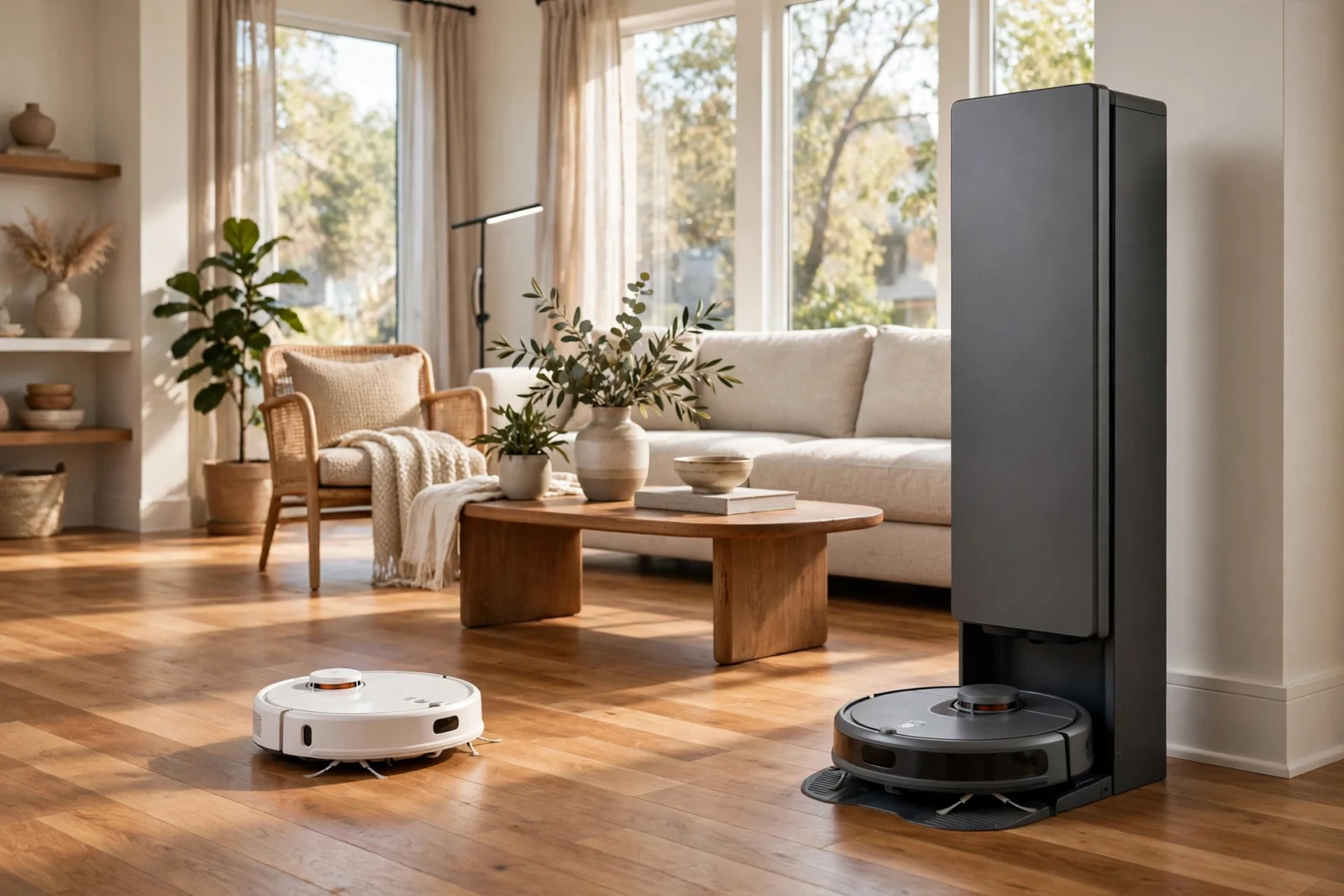
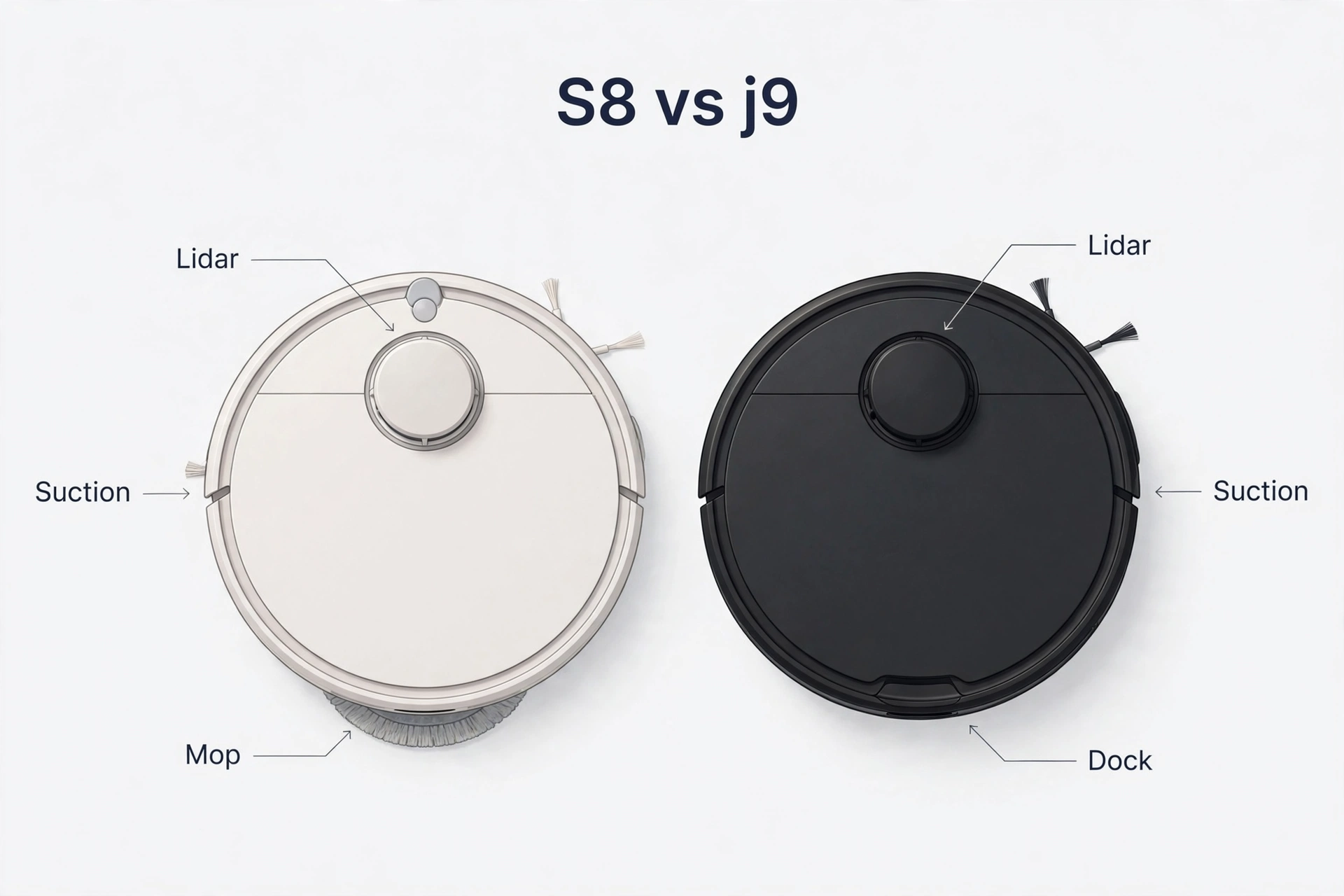
The Roborock S8 (Pro Ultra) wins the roborock s8 vs roomba j9 debate for most homes. It brings stronger claimed suction, fast LiDAR navigation, and a dock that washes and hot-air dries its own mop pads. The Roomba Combo j9+ answers with excellent obstacle avoidance, a simpler and more compact dock, and often a lower street price. Below is how they compare on the six things that actually matter before you spend four figures on a robot.
Roborock S8 vs Roomba j9: The Quick Verdict
If you want the most hands-off machine, buy the Roborock S8 Pro Ultra. Its dock empties dust, refills water, and washes and dries the mop pads after every run, so your involvement drops to swapping a dust bag and emptying a dirty-water tank every few weeks. The 6,000 Pa claimed suction and vibrating mop also make it the stronger deep cleaner on paper.
Buy the Roomba Combo j9+ if you value obstacle avoidance above all else, prefer a simpler ownership experience, or find it at a big discount. iRobot’s PrecisionVision camera system is excellent at dodging cables, shoes, and pet waste, and the Clean Base Auto-Fill Dock still handles debris disposal for around 60 days plus water refills for about a month. If you are still deciding between the two brands at a higher level, our Roborock vs Roomba brand comparison covers how the full lineups stack up, from budget bots to flagships.
Suction and Cleaning Power
Roborock publishes a number: the S8 Pro Ultra claims 6,000 Pa of suction, putting it near the top of its class. In practice that translates to strong pickup on hard floors and genuinely good carpet agitation, helped by a dual-roller brush system that resists tangles reasonably well.
iRobot does not publish a Pa figure for the Combo j9+, which makes direct comparison tricky. What it does have is a dual-roller system of its own and a reputation for thorough, methodical cleaning passes. In real homes it picks up pet hair, crumbs, and tracked-in dirt reliably — it just may need an extra pass on thick carpet where the Roborock’s raw suction pulls ahead.
For homes where pet hair is the daily battle, suction is only half the story — brush design and bin capacity matter just as much. Our best robot vacuum for pet hair roundup digs into which machines handle shedding seasons without choking.
Mopping: Sonic Scrub vs SmartScrub
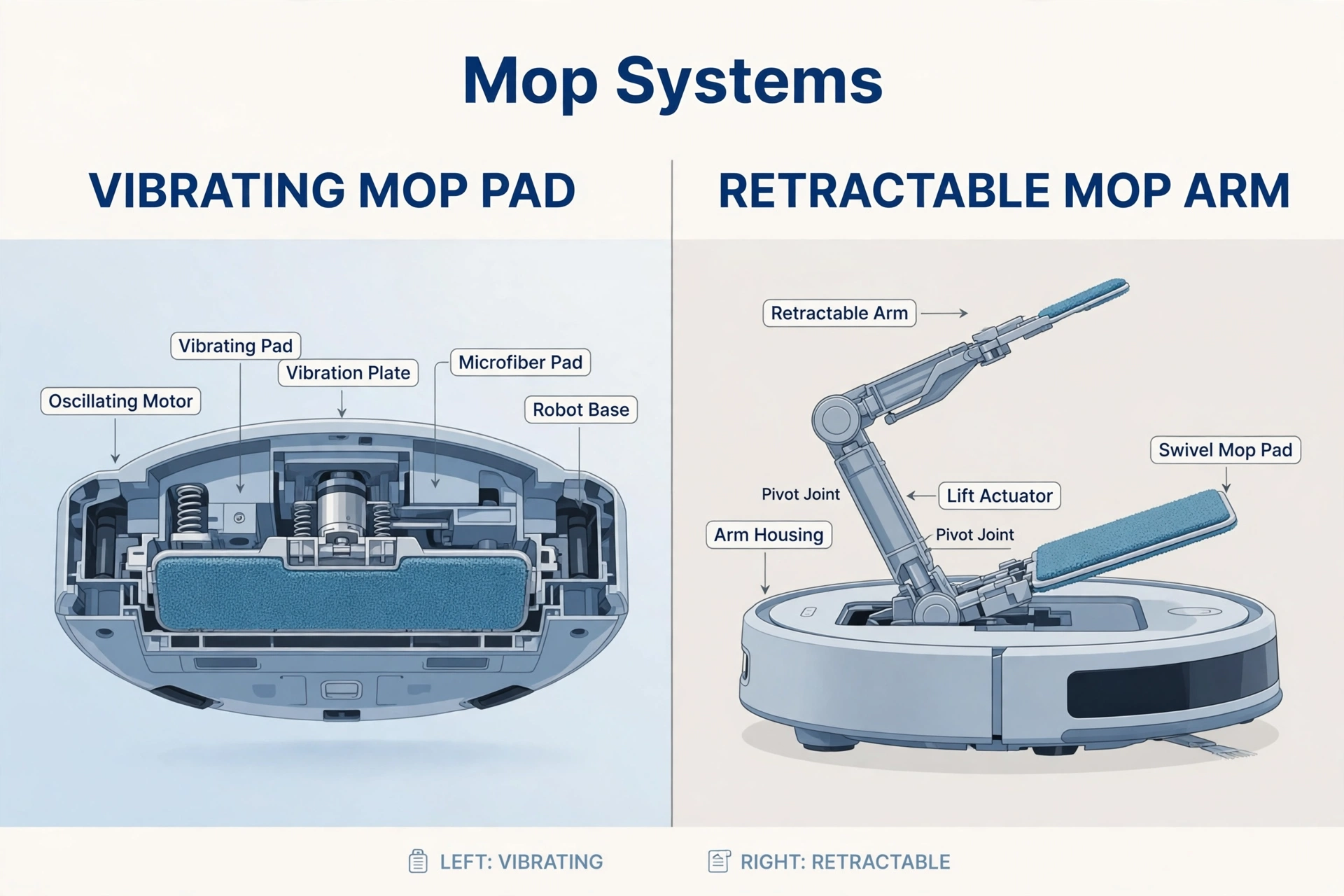
This is where the two philosophies split most clearly. The Roborock S8 uses a sonic vibrating mop pad that scrubs the floor thousands of times per minute, with the pad lifting a few millimeters when the robot crosses carpet. It is genuinely effective on stuck-on kitchen grime.
The Roomba Combo j9+ uses what iRobot calls SmartScrub: the mop pad moves back and forth with downward pressure, and — critically — the whole mop arm fully retracts on top of the robot when it detects carpet. That means zero damp-carpet risk, which matters if you have rugs everywhere. For a wider look at two-in-one machines, see our best robot vacuum mop combo picks.
The honest difference: Roborock scrubs harder, Roomba protects carpet better. Homes that are mostly hard floor with a few rugs favor the S8; homes that are mostly carpet with some hard floor favor the j9+.
Navigation and Obstacle Avoidance
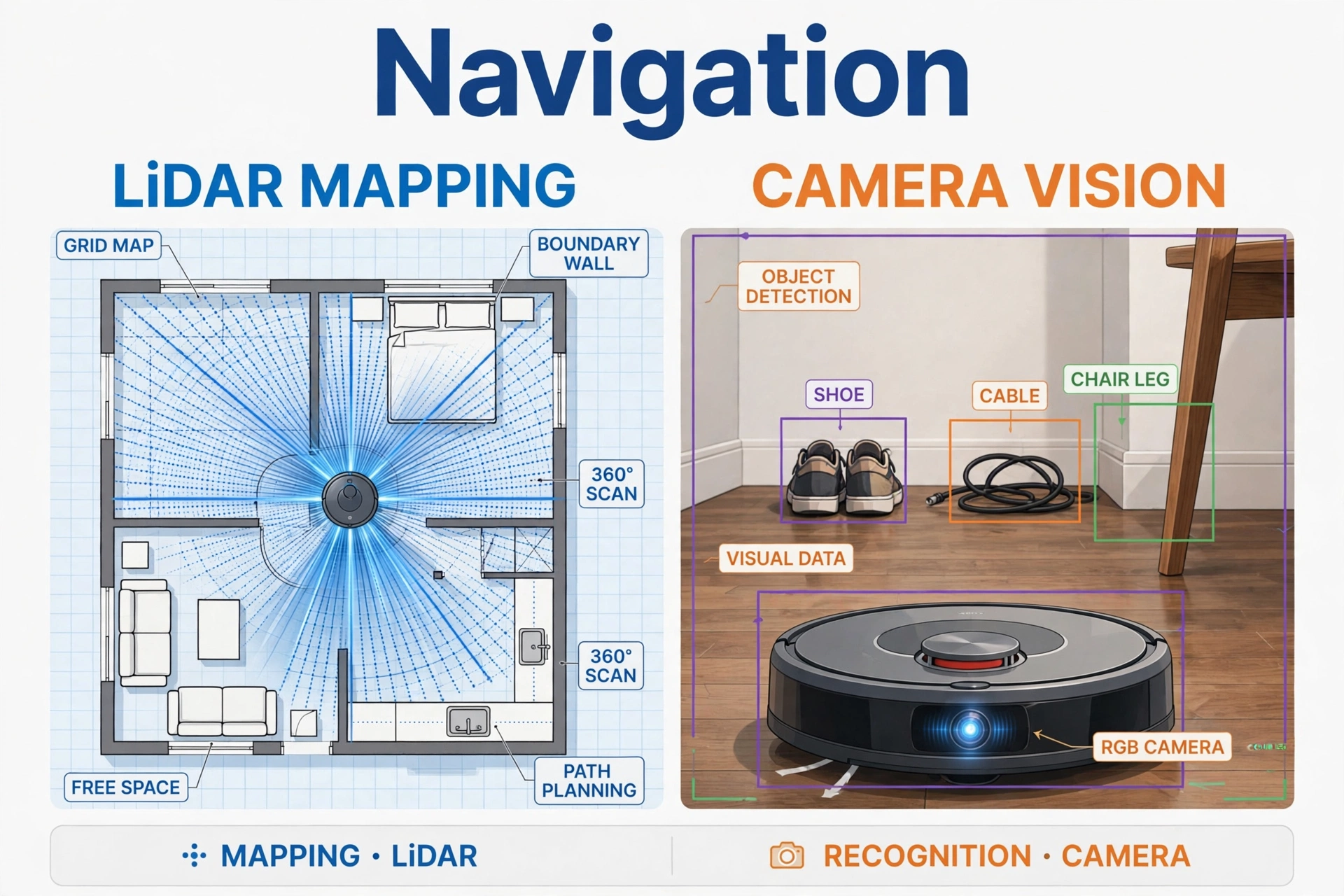
The Roborock S8 navigates with LiDAR — a spinning laser that maps your home in minutes, works in complete darkness, and plans efficient straight-line routes. It is fast, precise, and unbothered by dim hallways or night cleaning schedules.
The Roomba Combo j9+ uses vSLAM (camera-based visual mapping) paired with PrecisionVision obstacle recognition. In good light it is excellent — it identifies and steers around cords, socks, shoes, and pet waste, backed by iRobot’s P.O.O.P. (Pet Owner Official Promise) guarantee on waste avoidance. The trade-off is that camera navigation struggles in the dark, so scheduled night cleans need some ambient light.
Practically: the S8 maps faster and cleans in the dark; the j9+ dodges everyday clutter slightly more cleverly in lit rooms. Both rarely get stuck in a normal tidy home, and both resume cleaning after recharging if the job isn’t done.
The Docks: Wash-and-Dry vs Auto-Fill
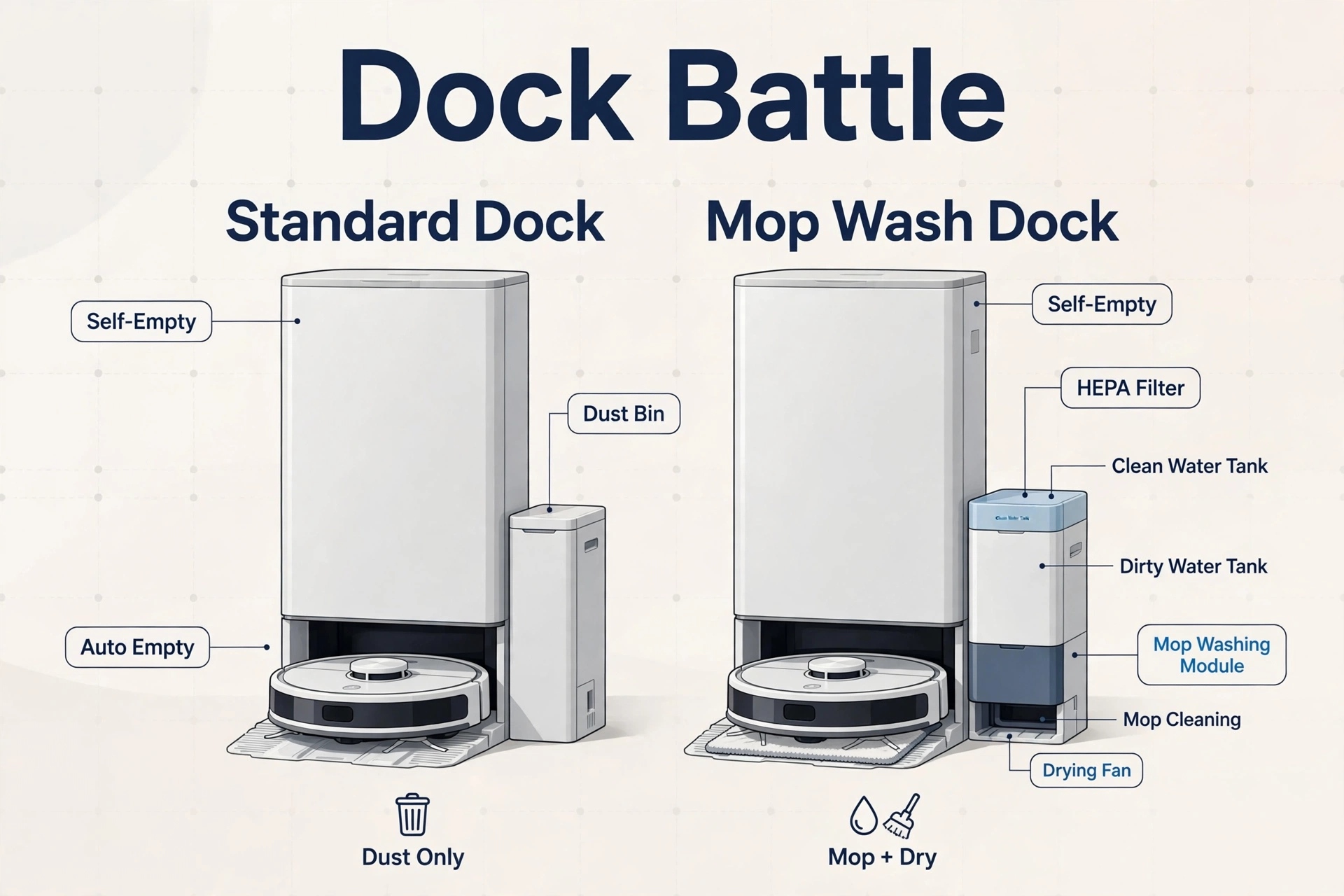
The RockDock Ultra is the more capable station. It self-empties dust (around 7 weeks of capacity), refills the water tank, and — the headline feature — washes the mop pads with water and then hot-air dries them, which prevents the mildew smell that plagues wash-less docks. The cost is footprint: it is a large piece of furniture.
The Clean Base Auto-Fill Dock takes a different approach. It auto-empties debris into a sealed bag for about 60 days and auto-fills the robot’s tank with water or cleaning solution for roughly 30 days. What it does not do is wash the mop pad — you remove and rinse that yourself. The dock is tall and cabinet-like but arguably better looking, with a flat top you can put decor on.
If you hate maintenance chores, the Roborock dock wins. If you prefer a smaller visual footprint and don’t mind rinsing a pad, the Roomba dock is perfectly livable.
App and Smart Home Control
The Roborock app is the tinker’s favorite: highly granular maps, room-by-room schedules, multi-floor support, no-go zones, and per-room suction and water settings. It takes ten minutes to learn and rewards the effort.
iRobot’s app leans simpler and smarter: it learns your home’s rooms, suggests schedules (including iRobot’s “Dirt Detective” logic that prioritizes dirtier rooms), and keeps the interface approachable. Both robots work with Alexa and Google Assistant for voice start/stop and room-specific commands.
Price and Value
List prices sit in the same premium tier: the Roborock S8 Pro Ultra launched around $1,600 and the Roomba Combo j9+ around $1,400, but neither sells at list for long. Both routinely drop to around $1,000 during major sale events, and the Roomba has been spotted even lower. At typical street prices, expect the Roborock to cost a little more — you are paying for the wash-and-dry dock hardware.
Value verdict: on sale at similar prices, the Roborock gives you more machine. If the Roomba drops several hundred below the Roborock, its simpler dock and strong avoidance start looking like the smarter buy. Always check the current price before deciding — these two are perpetually discounted somewhere.
Table: Roborock S8 Pro Ultra vs Roomba Combo j9+ at a glance (2026)
| Feature | Roborock S8 Pro Ultra | Roomba Combo j9+ |
|---|---|---|
| Claimed suction | 6,000 Pa | Not published |
| Navigation | LiDAR (works in dark) | vSLAM + PrecisionVision camera |
| Mopping | Sonic vibrating mop, lifts on carpet | SmartScrub, fully retracts off carpet |
| Dust self-empty | Yes, ~7 weeks | Yes, ~60 days |
| Mop washing/drying | Yes, wash + hot-air dry | No (manual rinse) |
| Water auto-refill | Yes | Yes, ~30 days |
| Obstacle avoidance | Reactive 3D, very good | Excellent, P.O.O.P. promise |
| App style | Granular, tinkerer-friendly | Simple, suggestion-driven |
| Typical street price | Around $1,000–$1,600 | Around $1,000–$1,400 |
Noise Levels: What to Expect
Neither robot is silent, but neither will ruin movie night. The Roborock S8 runs slightly louder on max suction — that 6,000 Pa has to come from somewhere — while the Roomba Combo j9+ stays a touch quieter in everyday cleaning thanks to lower peak suction and methodical pacing. The real noise event for both is the dock: self-emptying sounds like a small jet engine for about ten seconds. Schedule emptying (or whole cleaning runs) for when you’re out, and it’s a non-issue.
Ongoing Costs: Bags, Filters, and Brushes
The sticker price is only the start. Both docks use disposable dust bags: expect to replace them every 6 to 8 weeks in a normal home, more often with heavy-shedding pets. Bags are sold in multi-packs and work out to a few dollars per month — not a dealbreaker, but worth knowing before you buy.
Brushes and filters are the other consumables. The main roller brushes typically last 6 to 12 months depending on hair load, and filters need rinsing or replacing every couple of months to keep suction strong. Roborock also sells mop pads in packs; with the dock washing them automatically, a set lasts months, but they do wear out eventually. Budget roughly $50 to $80 a year in consumables for either machine — slightly more for the Roborock if you run the mop wash daily.
The Maintenance Routine: What You’ll Actually Do
Here is the honest weekly reality for each machine. With the Roborock S8 Pro Ultra: empty the dirty-water tank and refill the clean tank every week or two, wipe the dock’s wash tray monthly, and check the main brush for tangled hair monthly. The dock handles everything else.
With the Roomba Combo j9+: swap or empty the dust bag every couple of months, refill the dock’s water reservoir monthly, and remove and rinse the mop pad after mopping weeks. The pad rinse is the one chore the Roborock automates away — it takes two minutes, but it is two minutes every time you mop.
Neither machine is maintenance-free, despite what marketing suggests. But compared to pushing a manual vacuum weekly, both are a different universe of convenience.
Who Should Buy Which
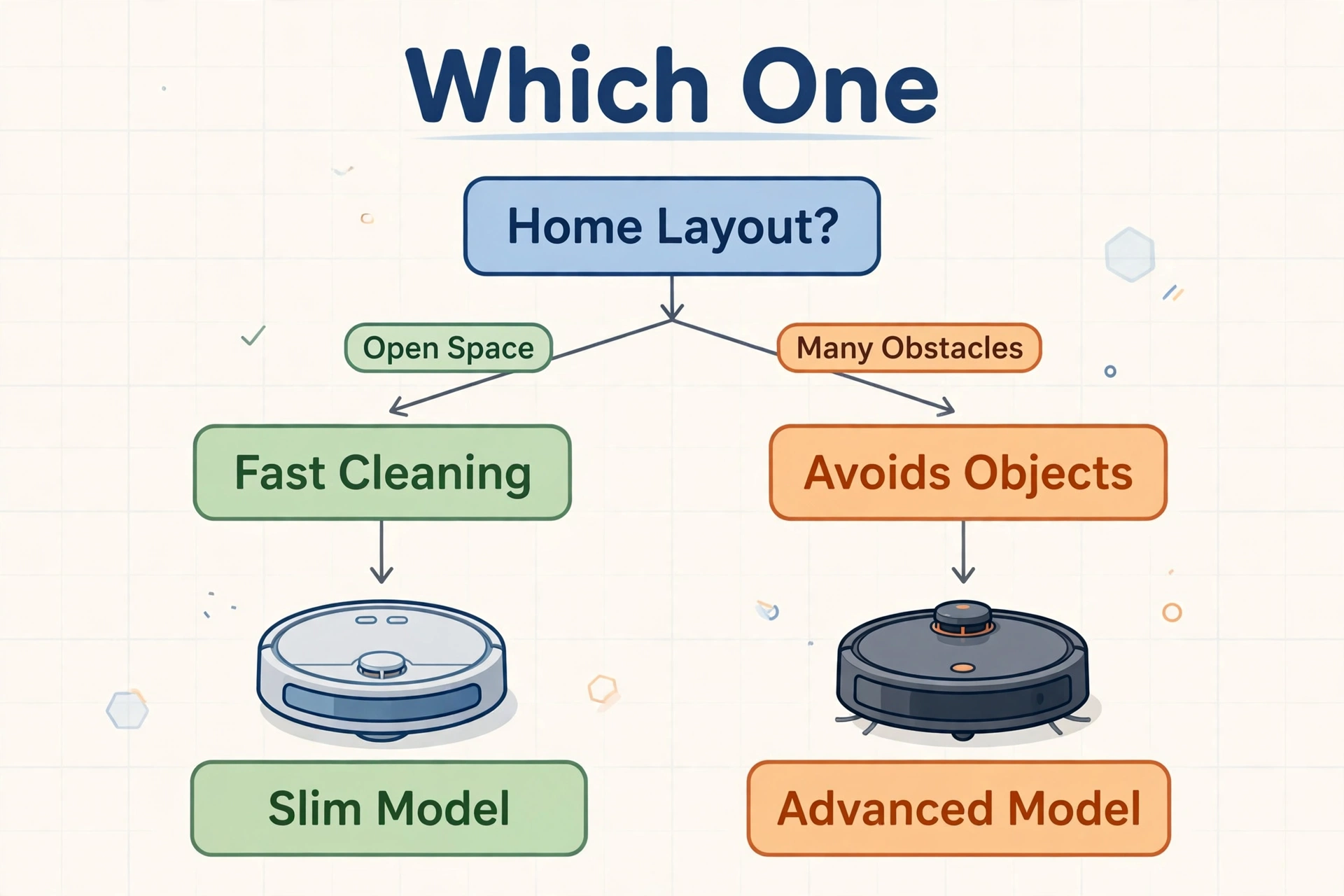
Buy the Roborock S8 Pro Ultra if: most of your home is hard flooring, you want the lowest-maintenance dock available, you clean at night or in dim rooms, or you enjoy fine-tuning maps and schedules.
Buy the Roomba Combo j9+ if: obstacle avoidance is your top priority (kids, pets, clutter), your home is carpet-heavy, you prefer a simpler app and ownership routine, or you catch it at a steep discount.
Frequently Asked Questions
Is the Roborock S8 better than the Roomba j9?
For raw cleaning ability and dock automation, yes — the S8’s stronger suction and wash-and-dry dock give it the edge. The Roomba j9+ is better at avoiding obstacles and is simpler to live with. “Better” depends on whether you value deep cleaning or hassle-free navigation more.
Do either of these wash their own mop pads?
Only the Roborock S8 Pro Ultra. Its RockDock Ultra washes the pads and hot-air dries them after each mopping run. The Roomba Combo j9+’s dock refills water but does not wash the pad — you rinse it by hand.
Which is better for pet hair?
Both handle pet hair well thanks to dual-roller brushes. The Roborock’s higher suction gives it an edge on carpet, while the Roomba’s waste-avoidance guarantee matters more to pet owners worried about accidents. Either is a strong pet-home choice.
Can they mop and vacuum at the same time?
Yes, both vacuum and mop in a single run. The Roborock lifts its mop slightly over carpet; the Roomba fully retracts its mop arm off carpet, so rugs stay completely dry.
Do they work in the dark?
The Roborock S8 does — LiDAR doesn’t need light. The Roomba Combo j9+ relies partly on cameras, so it cleans best with some ambient light and may be less confident in pitch-dark rooms.
Which dock is bigger?
The RockDock Ultra is the larger of the two because of its mop-washing hardware. The Roomba’s Clean Base is tall but has a smaller footprint and a flat top you can use as a shelf.
How often do I need to replace bags and filters?
Dust bags last 6 to 8 weeks in a typical home — longer in small apartments, shorter with multiple shedding pets. Rinse or replace filters every one to two months, and plan on new roller brushes every 6 to 12 months. Annual consumable cost runs roughly $50 to $80 for either machine.
Conclusion
In the roborock s8 vs roomba j9 matchup, the Roborock S8 Pro Ultra is the stronger all-round machine — more suction, smarter dock, better dark-room navigation. But the Roomba Combo j9+ remains a genuinely good alternative for cluttered, pet-filled, carpet-heavy homes, especially when it is on sale. Match the robot to your floors and your tolerance for maintenance, check the current price on both, and you will end up with the right one. Either way, you are buying into the top tier of robot cleaning in 2026.
