

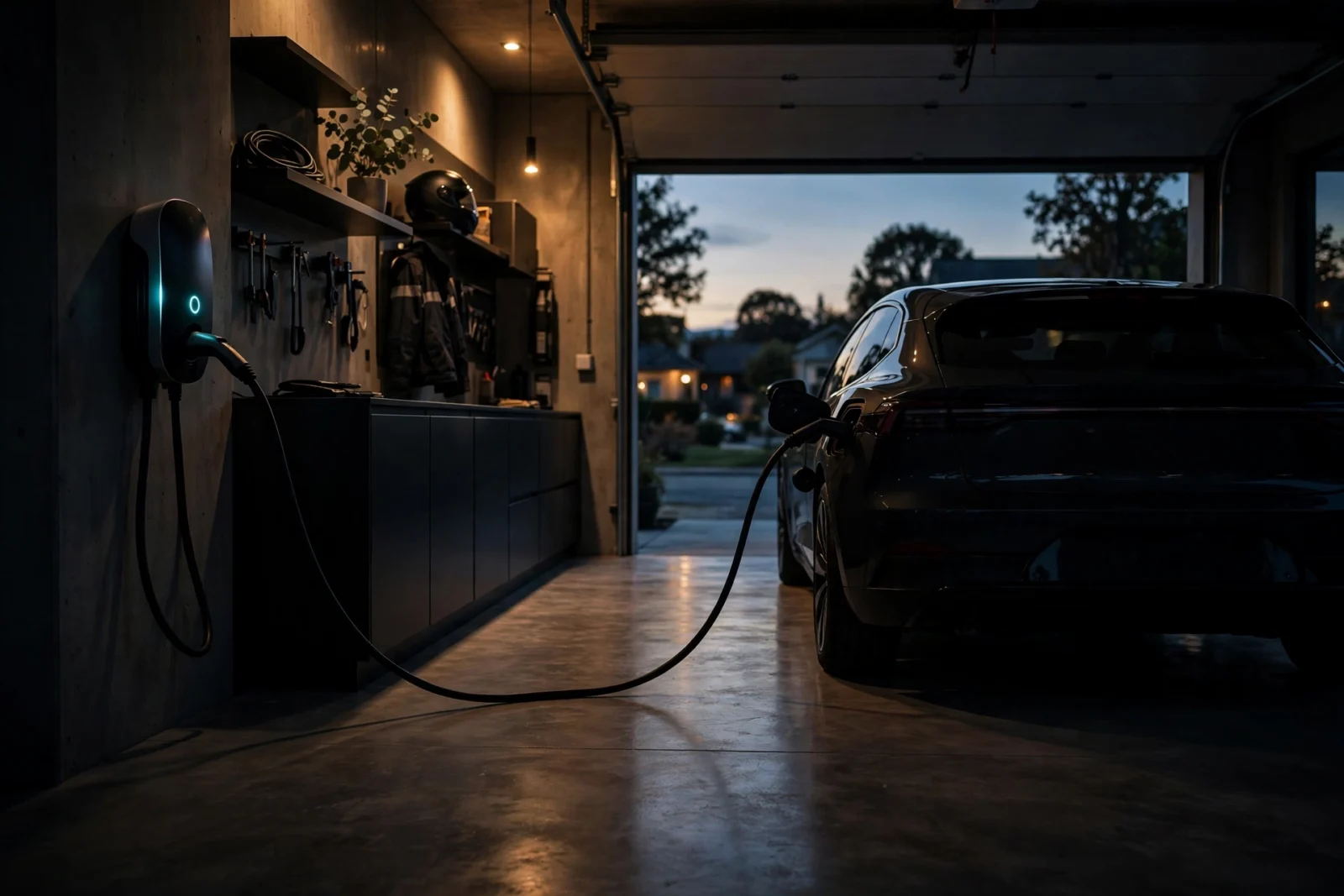
Tesla Universal Wall Connector vs ChargePoint Home Flex? The ChargePoint Home Flex (around $549) suits most households: adjustable 16–50A output, J1772 or NACS, and the best charging app available. The Tesla Universal Wall Connector (around $600) wins for Tesla-majority homes with its integrated J1772 adapter.
Both are Level 2 home chargers, meaning they run on a 240V circuit and add roughly 30–40 miles of range per hour — many times faster than the regular wall outlet your car came with. Both are well-built, outdoor-rated, and smart-connected. The differences that matter are connector flexibility, maximum power, the app, and price. Here is the full comparison.
Tesla Universal Wall Connector vs ChargePoint Home Flex at a Glance
Short on time? Here is the verdict in thirty seconds. Buy the ChargePoint Home Flex if your garage holds mixed EVs, you want the smartest app with off-peak scheduling and cost tracking, or your electrical panel needs the flexibility of 16–50A adjustable output. Buy the Tesla Universal Wall Connector if Teslas dominate your driveway and you value the integrated J1772 adapter and one-app simplicity over raw configurability. Either charger will fill any EV overnight — this decision is about ecosystem and convenience, not speed.
Power Output and Charging Speed
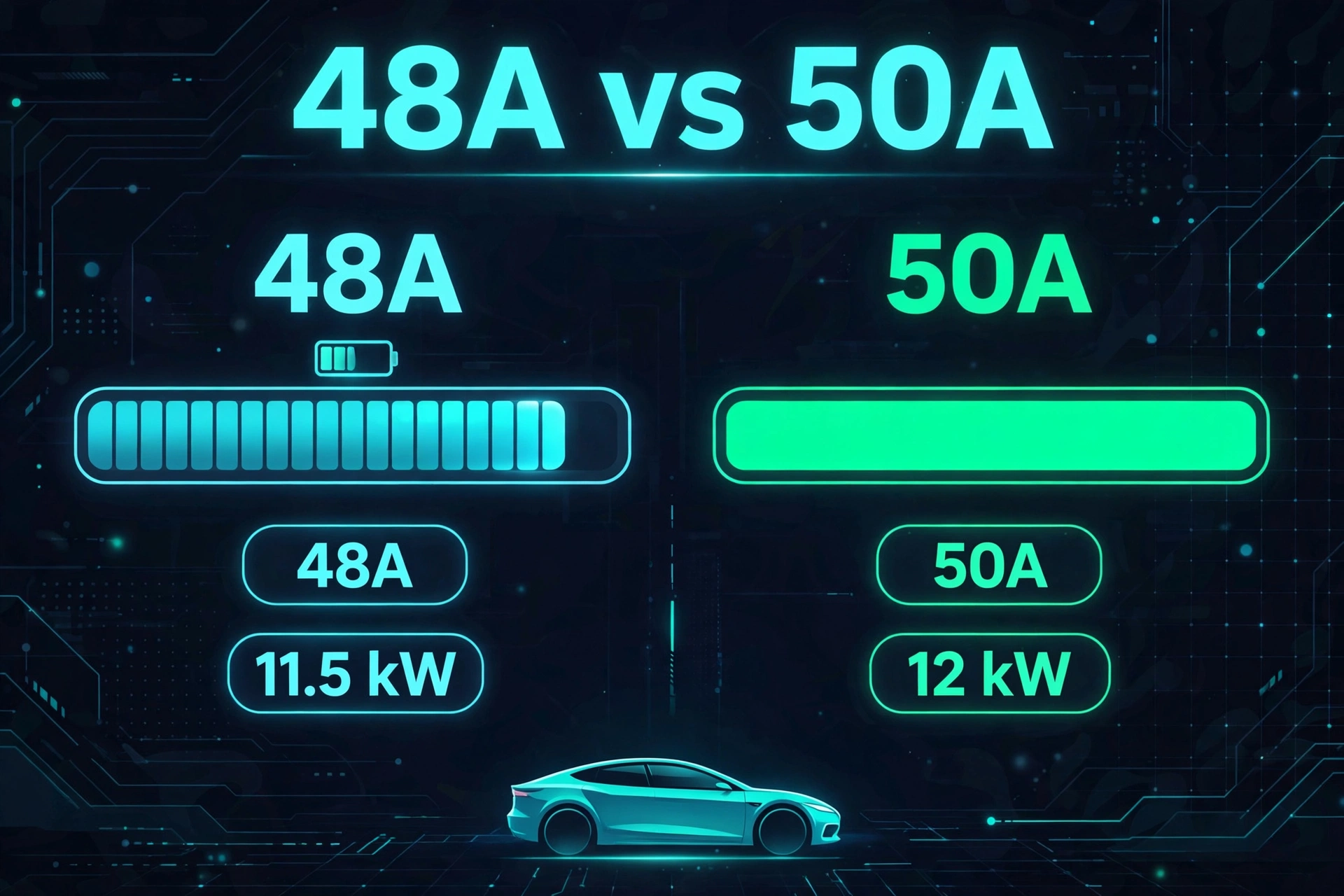
On raw power, ChargePoint has the edge. The Home Flex adjusts from 16A all the way to 50A (about 12kW at 240V), which translates to roughly 37 miles of range per hour on a capable EV. The Tesla Universal Wall Connector tops out at 48A (about 11.5kW), good for roughly 35 miles per hour. In real life, that 2-amp gap is invisible — both will fill any EV overnight with hours to spare.
What matters more is adjustability. The Home Flex lets you dial the amperage to match your electrical panel: start at 32A today on your current panel, then crank it to 50A later if you upgrade your service. The Tesla unit is also configurable at install time, but ChargePoint’s wide 16–50A range gives your electrician more room to work with a tight panel. If you are unsure what your panel can handle, read our ChargePoint vs Wallbox comparison, which covers the same panel-capacity math.
Connectors: NACS vs J1772
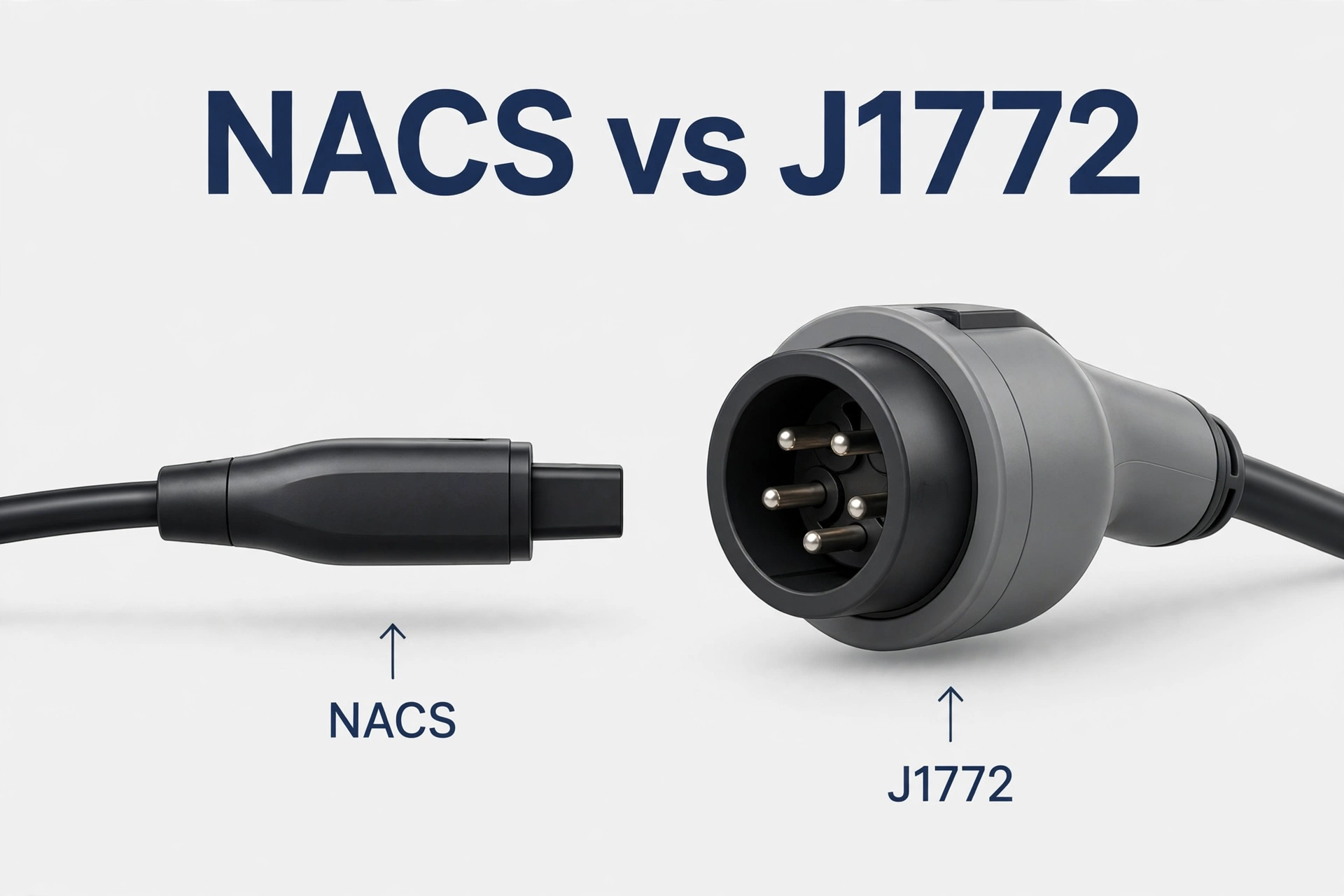
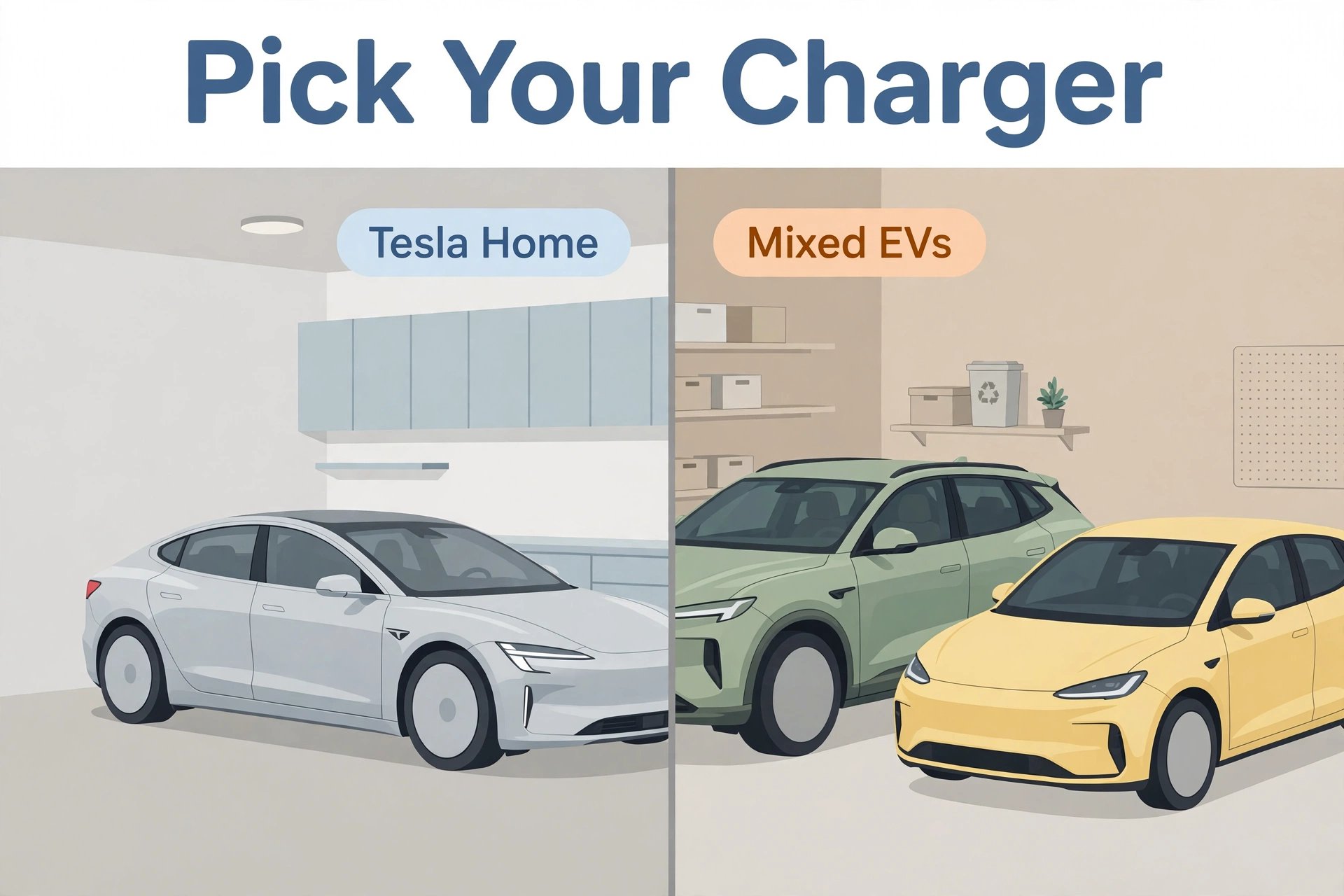
This is the heart of the comparison. The Tesla Universal Wall Connector ships with Tesla’s NACS plug and a clever integrated J1772 adapter docked in the unit itself — pull the handle and the adapter comes with it, so the same charger serves a Tesla today and a non-Tesla EV tomorrow with no extra parts to buy or lose. For a mixed garage (say, a Model Y and a Hyundai Ioniq 5), that is genuinely elegant.
The ChargePoint Home Flex takes the menu approach: you buy it with either a J1772 connector or a NACS connector, depending on your cars. J1772 works with every EV on the road (Teslas via a small adapter), while the NACS version suits Tesla-native households. You cannot switch later without buying a new cable, so choose based on the cars you will own for the next five years, not just the one in the driveway today.
Worth knowing: the industry is converging on NACS as the North American standard, and most new non-Tesla EVs are switching to NACS ports. A J1772 charger with an adapter remains fully usable — this is a “buy for your cars” decision, not a future-proofing crisis. One adapter-direction note: converting J1772 to a Tesla’s NACS port is common and cheap; going the other direction has far fewer options, which is exactly the problem the Universal Wall Connector’s built-in adapter solves.
Installation: What It Really Takes
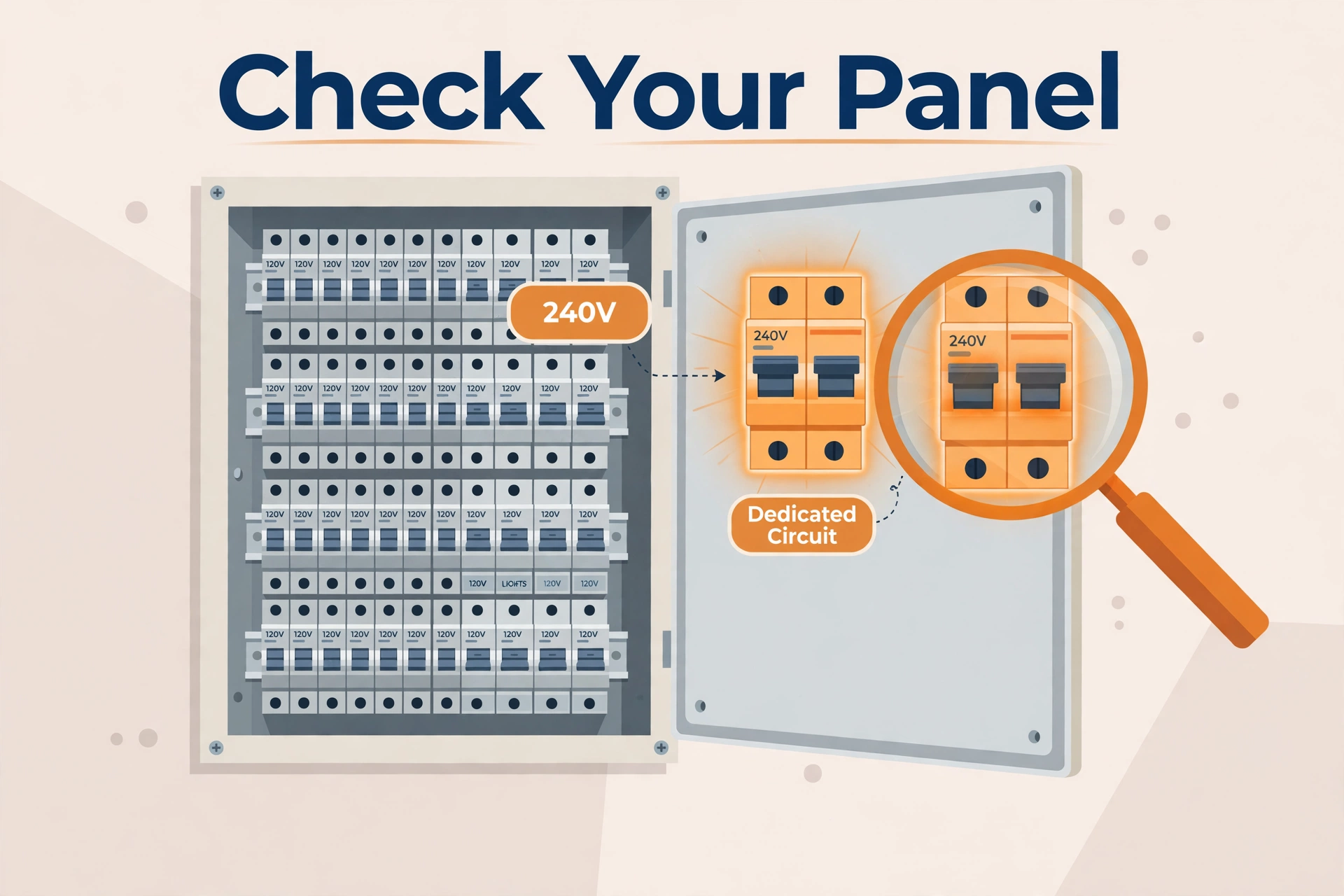
Both chargers need a dedicated 240V circuit installed by a licensed electrician — this is not a DIY project. The Tesla Universal Wall Connector is hardwired only. The ChargePoint Home Flex can be hardwired or plugged into a NEMA 14-50 or 6-50 outlet, which gives you flexibility if you move or want to take the charger with you.
Installation cost depends on your panel and how far the wire has to run, not on which charger you pick. A straightforward install — 200A panel, short wire run, open breaker slot — typically runs $700 to $1,800. If your home still has a 100A panel (common in pre-2000 houses), you may need a panel upgrade first, which costs much more. Get the electrician to check panel capacity before you buy the charger, not after. Both units are outdoor-rated (NEMA 4 or better), so a driveway or carport install is fine, though a garage keeps the cable happier in winter.
One practical note: both chargers need a stable WiFi connection in the garage for their smart features. If your router barely reaches the garage, fix that first — our best mesh WiFi for smart home picks solve exactly this problem.
Apps and Smart Features
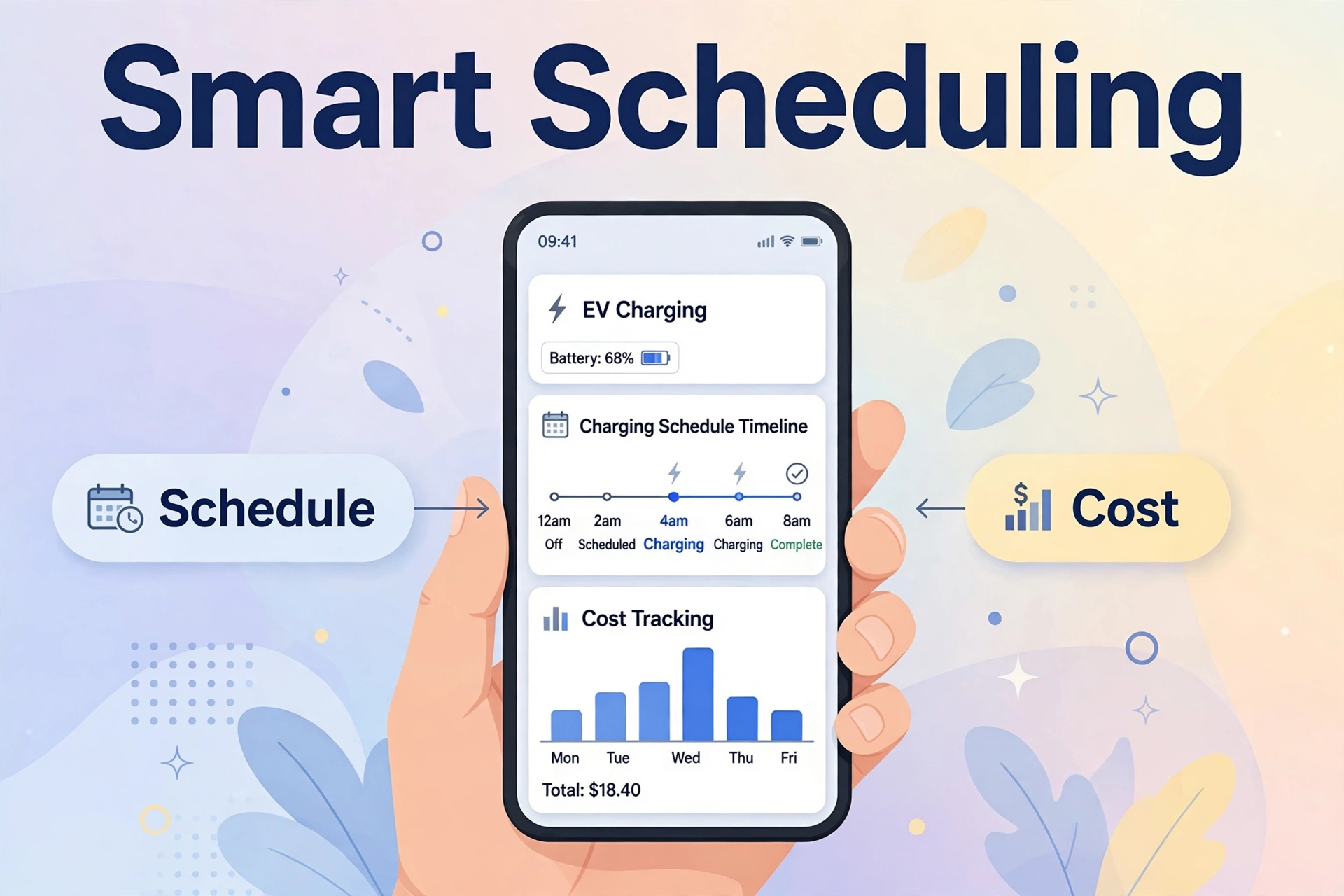
ChargePoint wins the app contest clearly. The ChargePoint app handles charging schedules (so you automatically charge on cheap overnight rates), tracks every session’s energy use and cost, and manages time-of-use utility plans. It is the same app ChargePoint’s public charging network uses, so home and road charging live in one place with one payment account. If your utility offers off-peak EV rates, the scheduling alone can save real money every month.
Tesla’s app experience is simpler and, for Tesla owners, beautifully integrated: charging status, scheduling, and preconditioning all live alongside the car’s own controls. It does less than ChargePoint’s app — energy reporting is basic — but what it does is effortless. Non-Tesla owners charging on a Universal Wall Connector still use the Tesla app, which works fine but feels like borrowing someone else’s remote.
Both apps let you start and stop charging remotely, set departure-time schedules, and monitor sessions in real time. Neither requires a subscription for core features.
Load Balancing, Solar, and Two-EV Homes
If two EVs share one garage, this section matters. The ChargePoint Home Flex supports load management across two units: they talk to each other and split the available amperage so you never trip the main breaker. Tesla’s Wall Connector has its own power-sharing feature that does the same thing within the Tesla family.
On solar: both chargers can be scheduled to charge during sunny hours through their apps, which pairs naturally with rooftop solar. Neither is a dedicated solar diverter (a device that sends only excess solar to the car, like the Zappi) — if your goal is to charge purely on surplus sunshine, that is a separate product category. For most solar homes, “charge between 10 AM and 3 PM on a schedule” gets you 90% of the benefit with zero extra hardware.
And if you like tracking where your electricity goes, a charger is only one piece of the puzzle. Our best energy-monitoring smart plugs roundup covers how to watch the rest of the house’s consumption plug by plug.
Before you buy, check your utility’s rebate programs — many offer hundreds back on specific charger models, and some require the charger to be on an approved list or hardwired to qualify. Utility time-of-use EV rates are the other half of the savings equation: a charger with good scheduling (both of these qualify) lets you automatically soak up cheap overnight electricity, which is where home charging’s real cost advantage lives.
Price and Value
The Tesla Universal Wall Connector lists at around $600 MSRP. The ChargePoint Home Flex lists at around $549 MSRP, though street prices move — check the current price on both before buying, since EV charger prices have been drifting downward. Note that Tesla also sells the standard (non-Universal) Wall Connector for less, around $450–$475, but it is NACS-only with no J1772 adapter, so it is a worse pick for mixed-EV homes.
Value verdict: ChargePoint gives you more adjustability, the better app, and plug-in flexibility for about $50 less. Tesla charges a premium for the integrated dual-connector design and the slickest Tesla-native experience. Neither price includes installation, which will likely cost more than the charger itself. When you budget, think in totals: charger plus install plus any panel work. A $549 charger on a $1,200 install is a $1,750 project either way — the $50 between these two units is noise next to the electrician’s invoice.
Table: Tesla Universal Wall Connector vs ChargePoint Home Flex (2026)
| Feature | Tesla Universal Wall Connector | ChargePoint Home Flex |
|---|---|---|
| Price (MSRP) | Around $600 | Around $549 |
| Max output | 48A / 11.5kW | 50A / 12kW (16–50A adjustable) |
| Range per hour (approx.) | ~35 miles | ~37 miles |
| Connector | NACS + integrated J1772 adapter | J1772 or NACS (choose at purchase) |
| Installation | Hardwired only | Hardwired or NEMA plug-in |
| Cable length | 24 ft | 23 ft |
| App | Tesla app (simple, Tesla-integrated) | ChargePoint app (scheduling, cost tracking) |
| Load balancing | Tesla power sharing | Dual-charger load management |
| Outdoor rated | Yes | Yes |
| Warranty | 3 years | 3 years |
| Best for | Tesla-majority homes | Mixed EVs, app lovers |
Who Should Buy Which
Buy the Tesla Universal Wall Connector if…
- Your household is mostly or all Tesla — the app integration is unmatched.
- You want one charger that handles Tesla and non-Tesla EVs with zero adapter juggling.
- You prefer simple: fewer settings, fewer decisions, it just works.
- You are already in the Tesla ecosystem (Powerwall, solar) and want one app.
Buy the ChargePoint Home Flex if…
- Your garage has mixed EVs or you will add a non-Tesla soon.
- You want the best app: off-peak scheduling, per-session cost tracking, TOU plans.
- Your panel is tight — the 16–50A adjustability gives the electrician options.
- You want plug-in flexibility or might take the charger when you move.
Frequently Asked Questions
Can the Tesla Universal Wall Connector charge non-Tesla EVs?
Yes — that is the whole point of the “Universal” model. It has a NACS plug with an integrated J1772 adapter docked in the unit, so it charges any EV. The cheaper standard Tesla Wall Connector is NACS-only and needs a separate adapter for non-Tesla cars.
Which charges faster: Tesla Universal Wall Connector or ChargePoint Home Flex?
The ChargePoint Home Flex is slightly faster on paper: 50A (about 12kW, ~37 miles of range per hour) versus the Tesla’s 48A (about 11.5kW, ~35 miles per hour). In practice the difference is negligible — both fully charge any EV overnight.
Do I need an electrician to install a home EV charger?
Yes. Both chargers need a dedicated 240V circuit on its own breaker, which means panel work that should be done by a licensed electrician and usually requires a permit and inspection. Budget $700–$1,800 for a straightforward install; a panel upgrade costs much more.
Can I install the ChargePoint Home Flex myself with a plug?
The plug-in version connects to an existing NEMA 14-50 or 6-50 outlet, so no charger-side wiring is needed — but the outlet itself must already exist on a properly sized dedicated circuit. If the outlet is not there yet, you still need an electrician to add it. Check your local electrical code before doing anything yourself.
Will these chargers work with future EVs?
Yes. Both support the two connectors that matter in North America (NACS and J1772), and both handle up to ~12kW, which exceeds what most EVs can accept at home. The industry’s shift toward NACS does not obsolete J1772 chargers — adapters are cheap and widely available.
Do home EV chargers need WiFi?
They work as “dumb” chargers without it, but you lose scheduling, energy tracking, and remote control — the features that save money on time-of-use rates. Both the Tesla and ChargePoint apps need a stable 2.4GHz or 5GHz connection at the charger, so check your garage’s signal before install day.
Conclusion
In the Tesla Universal Wall Connector vs ChargePoint Home Flex matchup, the ChargePoint Home Flex is the better buy for most homes: around $549 gets you 50A of adjustable power, your choice of connector, plug-in or hardwired install, and the best charging app available. The Tesla Universal Wall Connector (around $600) earns its premium in Tesla-majority garages, where the integrated J1772 adapter and one-app simplicity are genuinely delightful. Either way, get the electrician’s panel check before you order — the charger is the cheap part of this project. And check current prices; both move with sales and utility rebate programs.
