

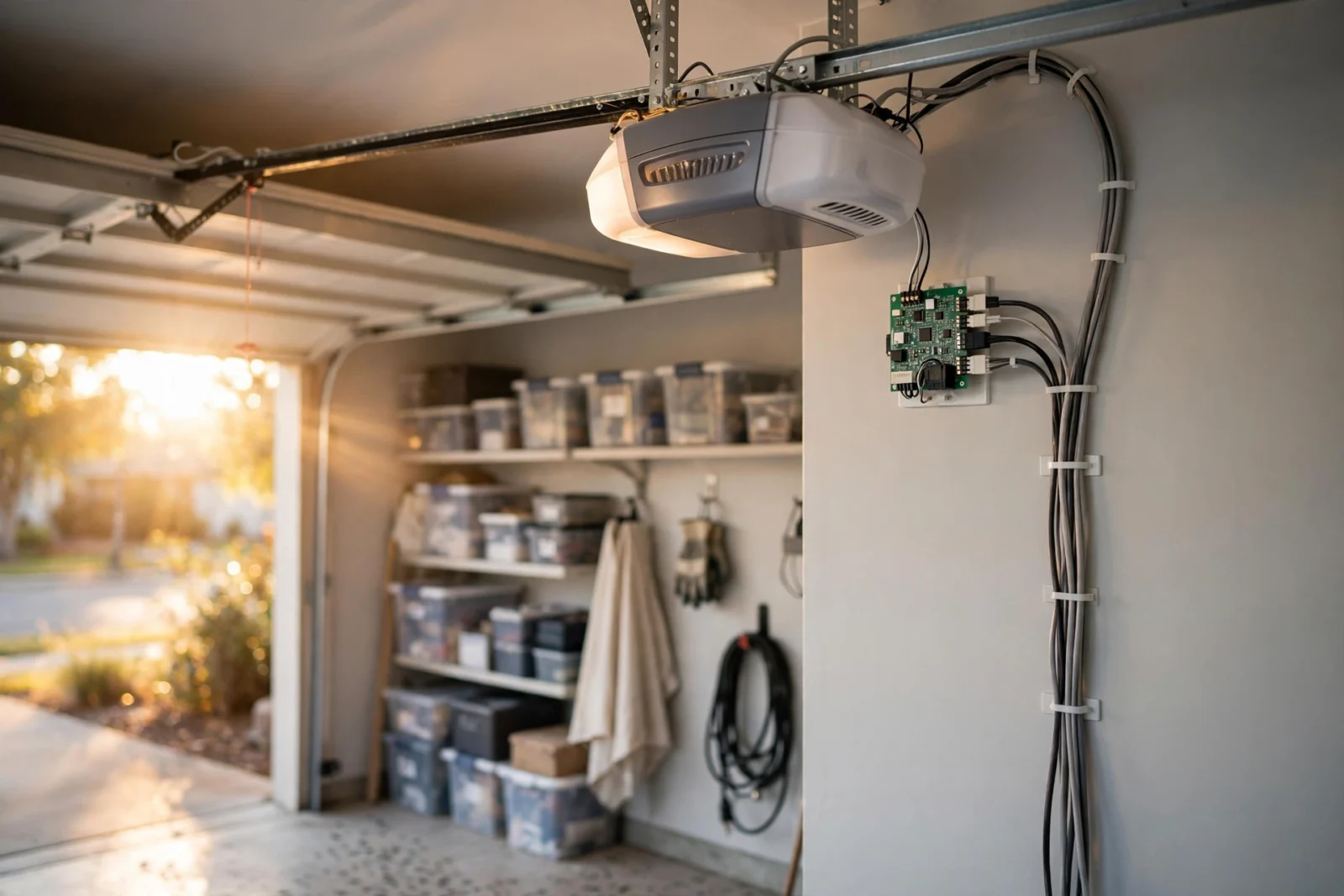
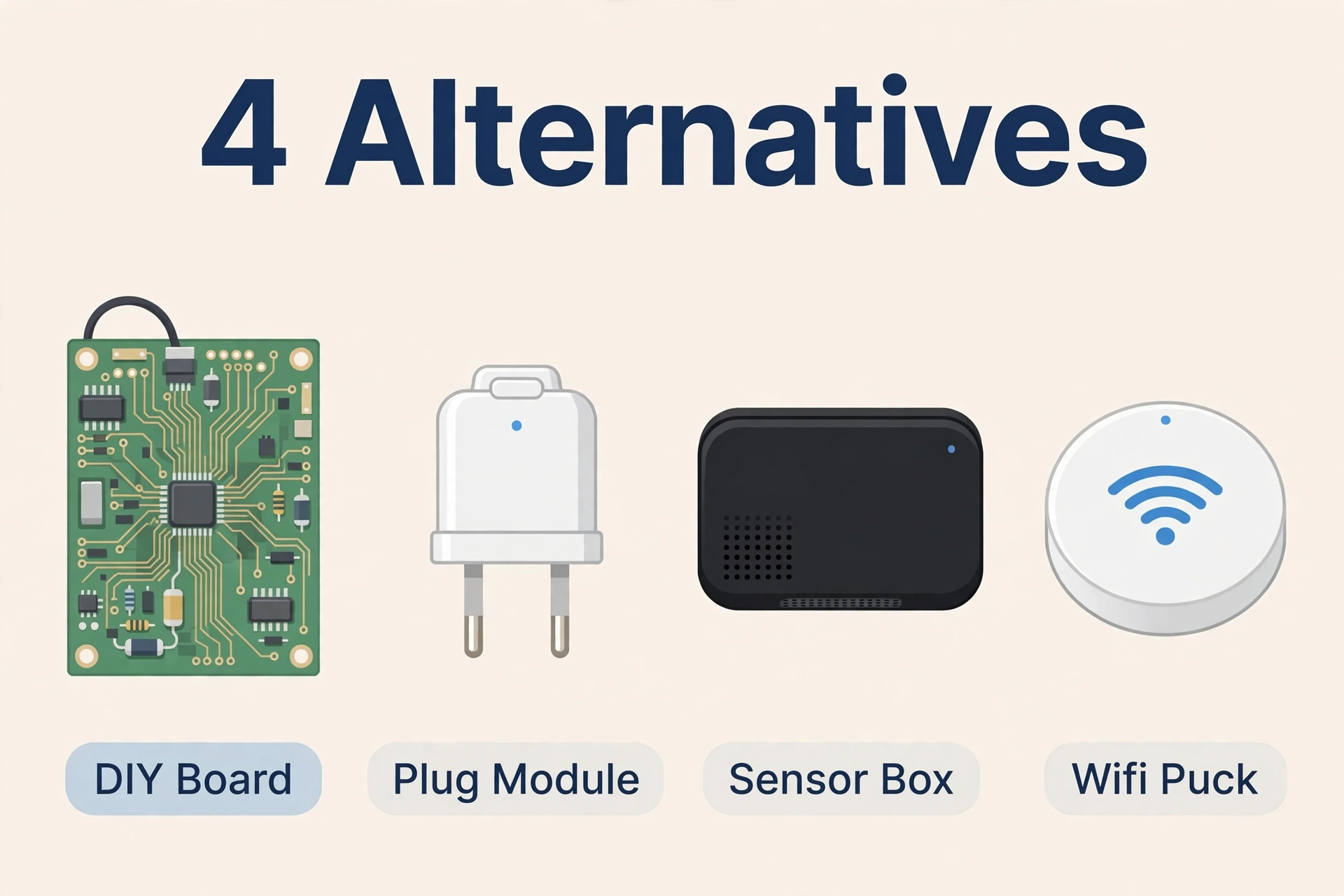
After Chamberlain cut off third-party API access, the hunt for a myQ alternative with true local control of the garage door exploded — and the best myQ alternative local control garage door owners can install in 2026 is ratgdo, an open-source ESP32 board that talks to your Chamberlain or LiftMaster opener directly over its native Security+ protocol. No Chamberlain cloud, no subscription, no internet required. If you want a finished product instead of a DIY board, the Konnected GDO blaQ packages the same technology with three-wire installation. For automatic open/close as you drive up, Tailwind iQ3 is the pick, and the Meross controller is the cheapest retrofit.
Why People Want a myQ Alternative
In late 2023, the Chamberlain Group cut off third-party API access to myQ. Home Assistant, SmartThings, Hubitat, and most automation platforms could no longer talk to myQ openers the way they used to. Chamberlain said the move was about security; the practical effect was that anyone who wanted their garage door in automations had to use Chamberlain’s cloud on Chamberlain’s terms — or find another way.
That is what “myQ alternative” means in 2026: a way to control a Chamberlain or LiftMaster opener locally, from your own network, without depending on a cloud service that can change the rules overnight. If you are choosing between the two big brands first, read our Chamberlain vs LiftMaster comparison — then come back here for the local-control options.
What “Local Control” Actually Means
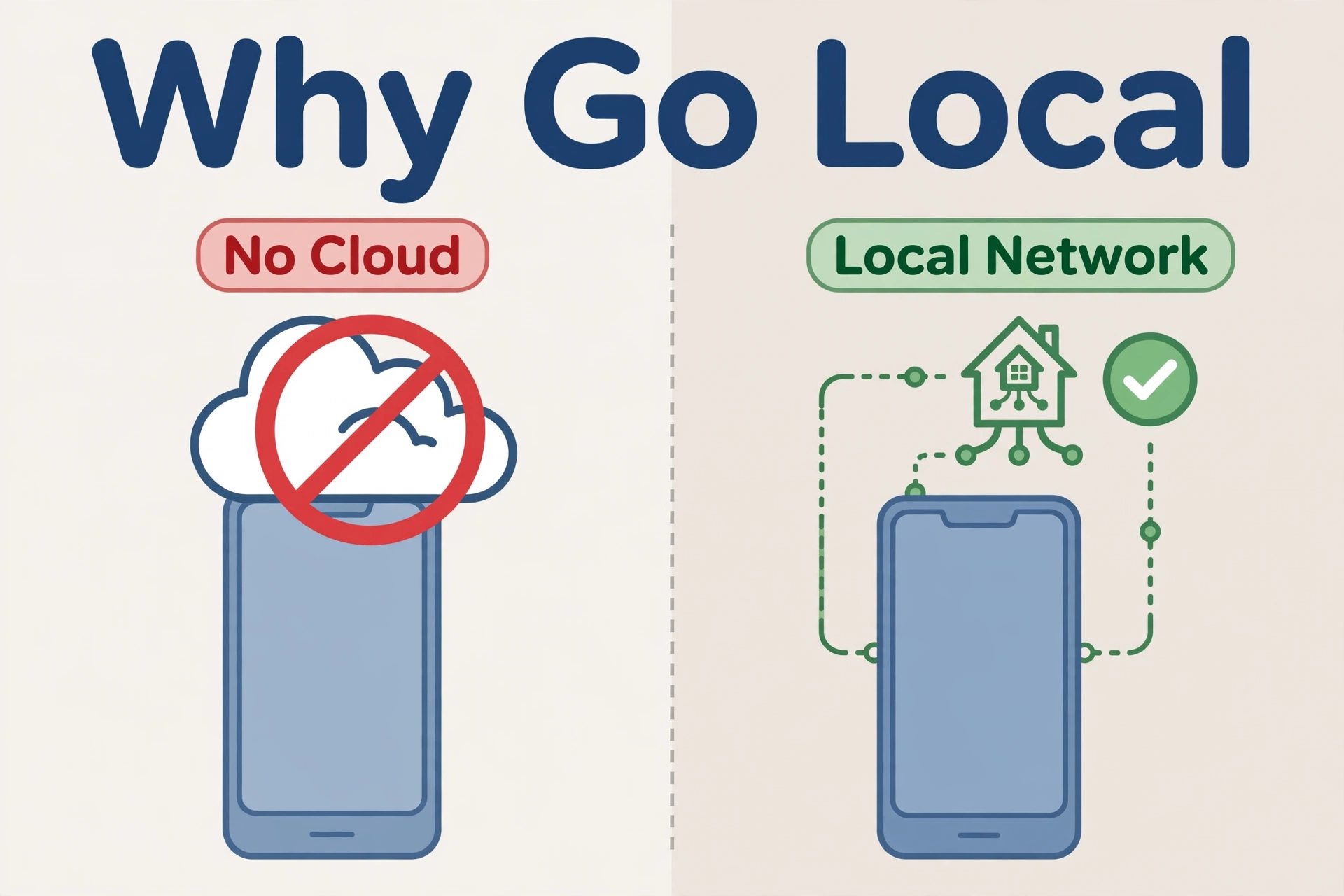
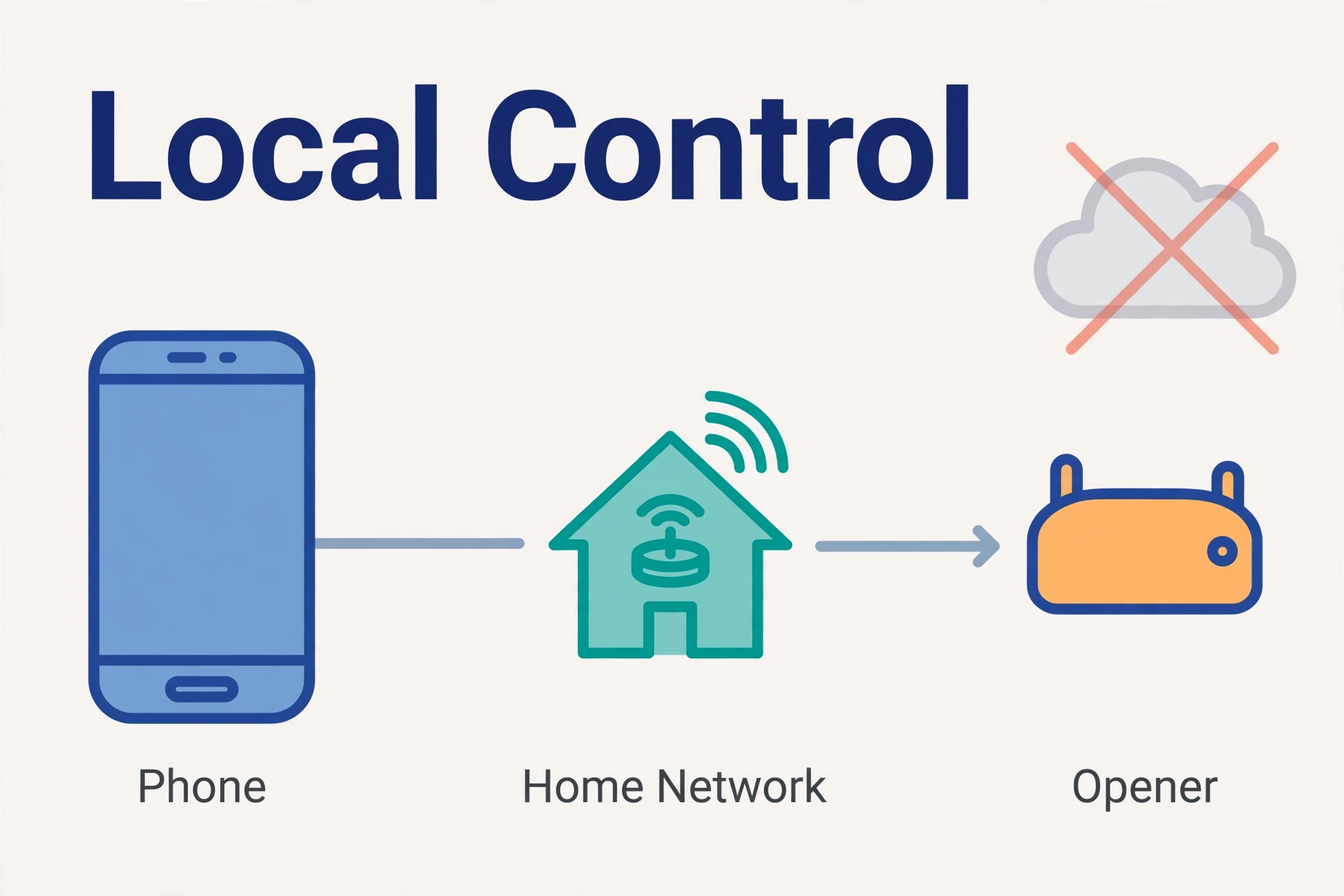
Local control means commands travel from your phone or automation hub to the opener over your home network — not up to a company’s server and back down. Three things follow from that:
- Speed: Local commands respond in a fraction of a second. Cloud round-trips add noticeable lag.
- Reliability: Your automations keep working when your internet goes down or when a vendor has an outage.
- Privacy: Nobody’s server logs every time your garage opens.
The trade-off is effort. Local options need a small hardware device wired to your opener, and sometimes firmware flashing. None of them are as plug-and-play as the myQ app. That is the honest price of independence.
What About Just Keeping myQ?
Fair question — and for many households, the answer is yes, keep it. If your automations are simple (open/close from your phone, a nightly auto-close schedule, a notification when the kids get home), the myQ app does all of that reliably today. The API cutoff only hurts you if you want the opener inside deeper automations: Home Assistant routines, Hubitat rules, or voice assistant workflows that Chamberlain does not officially support.
Think of it as a fork in the road. Path one: stay in the myQ ecosystem, accept its boundaries, and enjoy the polished app. Path two: invest an evening and around $60–$200 in local hardware, and own the integration outright. Neither is wrong — but do not start down path two expecting it to feel like path one. Local control rewards tinkerers and frustrates everyone else.
The 4 Best myQ Alternative Local Control Garage Door Options
1. ratgdo — Best for DIYers and Home Assistant
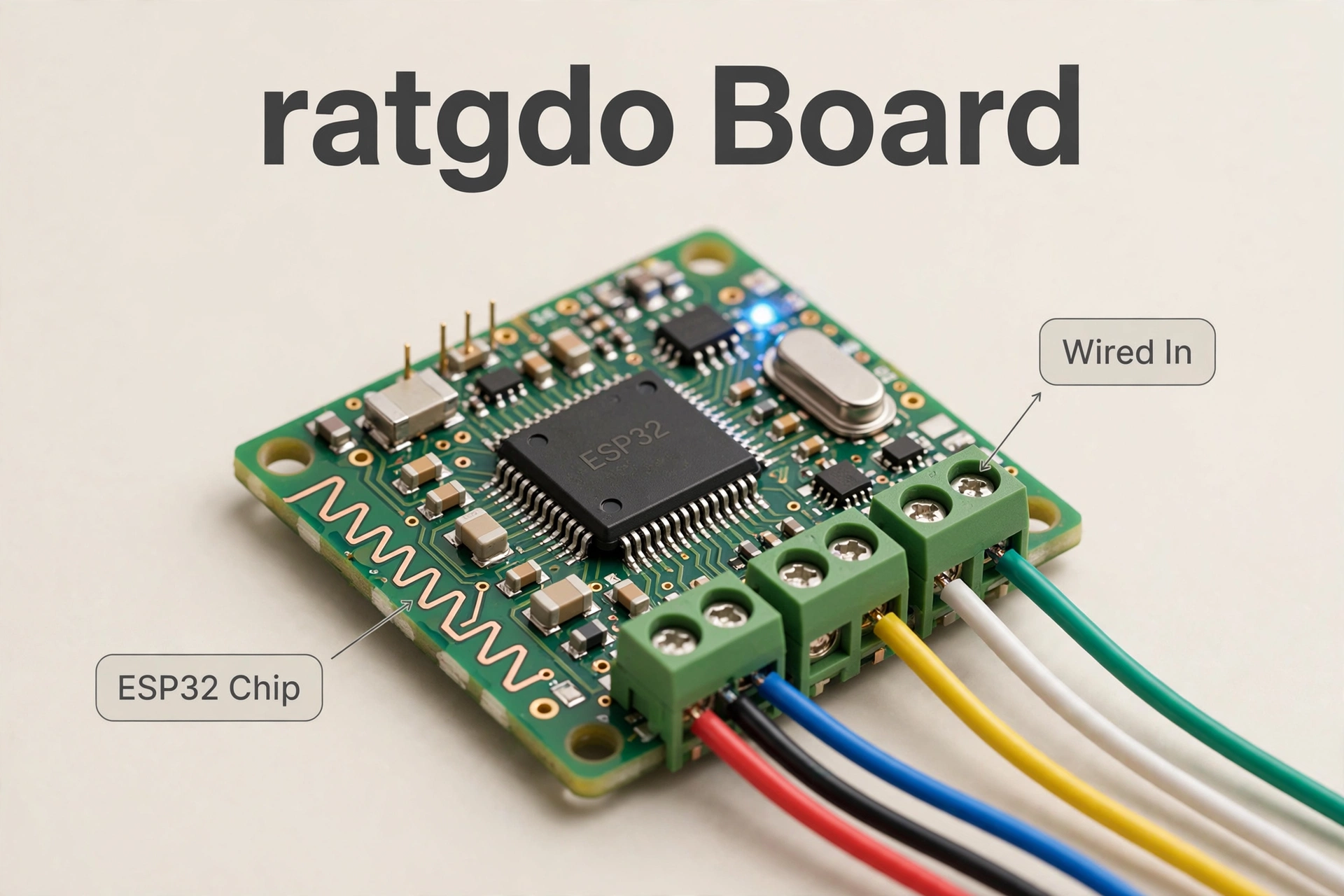
ratgdo is the heart of the myQ-alternative movement: an open-source ESP32-based control board that wires into your opener and speaks its native Security+ protocol directly. Because it talks the opener’s own language, it gets full status feedback — open, closed, opening, closing, motion, light — with no cloud in the middle and no polling delay.
You flash it with the firmware that fits your setup: ESPHome, MQTT, or native HomeKit. The current ratgdo32 board sells for around $62 from the official ratgdo store, plus a short wiring job at the opener’s terminals. It supports Security+ 2.0 (yellow learn button), Security+ 1.0, and dry-contact openers. The catch: it is a DIY product. You will strip wires, flash firmware from a computer, and troubleshoot on community forums if something misbehaves. For Home Assistant users, that is a feature, not a bug — but it is not for everyone.
Best for: Home Assistant or ESPHome users who want the deepest local integration.
Watch out for: DIY skill required; community support rather than a help desk.
2. Konnected GDO blaQ — Easiest Finished Product
The Konnected GDO blaQ takes ratgdo’s open-source technology and packages it as a finished consumer product: an elegant box that connects to your opener with as few as three wires and a power adapter, no firmware flashing required. It works locally with Home Assistant, Hubitat, and similar platforms, and through Konnected’s cloud with Alexa and Google Home.
You get the same rich status data as ratgdo — door position including partially-open states, obstruction sensor status, light control — without touching a soldering iron or a firmware flasher. See Konnected’s official GDO blaQ page for current compatibility and pricing. The premium over a bare ratgdo board buys you polish and a real company behind it.
Best for: People who want local control without a DIY electronics project.
Watch out for: Costs more than a bare ratgdo board; check your opener’s learn-button color for compatibility first.
3. Tailwind iQ3 — Best Automatic Open/Close
Tailwind’s killer feature is hands-free automation: with a small vehicle sensor, the garage opens as you arrive and can close after you leave — true geofencing-style behavior without fumbling for a remote. It also supports open/close alerts, schedules, and voice control, and one controller can handle up to three garage doors with additional sensors.
Tailwind is less “local” than ratgdo — it has its own app and cloud pieces — but it offers a local API that Home Assistant users can tap, which is why it survives on this list. Setup is straightforward: wire the controller to the opener terminals, mount the door sensor, and pair the vehicle sensor. If automatic arrival/departure is the automation you actually want, nothing else on this list does it as well.
Best for: Drivers who want the door to handle itself on arrival and departure.
Watch out for: Auto-close distance minimums may not suit every driveway; phone location permissions must be set correctly.
4. Meross Smart WiFi Controller — Cheapest Retrofit
The Meross controller is the budget path: a small WiFi device plus a door sensor that wires into over 200 opener brands and 1,600+ models. You get app control, open/close alerts, schedules, and native Apple HomeKit, Alexa, and Google Assistant support — the broadest voice-platform coverage here — for well under $100.
The honest caveat: Meross is cloud-dependent, not local. It is a myQ alternative in the sense that it frees you from Chamberlain’s ecosystem, but your commands still travel through Meross’s servers. For most households that is a fine trade at this price, especially HomeKit users. Just do not buy it expecting ratgdo-style local control — that is not what it is.
Best for: The cheapest way off myQ, especially for Apple HomeKit households.
Watch out for: Cloud-dependent; 2.4 GHz WiFi only; needs a solid signal in the garage.
Table: myQ alternatives for local control compared
| Feature | ratgdo | Konnected GDO blaQ | Tailwind iQ3 | Meross |
|---|---|---|---|---|
| Truly local | Yes | Yes | Partial (local API) | No (cloud) |
| Home Assistant fit | Excellent | Excellent | Good | Via HomeKit/cloud |
| Install difficulty | DIY (wiring + flashing) | Easy (3 wires) | Easy-moderate | Easy (20–30 min) |
| Auto open/close | Via automations | Via automations | Yes, vehicle sensor | No |
| Multi-door | One board per door | One unit per door | Up to 3 doors | One per door |
| Price range | Around $60 | Check current price | Check current price | Well under $100 |
| Best for | HA/DIY users | Plug-and-play local | Hands-free driving | Budget retrofit |
Which One Should You Pick?
Pick ratgdo if you run Home Assistant and are comfortable with basic wiring and firmware flashing. It is the deepest, cheapest, most private option — the enthusiast’s choice for a reason.
Pick the Konnected GDO blaQ if you want ratgdo-style local control but with a finished product, real documentation, and no flashing. The premium is worth it if your time matters more than $100.
Pick Tailwind iQ3 if automatic open-on-arrival is the feature you actually care about. Nothing else does hands-free driving as smoothly.
Pick Meross if you just want cheap, easy smart control with broad voice-assistant support and do not care about local-only operation.
One more consideration: think about who else uses the door. If your household includes people who will never open Home Assistant — kids, grandparents, guests — make sure whatever you pick still offers a dead-simple path for them: a wall button, a keypad, or a basic app. The fanciest local setup in the world fails if half the family cannot operate the door when you are not home. Every option on this list keeps the physical controls working, so nobody gets locked out of the garage by your smart-home ambitions.
And if you have not bought an opener yet at all, start from our best smart garage door opener roundup — sometimes the right alternative is simply choosing an opener whose ecosystem you already trust.
Safety Notes Before You Wire Anything
A garage door is the heaviest moving object in most homes. These devices wire into low-voltage terminals, not the high-tension spring — but respect the system anyway:
- Never touch the torsion spring. None of these installs require it. If a spring needs attention, call a pro.
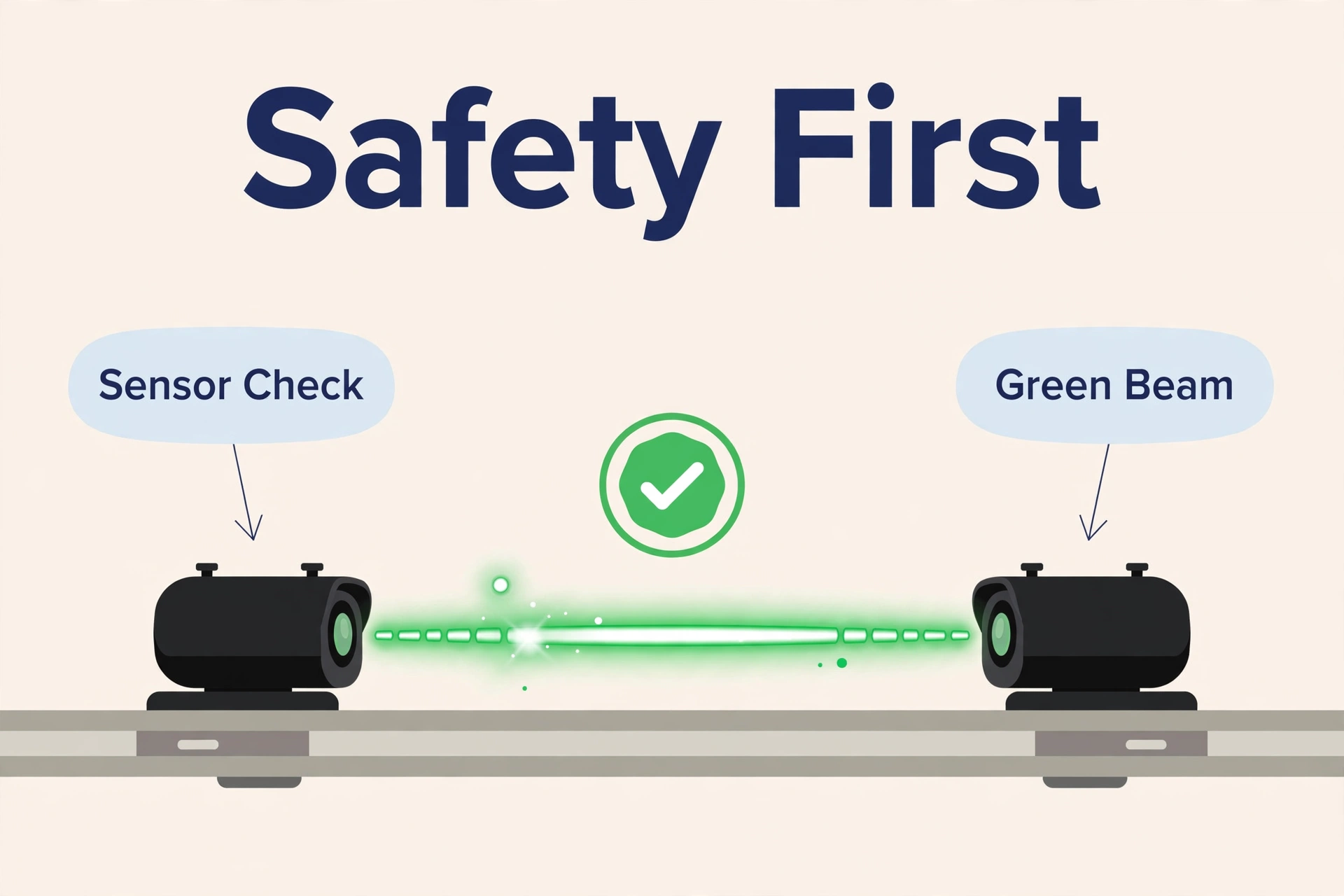
- Keep safety sensors working. After any controller install, test the photo-eye reversal monthly.
- Test auto-close carefully. If you enable automatic closing, watch several full cycles first and make sure the path is always clear — kids, pets, and bikes included.
- Secure the controller’s account. Strong unique password, two-factor authentication where offered. A garage door deserves real account security.
Pair any of these with exterior monitoring — the best security cameras with local storage watch the driveway around the clock with no subscription, which complements a locally-controlled opener nicely.
Frequently Asked Questions
Why did myQ block Home Assistant?
In late 2023, the Chamberlain Group cut off third-party API access to myQ, which broke the unofficial integrations that Home Assistant, SmartThings, and Hubitat relied on. Chamberlain cited security; the practical result is that myQ openers now work with third-party platforms only through Chamberlain’s own official (and limited) channels.
Is ratgdo legal and safe to use?
ratgdo is an open-source hardware project that speaks the opener’s native Security+ protocol — it does not hack or bypass safety systems. It wires into the same low-voltage terminals as a wall button. That said, it is a community DIY product: you assume responsibility for correct installation, and you should verify compatibility with your exact opener model first.
Do I need to replace my opener to get local control?
No. All four options on this list are retrofit devices that work with your existing opener. Replace the whole unit only if the opener itself is old, loud, or unreliable.
Which myQ alternative works with Apple HomeKit?
ratgdo (with HomeKit firmware), the Konnected GDO blaQ, Tailwind iQ3, and Meross all support Apple HomeKit. Meross has the broadest native platform support overall (HomeKit, Alexa, Google, SmartThings); ratgdo gives the deepest local HomeKit integration for tinkerers.
Will these work if my internet goes down?
ratgdo and the Konnected GDO blaQ keep working locally without internet (as long as your home network and Home Assistant host are up). Tailwind’s core local functions mostly survive; Meross, being cloud-dependent, does not — use the wall button or remote during outages.
Can one controller handle two garage doors?
Tailwind iQ3 can control up to three doors with additional sensors. ratgdo, Konnected, and Meross need one unit per door. If you have a two-door garage, budget accordingly.
Conclusion
The myQ API cutoff pushed a lot of people toward local control, and the good news is the alternatives are mature in 2026. ratgdo is the best answer for Home Assistant users who do not mind DIY; the Konnected GDO blaQ is the same idea in a finished box; Tailwind owns hands-free driving; Meross owns the budget. Pick the one that matches your skills and your automations — and enjoy a garage door that answers to you, not to a cloud. Your future self, debugging automations at midnight, will thank you for choosing the local path.
