

mmWave vs PIR Motion Sensors: Which Presence Detection Is Better?
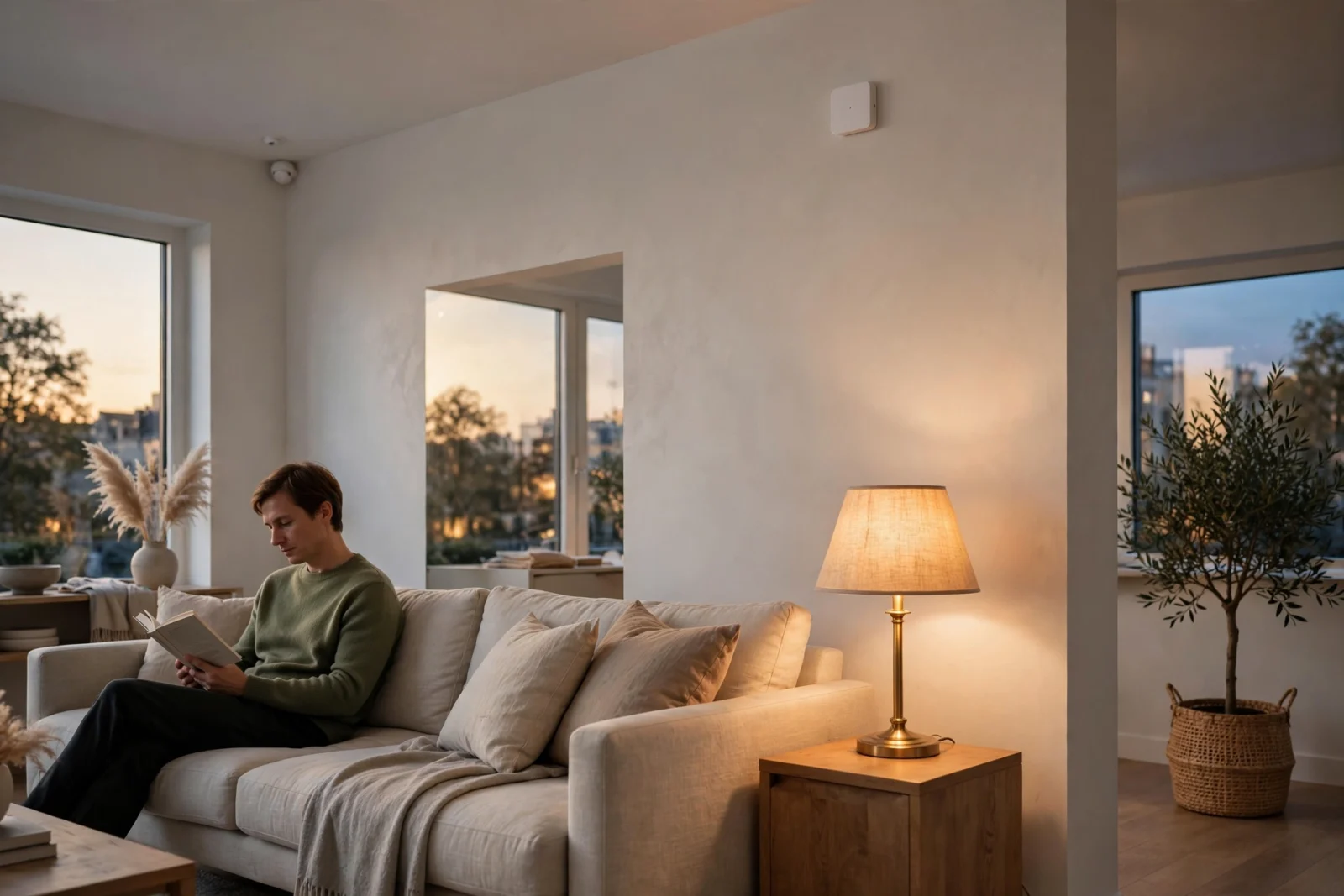
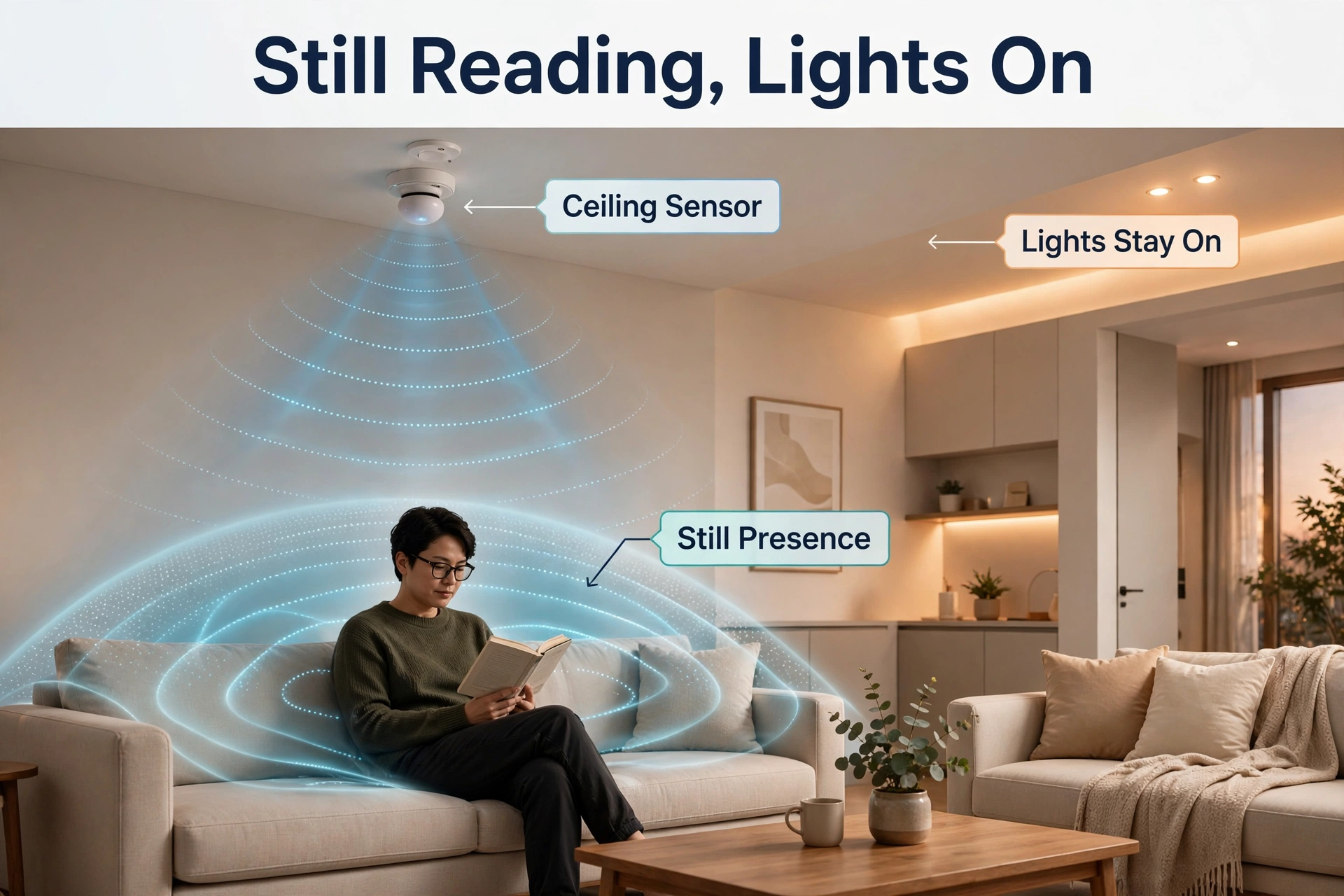
You walk into the room, the lights come on, you sit down to read — and ten minutes later you’re waving your arms in the dark like you’re flagging down a plane. That small humiliation is the difference between motion detection and presence detection, and it’s why the mmwave vs pir sensor question has become the first real fork in the road for smart-home lighting. PIR sensors have run our hallways for decades. mmWave radar sensors are the newcomers promising to know you’re still there even when you’re perfectly still. So which one belongs in your rooms? The honest answer is “it depends where” — and by the end of this comparison you’ll know exactly which rooms get which sensor, and why.
How PIR Sensors Work
PIR stands for passive infrared. A PIR sensor doesn’t send anything out — “passive” is the giveaway. It watches the room through a faceted plastic lens, looking at infrared heat radiation, the kind every warm body emits. The sensing element is split into zones, and the magic happens when a warm object moves from one zone into the next: the sensor sees the heat pattern change, and that change is what it reports as motion.
This design has real virtues. PIR sensors are tiny, cheap, sip power (battery models can run for a very long time), and react almost instantly when a person crosses their field of view. That’s why they’re everywhere: alarm systems, hallway lights, and most battery-powered smart sensors use PIR, including many devices in Zigbee lineups like those in our roundup of the best Zigbee coordinator dongles that keep those sensors connected.
But notice the catch hiding in the mechanism: PIR detects change, not presence. A person sitting still produces a steady heat pattern, and steady means invisible. PIR also needs a clear view — heat radiation doesn’t pass through furniture, walls, or glass — and it can be fooled by rapid warmth changes, like sun patches moving across a floor or warm air from a heating vent. If your automations drop connections or behave oddly, by the way, the sensor may not be the problem at all; our guide to why Zigbee devices keep going offline covers the network side of that headache.
How mmWave Sensors Work
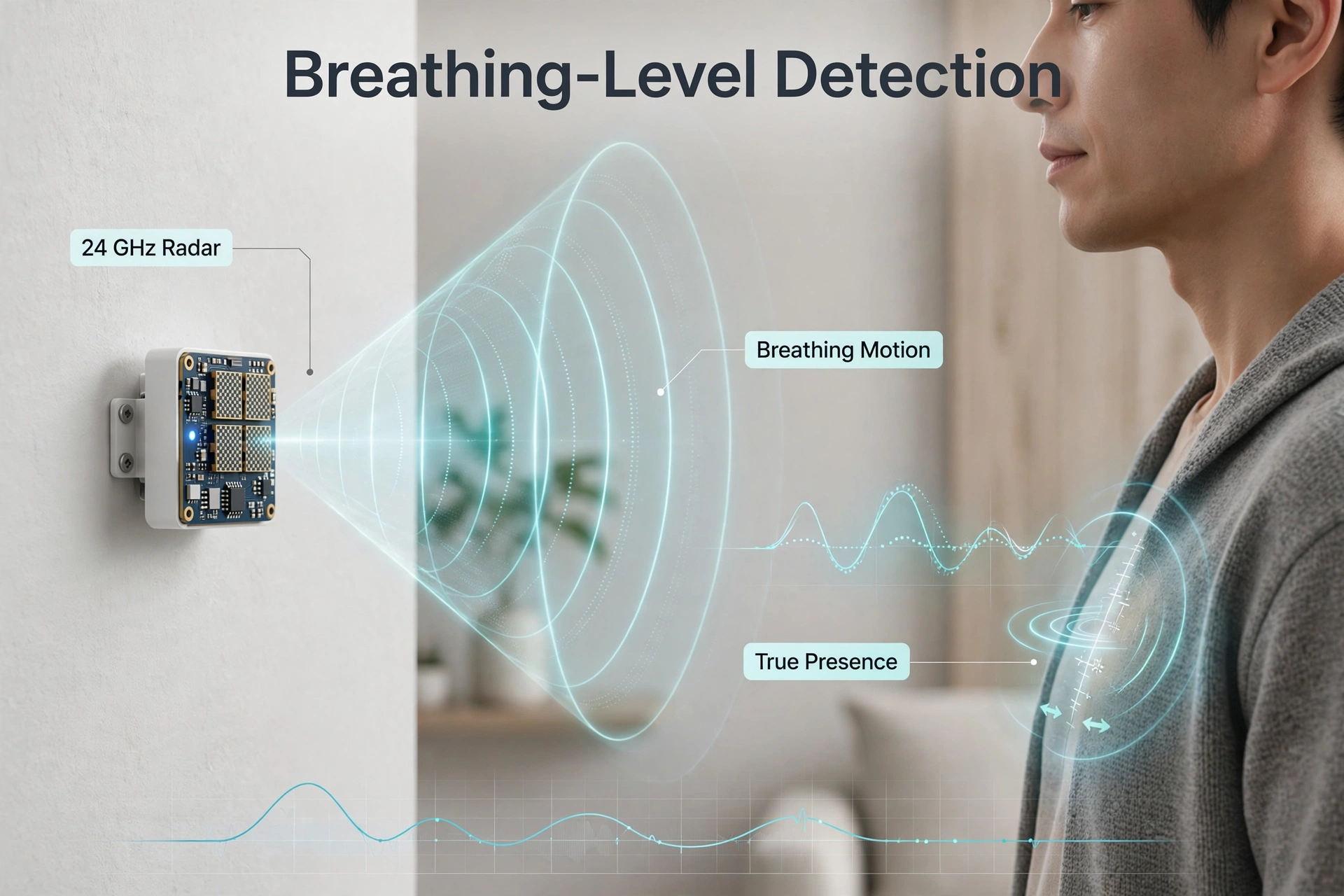
mmWave sensors play a completely different game. They are active radar: the sensor emits low-power millimeter-wave radio signals and listens to the echoes, building a picture of what moved, how far away it is, and how fast. Common smart-home radar modules work in the 24 GHz band (with some higher-end units using 60 GHz), and the sensitivity is startling — the returning signal carries micro-movements as small as the rise and fall of a chest while breathing.
That changes what the sensor can claim. A PIR sensor can say “something warm just moved.” A mmWave sensor can say “a person is sitting 8 feet away, roughly still, and still breathing” — which is to say, it detects presence, not just motion. Radar also works in total darkness, doesn’t involve a camera (nothing to feel spied on by), and the radio waves pass through light materials like drywall, curtains, and plastic housings, so placement is more forgiving and the sensor can even sit inside an enclosure.
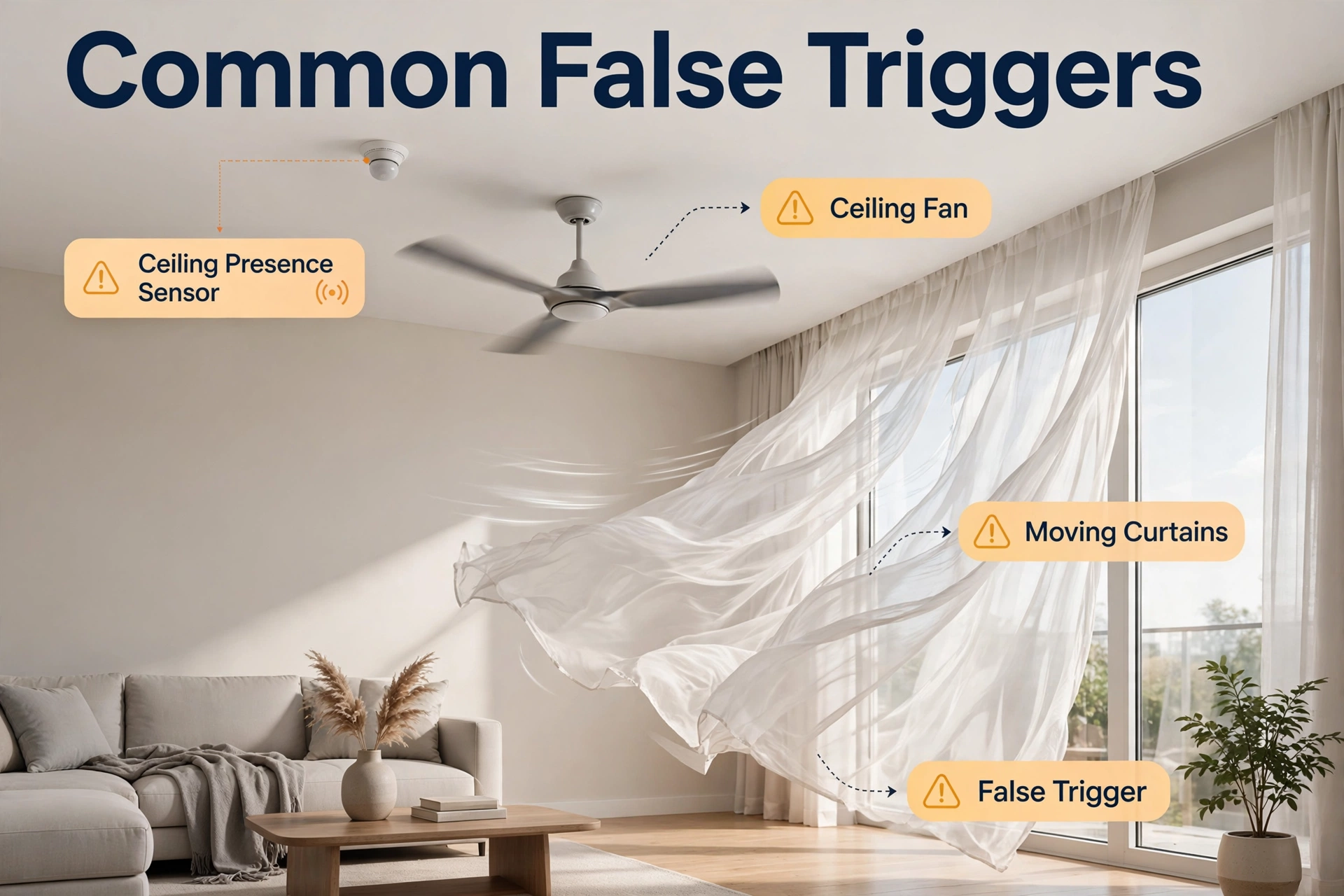
The trade-offs are real, though. Radar analysis takes a beat longer than PIR’s simple heat-change trigger, so lights can feel a touch less instant on entry. mmWave modules use more power, so nearly all of them want mains or USB power rather than a coin cell. And anything that moves in the detection field — a spinning fan, rustling curtains, a pet with ambitions — is movement to a radar, whether or not it’s a person.
mmWave vs PIR Sensor: The Head-to-Head Comparison
Here’s the whole argument on one screen. Scan the table, then we’ll walk the rooms one by one.
| Feature | PIR Sensor | mmWave Sensor |
|---|---|---|
| What it detects | Changes in infrared heat — motion only | Radar reflections, including tiny micro-movements like breathing |
| Detects a still person | No — a motionless person becomes invisible | Yes — true presence, even sitting, reading, or sleeping |
| Response speed on entry | Almost instant | Very fast, but can lag slightly while confirming presence |
| Power use | Extremely low; battery models last a long time | Higher; usually needs mains or USB power |
| Line of sight | Required; blocked by furniture, walls, and glass | Not required; passes through drywall, curtains, and plastic |
| False trigger sources | Sunlight patches, heating vents, sudden warm air | Ceiling fans, moving curtains, pets, anything that moves |
| Distance and zones | General coverage of its field of view | Reports distance; many models support range limits and detection zones |
| Privacy | No camera, senses heat only | No camera, senses reflections only |
| Typical cost | Low; among the cheapest smart sensors | Higher; radar hardware costs more |
| Best role | Fast entry triggers, hallways, alarms, battery spots | Occupied-room presence: living rooms, offices, bedrooms |
Typical prices: a few examples
To put the table’s “Low” and “Higher” in context, here are typical prices for a few examples, checked 6 November 2026. Prices vary by retailer, and these are examples only, not recommendations.
PIR examples: SONOFF SNZB-03P ~$11.90; IKEA VALLHORN ~$11.99; Aqara Motion Sensor P1 ~$20.99; Hue Motion Sensor ~$44.99.
mmWave examples: Apollo MSR-2 from ~$34.99; Aqara FP300 ~$50 US; Aqara FP400 ~$80-ish; Aqara FP2 list $82.99.
The one-line summary
PIR answers “did something just move?” almost instantly and for pennies. mmWave answers “is someone actually here?” — including someone doing nothing at all. Most sensor frustration comes from asking one of them the other’s question.
Which Rooms Should Use Which Sensor?
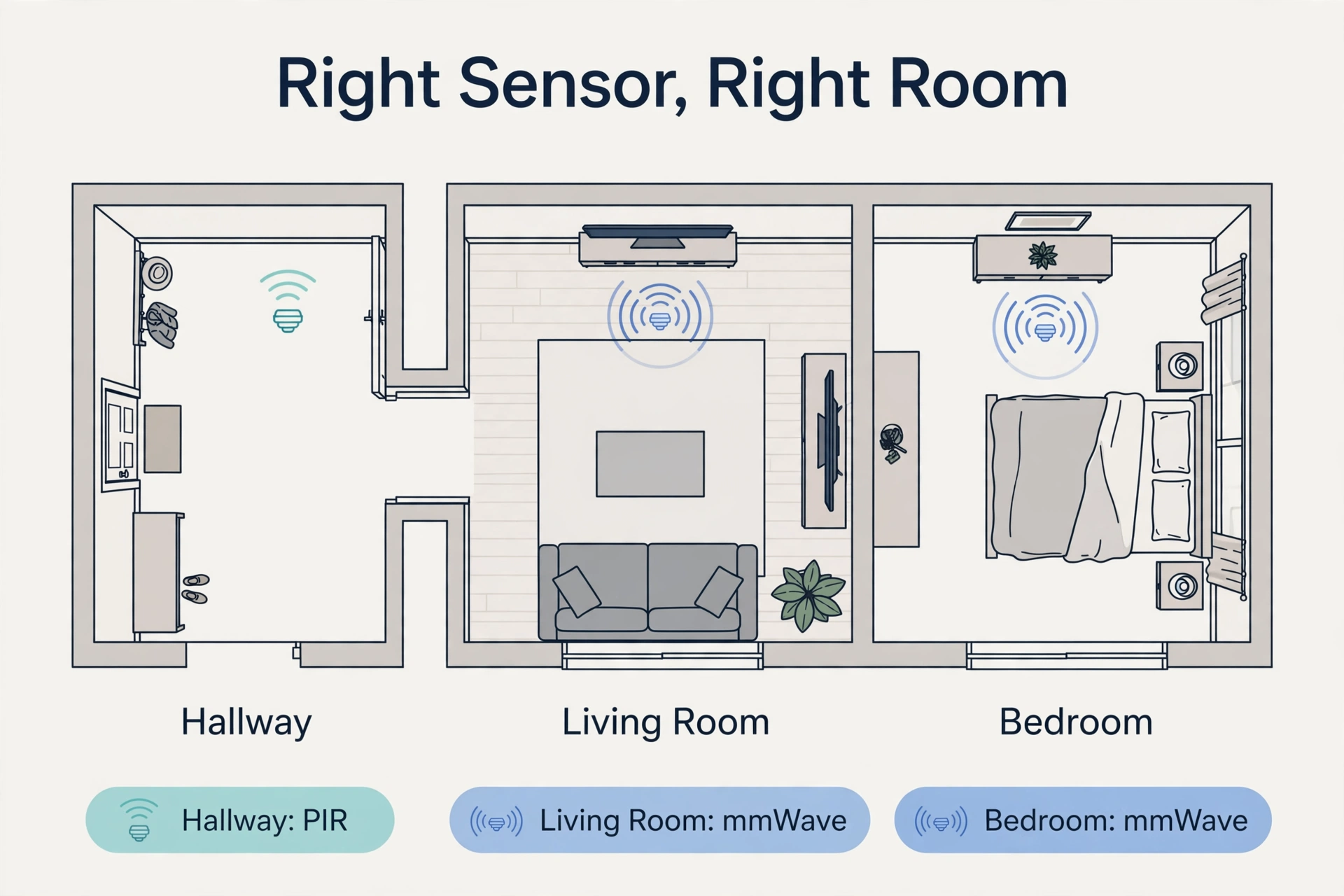
Hallways, stairs, and entryways: PIR wins
Nobody sits still in a hallway. People pass through, and what you want is instant light the moment they enter and a quick off behind them. PIR is faster on entry, cheaper, and can run on a battery for ages. Radar here buys you nothing except the risk of detecting people in the next room through the wall.
Living rooms and home offices: mmWave wins
This is where PIR earns its bad reputation. Reading, watching a film, working at a desk, a video call where you barely move — all read as “empty room” to a heat-change sensor, and the lights dutifully switch off mid-chapter. mmWave keeps presence locked in through all of it. For these rooms, PIR alone is the wrong tool, full stop.
Bedrooms: mmWave, tuned carefully
A sleeper is the ultimate still person. Radar that picks up breathing can keep a night routine honest — lights that stay politely off, or a fan that keeps running while someone’s actually in bed. But tune it: aim the sensor so it covers the bed, not the whole street-facing wall, and set a sensible maximum distance so passers-by outside don’t count as occupants.
Bathrooms: mmWave with zones
Showers and baths are peak “person not moving much” territory, and radar sees through a shower curtain or steam that defeats PIR. This is also where zone control shines — you can treat the shower area differently from the doorway. We go deep on exactly that in our step-by-step on how to configure mmWave detection zones.
The hybrid answer many homes land on
You don’t actually have to pick a team. A popular pattern is PIR for the instant trigger (“someone entered — lights on now”) and mmWave for the veto (“someone is still here — do not turn off”). Many better presence devices literally combine both sensors in one housing for exactly this reason. In Home Assistant, the logic is easy to express once both sensors report in — and if you’re deciding how those sensors connect, our Zigbee2MQTT vs ZHA comparison helps you pick the stack they’ll live on.
False Triggers and Tuning: Where Each Sensor Misbehaves
Neither sensor is “set and forget.” Each has a characteristic way of lying to you, and knowing the pattern makes the fix obvious.
PIR’s classic lies
- The sunny-afternoon ghost: a patch of sunlight sweeping across the floor warms and cools surfaces, and the sensor reads motion. Fix: reposition so the sensor doesn’t stare at sunlit floor, or lower sensitivity.
- The heating vent hello: warm air cycling from a vent looks like a warm object arriving. Fix: angle the sensor away from vents and radiators.
- The statue problem (the big one): this isn’t a false trigger — it’s a false absence. You are present; the sensor swears you’re not. No PIR tuning truly fixes this. Longer timeouts only delay the argument.
mmWave’s classic lies
- The haunted fan: spinning ceiling-fan blades are rhythmic movement, and radar loves rhythmic movement. Fix: exclude that area with a distance limit or zone, or move the sensor so the fan sits outside its pattern.
- Through-the-wall neighbors: radar passes through drywall, so the person in the next room can keep your bathroom “occupied.” Fix: reduce maximum detection distance — community tuning notes for common radar modules, like the LD2410 presence-sensor setup notes, recommend trimming range to match the room rather than accepting the generous default.
- The curtain ballet: air currents moving curtains or plants register as motion. Fix: raise the movement threshold slightly, or re-aim so soft furnishings at the edge of range don’t dominate.
The vendor-neutral explainer from Homey’s mmWave vs PIR guide makes the same point from the manufacturer side: the two technologies fail in opposite ways, which is exactly why tuning — and sometimes combining them — matters more than brand choice.
Privacy, Safety, and Power: The Practical Fine Print
Both technologies are camera-free, which is their shared superpower. PIR senses heat patterns; radar senses reflections of its own radio chirps. Neither records images or audio, so both are reasonable in bedrooms and bathrooms where a camera would be a hard no. mmWave runs at power levels far below a Wi-Fi router, and it works identically in darkness — there’s no infrared illuminator or glowing eye. On the practical side, plan power honestly: PIR sips and can live on batteries in awkward spots for a very long time, while radar’s continuous sensing wants a wall socket or USB. If your dream sensor spot has no power nearby, that fact alone may make the decision for you.
It’s also worth being precise about one popular claim: because mmWave can hold presence on a person lying completely still, some radar products aim at “fall-adjacent” duties — noticing that someone who should be moving hasn’t, or flagging that a person is down and motionless. That’s a genuinely promising use of the technology. But a general-purpose presence sensor is not a medical device, and no sensor in this price class should be your only safety net for a vulnerable family member. Treat it as a helpful signal, not a guarantee.
Frequently Asked Questions
Can mmWave replace PIR completely?
In occupied rooms, mostly yes — but homes still benefit from PIR’s instant, battery-friendly triggering in pass-through spaces. Most mature setups use both, each where it’s strong.
Why do my lights still turn off on me with a PIR sensor?
Because PIR sees change, not presence. Sit still long enough and you vanish from its world. Longer off-delays mask it; mmWave actually solves it.
Does mmWave work through walls?
Through light materials like drywall, curtains, and plastic — yes. That’s a feature for flexible mounting and a bug when it detects the next room. Distance limits and zones keep it honest.
Is mmWave radar safe around people and pets?
The radio power involved is very low — well below everyday devices like routers — and the sensors contain no camera or microphone. Pets are a detection question rather than a safety one: radar will notice your cat, so use zones and thresholds if the cat shouldn’t count as “someone home.”
Which is better for Home Assistant?
Both integrate well. PIR devices are everywhere, cheap, and often battery-powered, which makes them easy to scatter. mmWave devices usually expose richer data — presence, distance, sometimes zones — which makes for smarter automations. The strongest Home Assistant rooms usually run PIR for entry and mmWave for “still occupied,” with zones configured per our detection-zones guide.
The Bottom Line
The mmwave vs PIR contest has no single champion, because they’re answering different questions. PIR is the sprinter: instant, cheap, battery-sipping, perfect for hallways, stairs, and anywhere people only pass through — and blind the moment you sit down. mmWave is the watcher: slower off the mark and thirstier for power, but it knows you’re on the sofa, at your desk, or asleep, because it can feel you breathing. Buy PIR where motion is all that matters. Buy mmWave where presence matters. And where both matter — which is most living spaces — let them share the job. Your lights will stop arguing with you, and the arm-waving era ends.
