

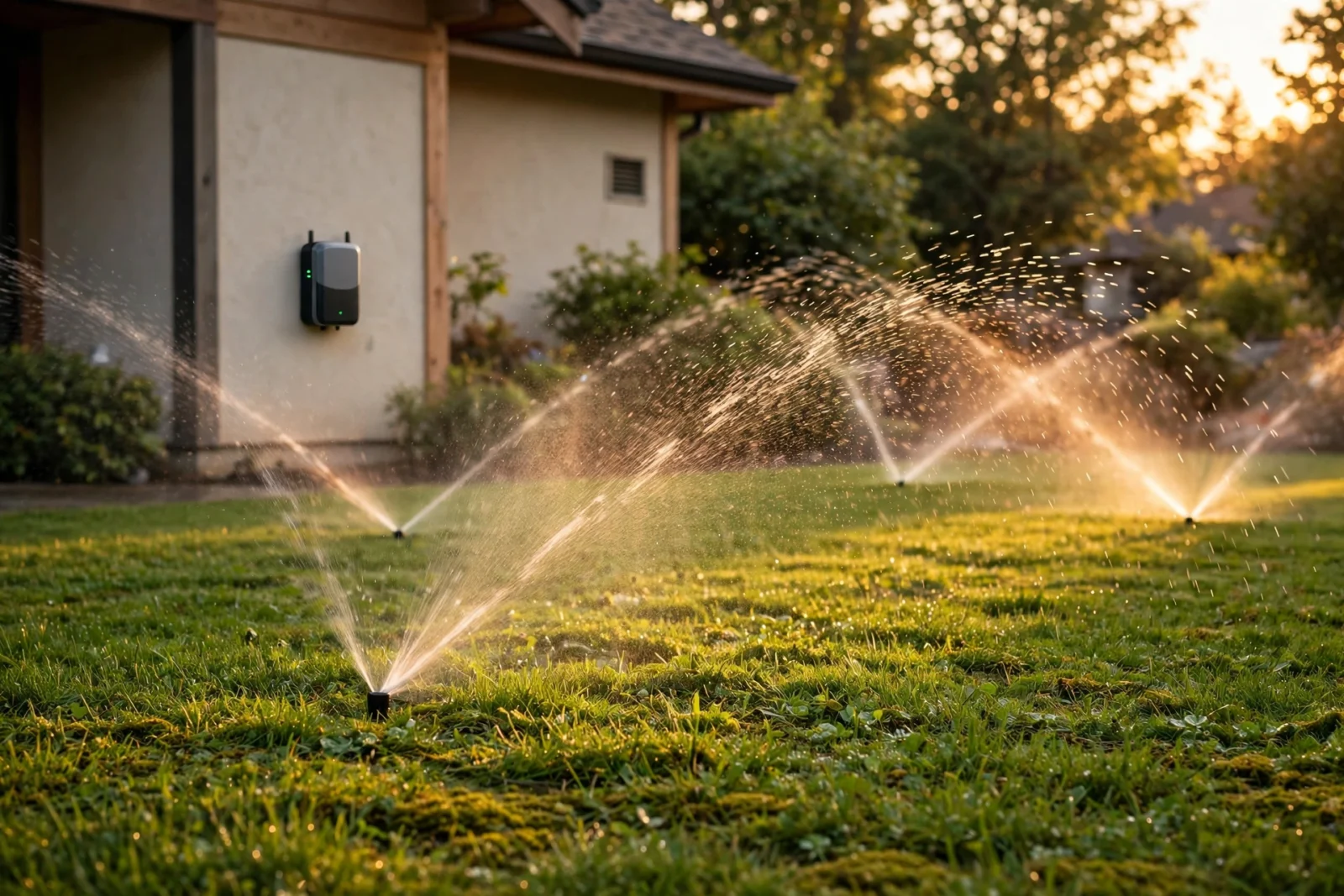
In the rachio vs orbit b-hyve debate, the Rachio 3 is the better controller for most homeowners — smarter weather intelligence, a more polished app, and broader smart-home support. The Orbit B-hyve wins on price by a wide margin and includes outdoor-ready hardware Rachio charges extra for. Here is an honest breakdown of where each one earns its money.
Rachio vs Orbit B-hyve: The Quick Verdict
Buy the Rachio 3 if you want the best app experience, the most accurate weather-based watering, and deep smart-home integration including Apple HomeKit. It costs around $180 to $250 for the 8-zone model, and it earns that premium every time you open the app.
Buy the Orbit B-hyve (the XR line is the current sweet spot) if budget matters most. At around $90 to $130, it delivers roughly 80% of the Rachio experience — weather-based skips, app control, EPA WaterSense certification — plus a weatherproof locking cabinet and Bluetooth control that Rachio lacks. To see how both fit into the wider market, check our best smart irrigation system roundup.
Zones and Hardware
Both controllers come in 8-zone and 16-zone versions, which covers everything from a small suburban lawn to a large multi-bed landscape. Count your existing zones before buying — most homes need 4 to 8, and paying for 16 you will never wire is wasted money.
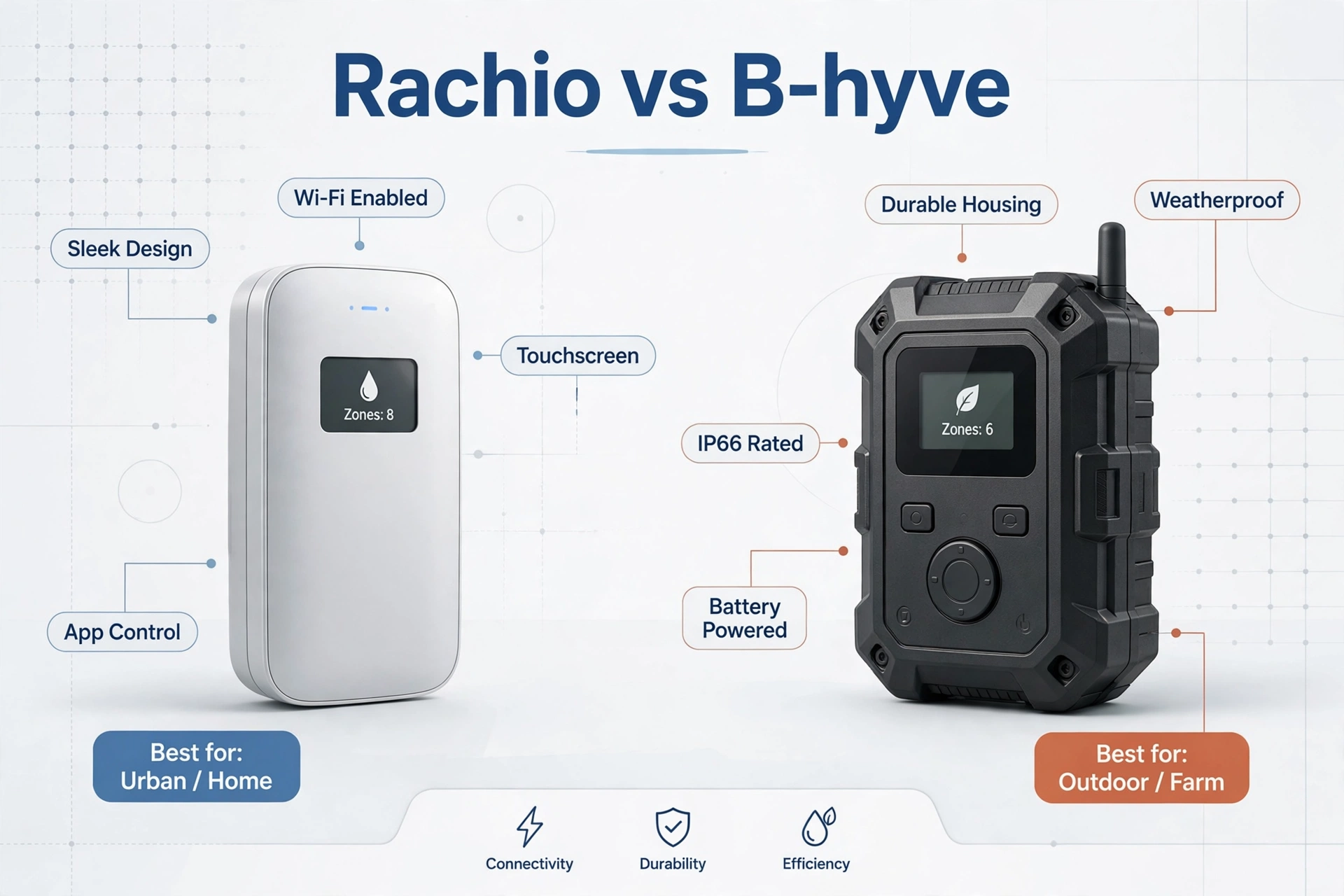
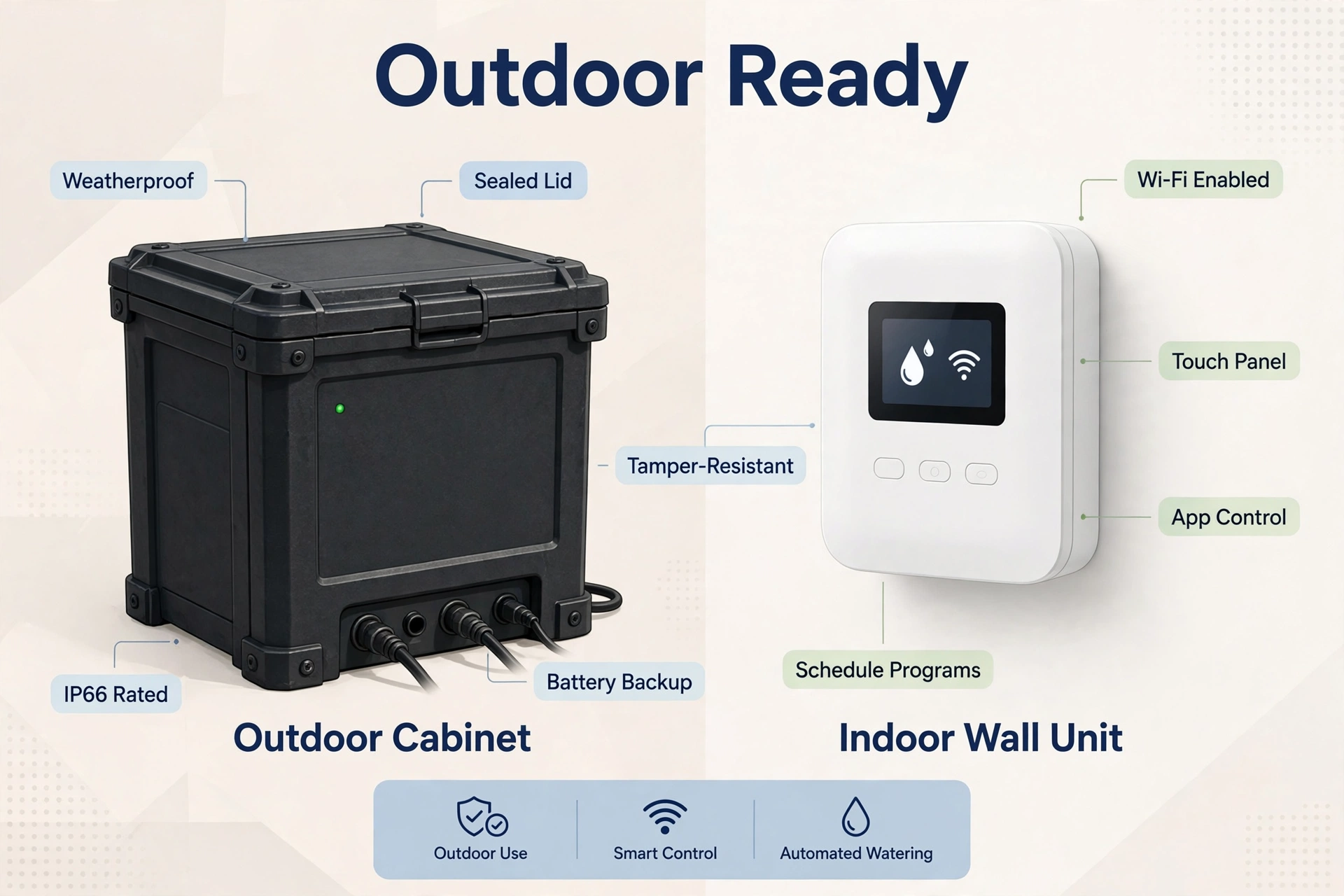
The hardware philosophies differ. Rachio 3 is a sleek indoor unit: compact, minimal, designed to mount in a garage. If it must live outdoors, you need a separate weatherproof enclosure, which adds cost and bulk. Orbit takes the opposite approach — the B-hyve ships in a weather-resistant locking cabinet, so it can mount straight onto an exterior wall with no accessories. It also has physical buttons on the unit for manual runs, while the Rachio is app-only.
Weather Intelligence: ET-Based vs Rain-Skip
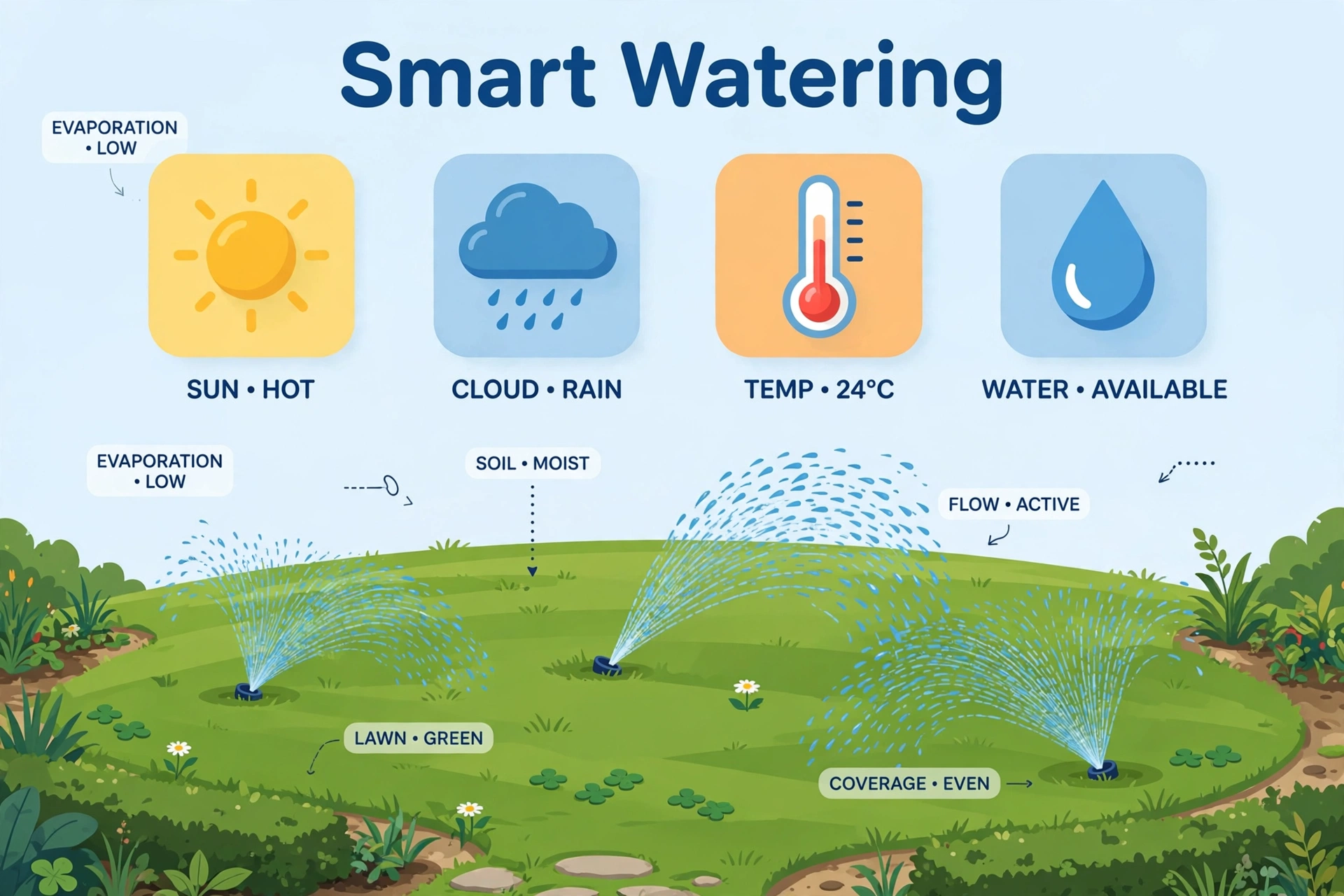
This is the biggest real-world difference. Rachio’s Weather Intelligence Plus pulls hyperlocal data from hundreds of thousands of weather stations and calculates evapotranspiration (ET) — essentially, how much water your soil actually lost. Its Flex Daily schedule then waters only what each zone needs, adjusting durations automatically. It is the closest thing to a set-and-forget lawn.
Orbit’s WeatherSense is simpler: it watches forecasts and recent rain, then skips scheduled runs when watering isn’t needed. It works and it saves water, but it is coarser — more of a smart rain-skip than true ET-based scheduling. For most lawns the practical gap is modest, but Rachio’s approach wastes less water in shoulder seasons.
App Experience
Rachio’s app is the best in the category by most accounts — highly rated, intuitive zone setup, clear watering history, and genuinely useful notifications. Setup walks you through soil type, plant type, sun exposure, and slope, and the resulting schedules just work. The app also estimates gallons used per zone, which makes the water savings concrete instead of abstract.
The B-hyve app is functional but less polished. A meaningful share of owner reviews report occasional missed runs, inaccurate watering history, or setup hiccups connecting to WiFi. Many owners never hit these issues, but the pattern is consistent enough to mention: if app reliability is a dealbreaker, that alone can justify Rachio’s premium.
Connectivity and Smart Home Support
One spec-sheet surprise: the Orbit B-hyve supports dual-band WiFi (2.4 and 5 GHz) plus Bluetooth, while the Rachio 3 is 2.4 GHz WiFi only. Bluetooth is genuinely useful — you can control the Orbit from your phone during setup or at a property with flaky internet, no cloud required.
On voice assistants, Rachio supports Alexa, Google Home, and Apple HomeKit. Orbit supports Alexa and Google Home but not HomeKit. Both work with the usual routines like “water the front yard,” and both can be triggered from broader smart-home automations.
A practical note: sprinkler controllers often live in garages or on exterior walls where WiFi is weakest, and a controller that can’t reach the cloud can’t adjust for weather. If your garage is a dead zone, fixing coverage with a best mesh WiFi for smart home setup pays off for the irrigation controller as much as for anything else.
EPA WaterSense and Rebates
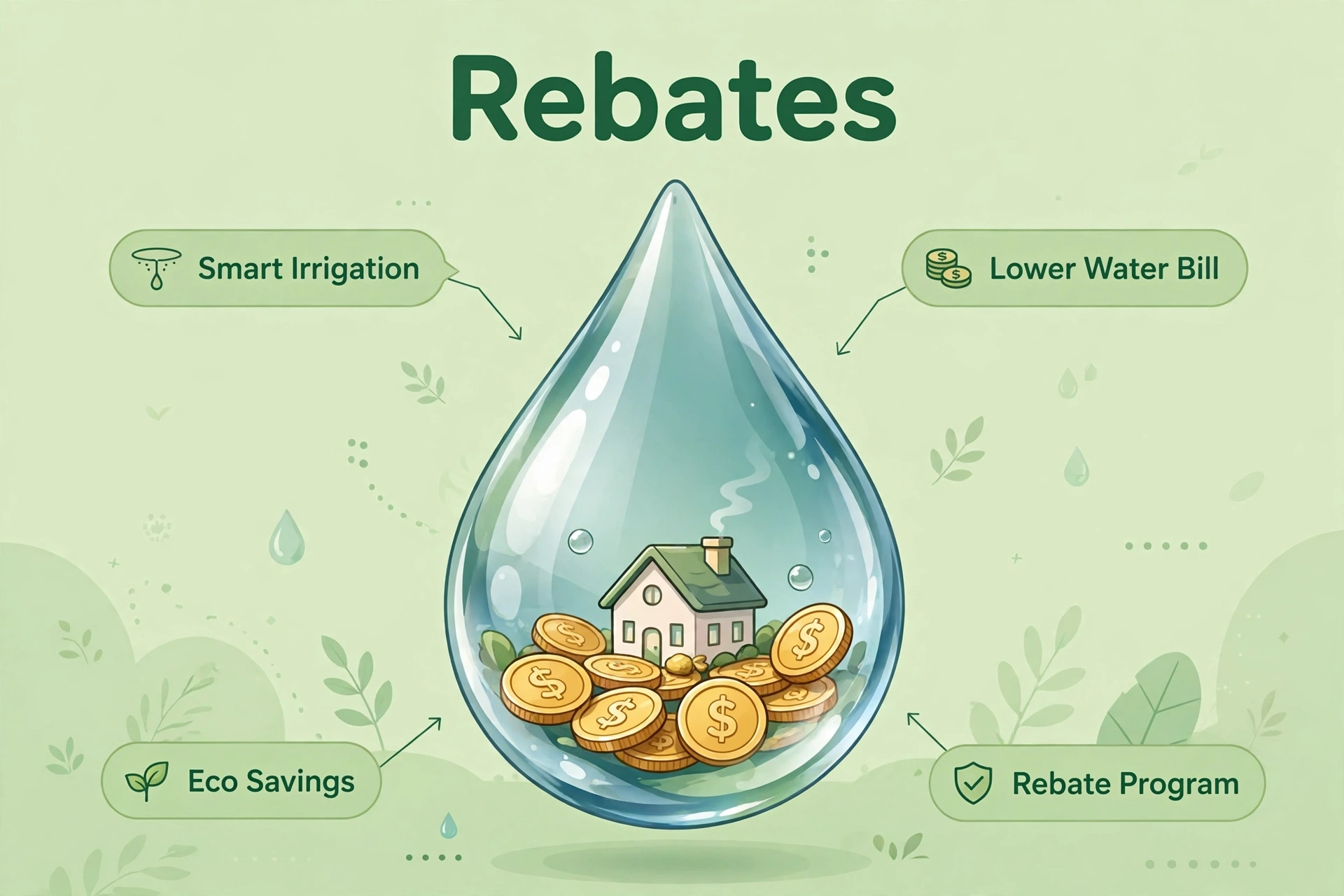
Both controllers are EPA WaterSense certified, which matters for two reasons. First, it is an independent signal that the weather-based features actually save water (typically 20 to 30% versus a dumb timer). Second, many water utilities offer rebates — often $50 to $100+ — for installing a WaterSense controller, which can cut the Orbit’s effective price to nearly nothing and take a real bite out of the Rachio’s.
Check your local water district’s rebate page before buying. Rebate programs change yearly, and some require the controller to be on a specific qualifying-products list.
Price and Value
The gap is stark: around $180 to $250 for the Rachio 3 (8-zone) versus around $90 to $130 for the Orbit B-hyve XR (8-zone). Sixteen-zone versions of each run higher. Both go on sale in spring, which is the best time to buy.
Value math: if a utility rebate covers $75 of either controller, the Orbit can end up nearly free while the Rachio lands around $100 to $175. At those effective prices, the decision often comes down to how much you value the better app and ET-based scheduling. Also factor in longevity: a controller lasts 5 to 10 years, so a $100 price gap amortizes to barely $10 to $20 a year — small compared to a decade of water bills.
Table: Rachio 3 vs Orbit B-hyve XR compared (2026)
| Feature | Rachio 3 | Orbit B-hyve XR |
|---|---|---|
| Zones | 8 or 16 | 8 or 16 |
| Typical price (8-zone) | Around $180–$250 | Around $90–$130 |
| Weather approach | ET-based Flex Daily | Forecast rain-skip |
| Connectivity | 2.4 GHz WiFi | Dual-band WiFi + Bluetooth |
| Outdoor mounting | Needs separate enclosure | Weatherproof cabinet included |
| Manual controls | App only | Buttons on unit |
| Voice assistants | Alexa, Google, HomeKit | Alexa, Google |
| EPA WaterSense | Yes | Yes |
| Warranty | 2 years | 2 years |
Installation: What to Expect
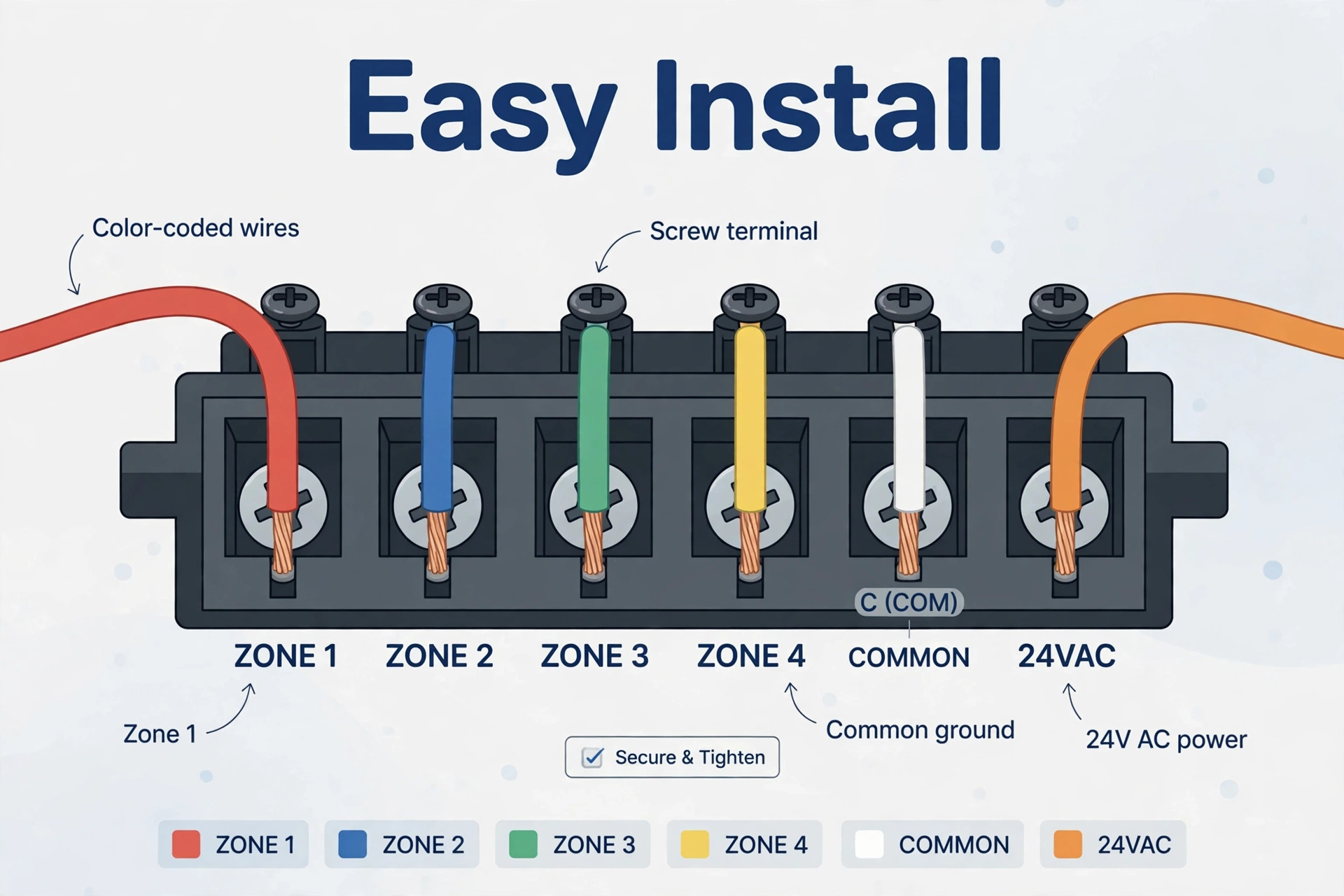
Both controllers replace a standard 24V AC timer, and the wiring is the same either way: label each zone wire with the included stickers, photograph the old wiring, then move wires to the matching terminals. Most DIYers finish in 30 to 60 minutes with a screwdriver.
Two gotchas: first, turn off the breaker (or unplug the old transformer) before touching wires — 24V won’t kill you but a short can fry the old transformer. Second, the Rachio needs a strong 2.4 GHz signal at its mounting spot; test with your phone before you screw it to the wall. Third, take a photo of your old controller’s wiring before you label anything — labels fall off, photos don’t. If a wire’s label is already missing, you can identify zones by running each one manually and watching which sprinklers pop up.
Flex Daily vs Fixed Schedules: Which to Use
Rachio offers three schedule types, and picking the right one matters more than most people realize. Flex Daily is the flagship: it recalculates every zone’s watering based on weather, soil moisture estimates, and plant needs, watering only when the soil actually needs it. This is where the big water savings come from, but it needs accurate zone settings to work well.
Flex Monthly adjusts durations once per month based on historical seasonal patterns — simpler and more predictable, a good middle ground. Fixed schedules are just smart timers with rain skip: same days, same durations, skipped when it rains. If Flex Daily feels like too much trust in an algorithm, start with Flex Monthly and graduate later.
Orbit’s approach is closer to fixed-with-smarts across the board: you set programs, and WeatherSense skips or adjusts them. There is less to configure and less to go wrong, which suits gardeners who want predictable behavior over maximum optimization.
What ET Actually Means for Your Lawn
Evapotranspiration sounds academic, but the idea is simple: your soil is a bank account, rain and watering are deposits, and sun, wind, and plant thirst are withdrawals. ET-based controllers like Rachio’s track the balance daily and water only when the account runs low.
Why this beats fixed schedules: a fixed timer waters the same amount in cool April as in scorching August. ET scheduling might water deeply twice a week in summer and barely at all in a rainy spring week — automatically. The result is a lawn that gets what it needs and nothing more, which is exactly why ET systems consistently post the biggest water savings in utility studies.
The catch is setup honesty. ET math depends on your soil type, grass type, sun exposure, and slope settings. Spend the extra ten minutes getting those right during installation and the algorithm does the rest. Guess at them and you’ll get guess-quality schedules.
HOAs, Rebates, and Renters
A few practical notes before you buy. HOAs: most don’t care about the controller (it’s in your garage), but some have watering-day restrictions — both apps let you lock schedules to allowed days, so check your HOA rules during setup.
Rebates: as mentioned, WaterSense certification unlocks utility rebates in many areas. Some districts also run direct-install programs or seasonal promotions — a quick search of “[your water district] sprinkler rebate” before buying can save real money.
Renters: if you rent a house with irrigation, ask the landlord before swapping the controller — but know that it is a 30-minute reversible job, and many landlords happily approve something that lowers the water bill.
Who Should Buy Which
Buy the Rachio 3 if: you want the best app, the smartest watering, HomeKit support, or you are automating a larger landscape where ET-based scheduling saves real money.
Buy the Orbit B-hyve if: you want the best value, the controller must mount outdoors with no extra parts, you like physical buttons, or a utility rebate makes it nearly free.
Frequently Asked Questions
Is Rachio worth the extra money over Orbit?
If you value app quality and precise weather-based watering, yes — the daily experience is noticeably better. If you just want reliable smart watering on a budget, the Orbit covers the essentials for roughly half the price.
Do I need WiFi for these controllers to work?
For smart features, yes — both need WiFi for weather data and remote control. The Orbit’s Bluetooth lets you control it locally without internet, which is handy during outages or at properties with unreliable connections.
Can I install a smart sprinkler controller myself?
Yes. Both replace a standard 24V timer using the same wiring. Label wires, photograph the old setup, and most people finish in under an hour. No plumber or electrician needed.
How much water do smart controllers actually save?
EPA WaterSense data suggests 20 to 30% versus a fixed timer, mostly from skipping rainy days and adjusting for seasons. ET-based systems like Rachio’s Flex Daily tend to save more than simple rain-skip systems.
Will these work with my existing sprinkler valves?
Yes — both work with standard 24V AC valves, which is what nearly all residential systems use. You are replacing the timer (controller), not the valves or pipes.
Do utility rebates really apply?
Often, yes. Many water districts rebate $50 to $100+ for EPA WaterSense controllers. Check your district’s current qualifying-products list before buying, since programs and amounts change.
Can I use a smart controller with drip irrigation or a well?
Yes to both, with caveats. Drip zones work fine — just set the zone type to drip so the controller uses appropriate durations. Well users should confirm their pump and pressure tank can handle the controller’s scheduling, and consider a flow sensor (supported by Rachio and some Orbit setups) to catch leaks fast.
Conclusion
The rachio vs orbit b-hyve choice comes down to what you value: the Rachio 3 is the better controller — smarter watering, better app, wider smart-home support. The Orbit B-hyve is the better deal — most of the smarts for half the money, with outdoor-ready hardware included. Check your utility rebates, check the current price on both, and buy the one that fits your yard and your patience for apps.
