

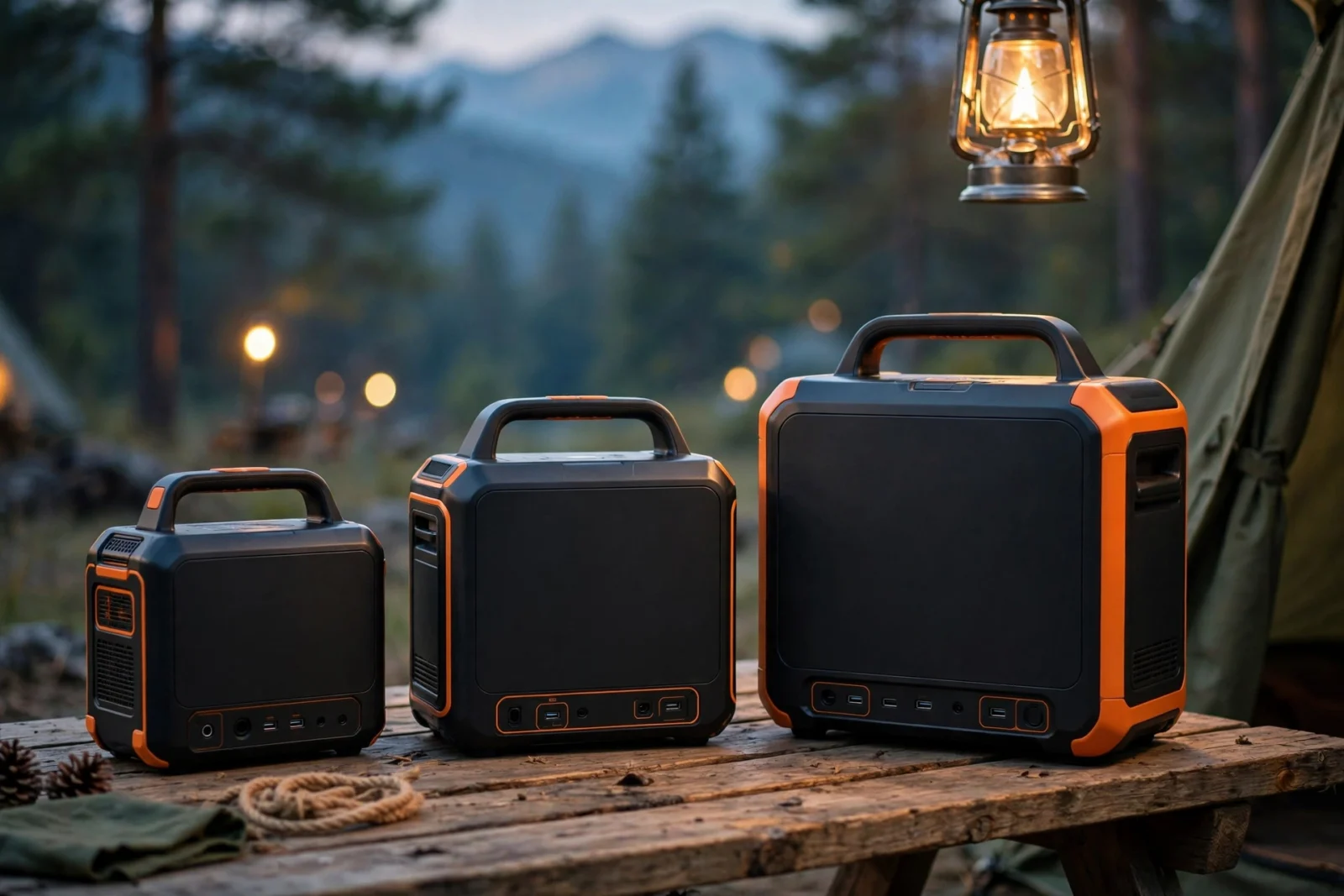
A Jackery portable power station is a rechargeable battery box that works like a quiet, fume-free generator. However, you plug your devices into it, and it delivers clean power for hours — no gas, no noise, no exhaust. In 2026, the Jackery lineup runs from the backpack-friendly Explorer 300 Plus to the whole-home Explorer 2000 Plus, and the model most buyers should start with is the Explorer 1000 v2: it holds 1,070Wh of energy, pushes 1,500W of output, and typically sells for around $500–$700 — check current price. This guide compares every Jackery portable power station, explains who each model suits, and helps you buy the right size the first time.
What a Jackery Portable Power Station Actually Is
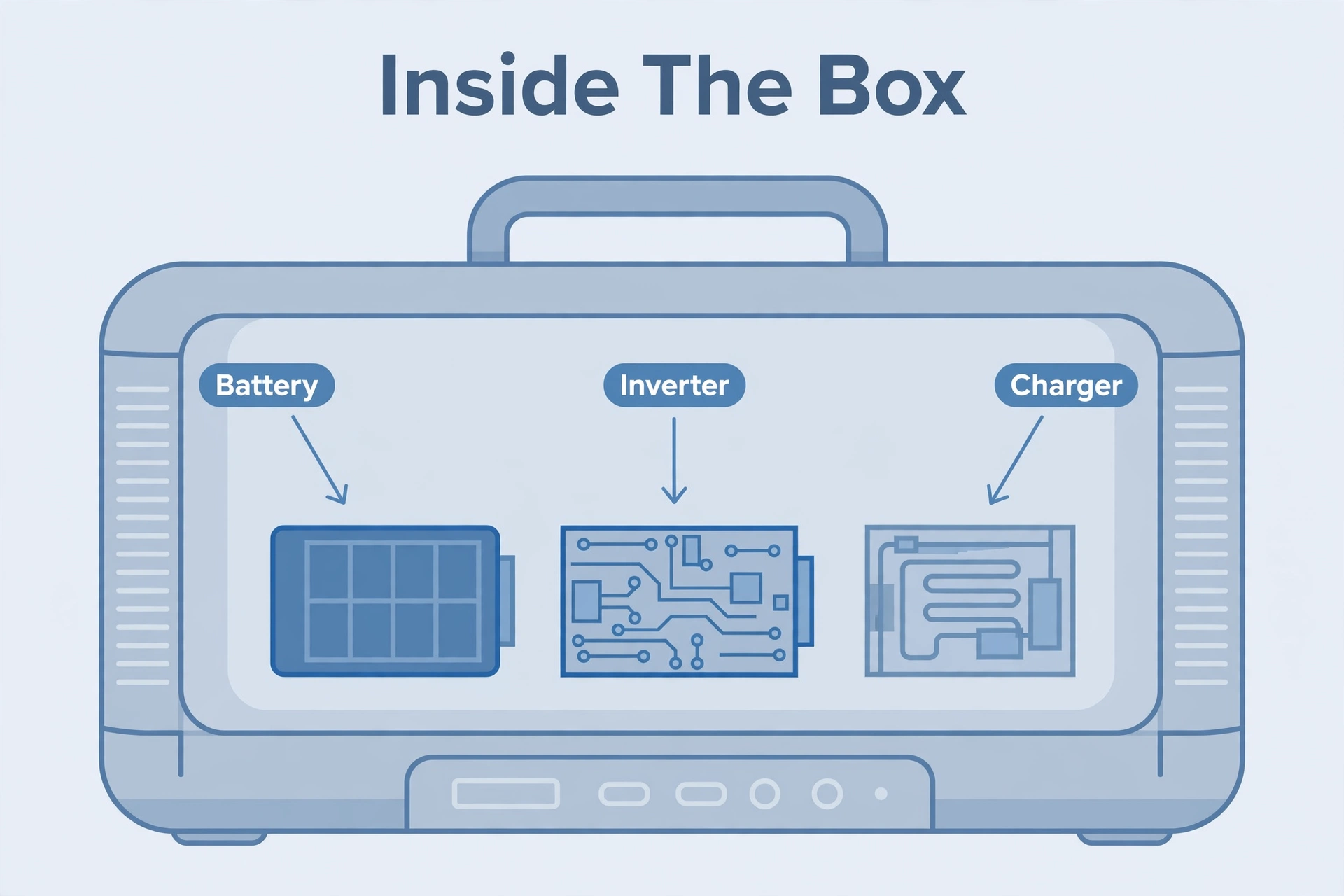
Strip away the marketing and a Jackery portable power station is three things in one box: a large lithium battery, an inverter that turns that battery power into normal wall-outlet AC power, and a charger that refills the battery from a wall outlet, a car, or solar panels. For example, you charge it up, carry it where you need power, and plug things in. In addition, it is silent, it is safe to use indoors, and it needs no fuel.
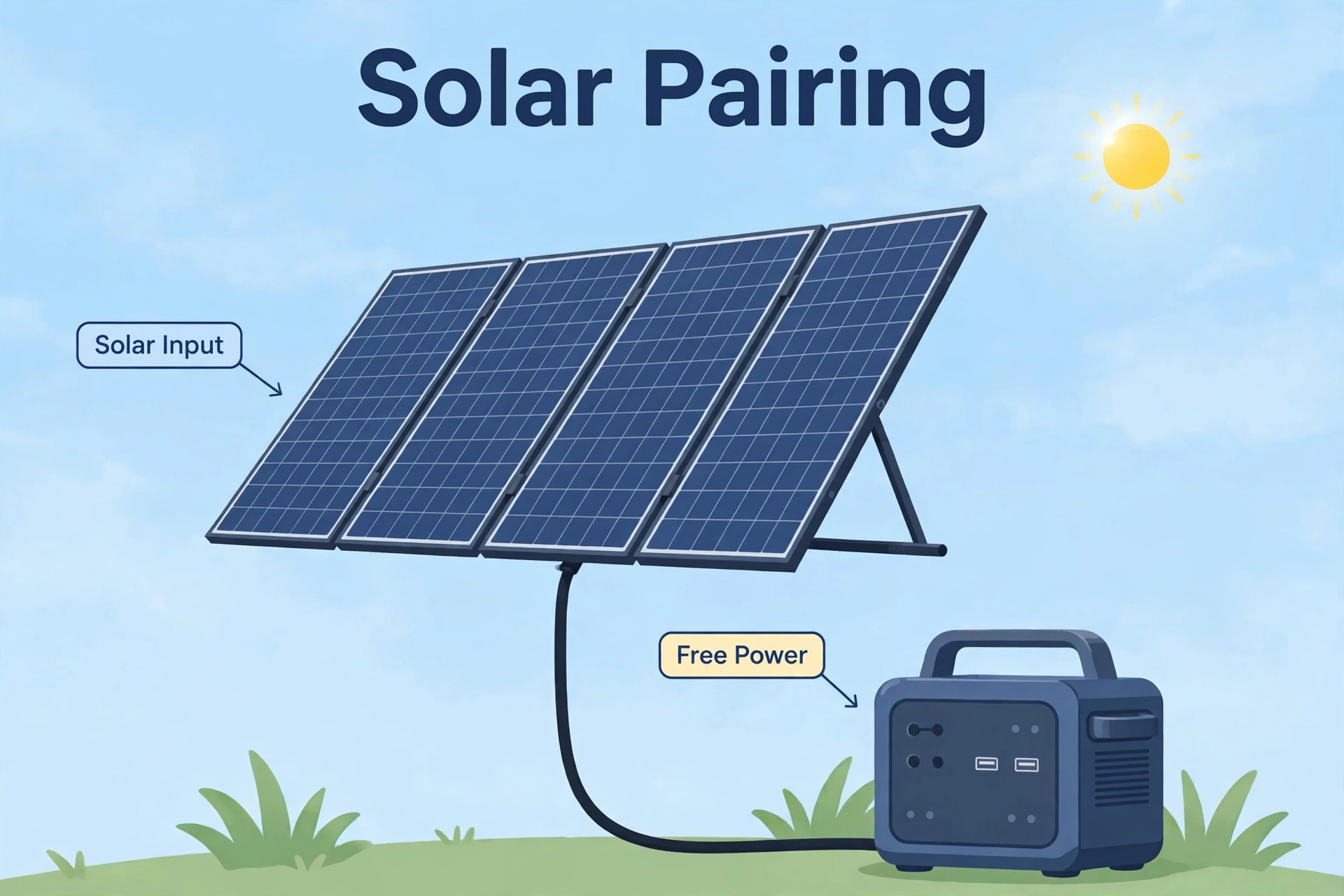
You will also see the term “solar generator.” That just means the power station bundled with one or more SolarSaga solar panels. The station is the battery; the panels are the fuel. Any Jackery station can charge from third-party panels too, but the bundles are the simplest way to buy both together.
Jackery has been making these since 2012, when it launched some of the first lithium portable power stations on the market. That long track record is a big part of why the brand shows up in nearly every “best of” roundup: millions of units sold means spare parts, firmware updates, and a support team that has seen every problem before.
The Jackery Lineup at a Glance
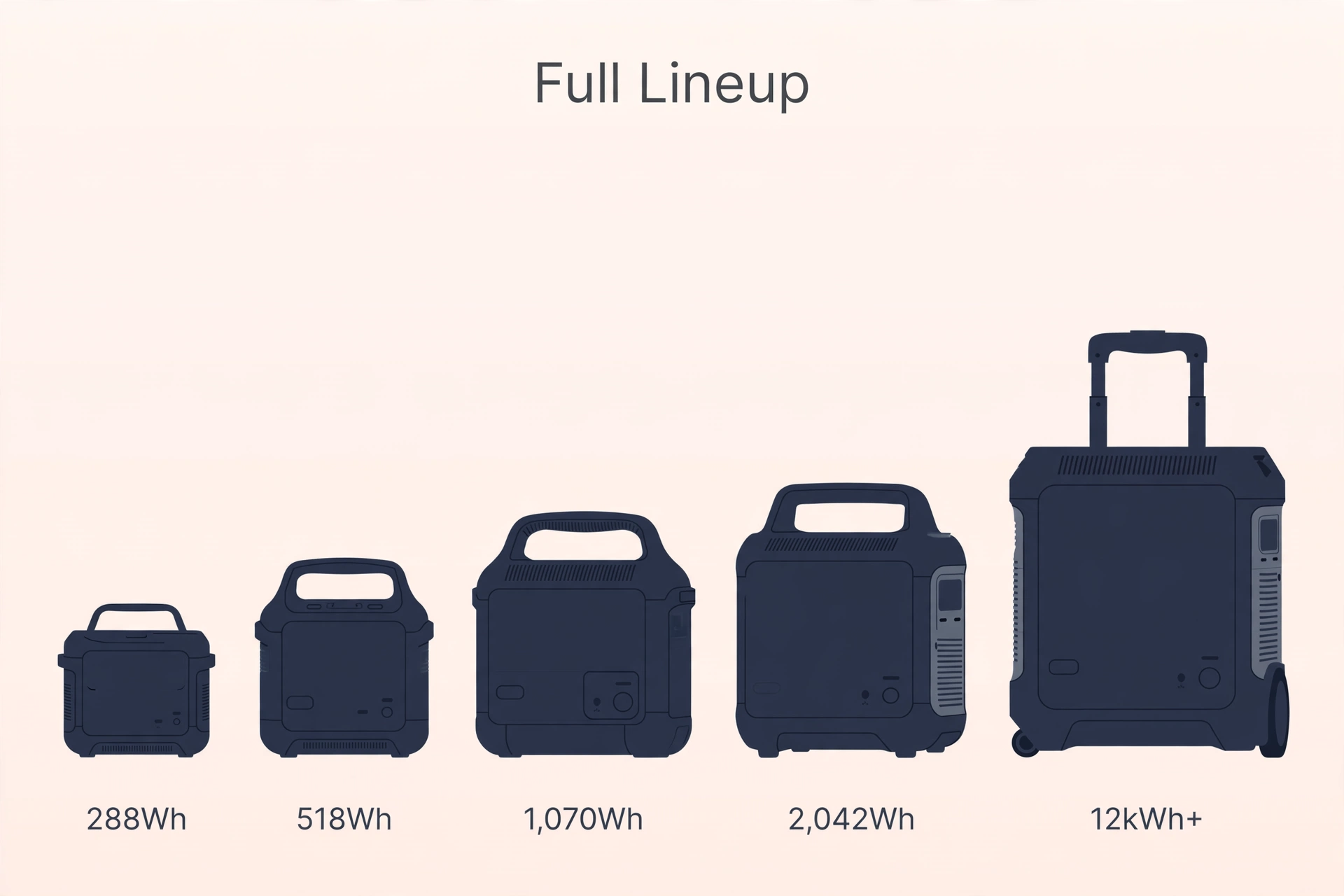
Jackery’s current lineup is built around the Explorer series. Furthermore, the number in the name roughly matches the output class, and the “Plus” and “v2” labels mark the newer generation with longer-life LiFePO4 batteries. Moreover, here is the full range side by side.
Table: Jackery Explorer lineup compared (2026)
| Model | Capacity | AC Output | Battery Type | Weight | Best For |
|---|---|---|---|---|---|
| Explorer 300 Plus | 288Wh | 300W | LiFePO4 | ~7.8 lbs | Day trips, phones, laptops |
| Explorer 500 | 518Wh | 500W | NMC (older) | ~13.3 lbs | Light camping (older model) |
| Explorer 1000 v2 | 1,070Wh | 1,500W | LiFePO4 | 23.8 lbs | Most buyers: camping + backup |
| Explorer 2000 v2 | 2,042Wh | 2,200W | LiFePO4 | ~39.5 lbs | Serious backup, RV |
| Explorer 2000 Plus | 2,042Wh | 3,000W | LiFePO4 | ~61.5 lbs | Expandable home backup |
Two things to notice in that table. First, the older non-Plus models — the original Explorer 300, 500, and 1000 — still float around at some retailers. They use older NMC battery chemistry with far fewer charge cycles, so they are only worth buying at a deep discount. Second, capacity (Wh) tells you how long things run; output (W) tells you how big an appliance you can plug in. Both numbers matter, and the sections below explain the trade-offs model by model.
Explorer 300 and 300 Plus: The Ultralight Pair
The Explorer 300 Plus is the smallest current Jackery, and it is genuinely backpackable at under 8 pounds. Also, with 288Wh of capacity and 300W of output, it is built for phones, tablets, laptops, cameras, drones, and small fans — the kind of gear you take on a day hike, a picnic, or a flight delay at the airport. First, it will not run a kettle or a mini fridge for long, and that is fine: that is not its job.
The “Plus” matters here. Second, the original Explorer 300 used an older NMC battery rated for about 800 cycles. The 300 Plus switched to LiFePO4, which Jackery rates for around 4,000 cycles to 80% capacity — roughly five times the lifespan. It also charges faster and runs quieter. If you are choosing between the two, the Plus is the one to buy unless the original is dramatically cheaper.
Expect to pay around $250–$350 for the Explorer 300 Plus — check current price, since Jackery runs frequent sales. At that price it makes a great first power station, a gift, or a dedicated “tech bag” battery for creators who charge cameras and drones on location.
Explorer 500: The Aging Middle Child
The Explorer 500 sits in an awkward spot in 2026. Finally, its 518Wh capacity and 500W output were a sweet spot a few years ago, but the model still uses the older NMC battery, charges slowly by modern standards, and costs more per watt-hour than the newer Plus and v2 models. Meanwhile, it is not a bad product — thousands of owners use them happily for camping — but it is yesterday’s technology at today’s prices.
Our honest take: only buy the Explorer 500 if you find it heavily discounted, ideally under $300. Nevertheless, at full price, the Explorer 300 Plus is lighter and longer-lived for small loads, and the Explorer 1000 v2 is only a step up in price for triple the capability. In fact, retailers clear out old stock regularly, so set a price alert and be patient.
Explorer 1000 v2: The Sweet Spot of the Jackery Portable Power Station Line
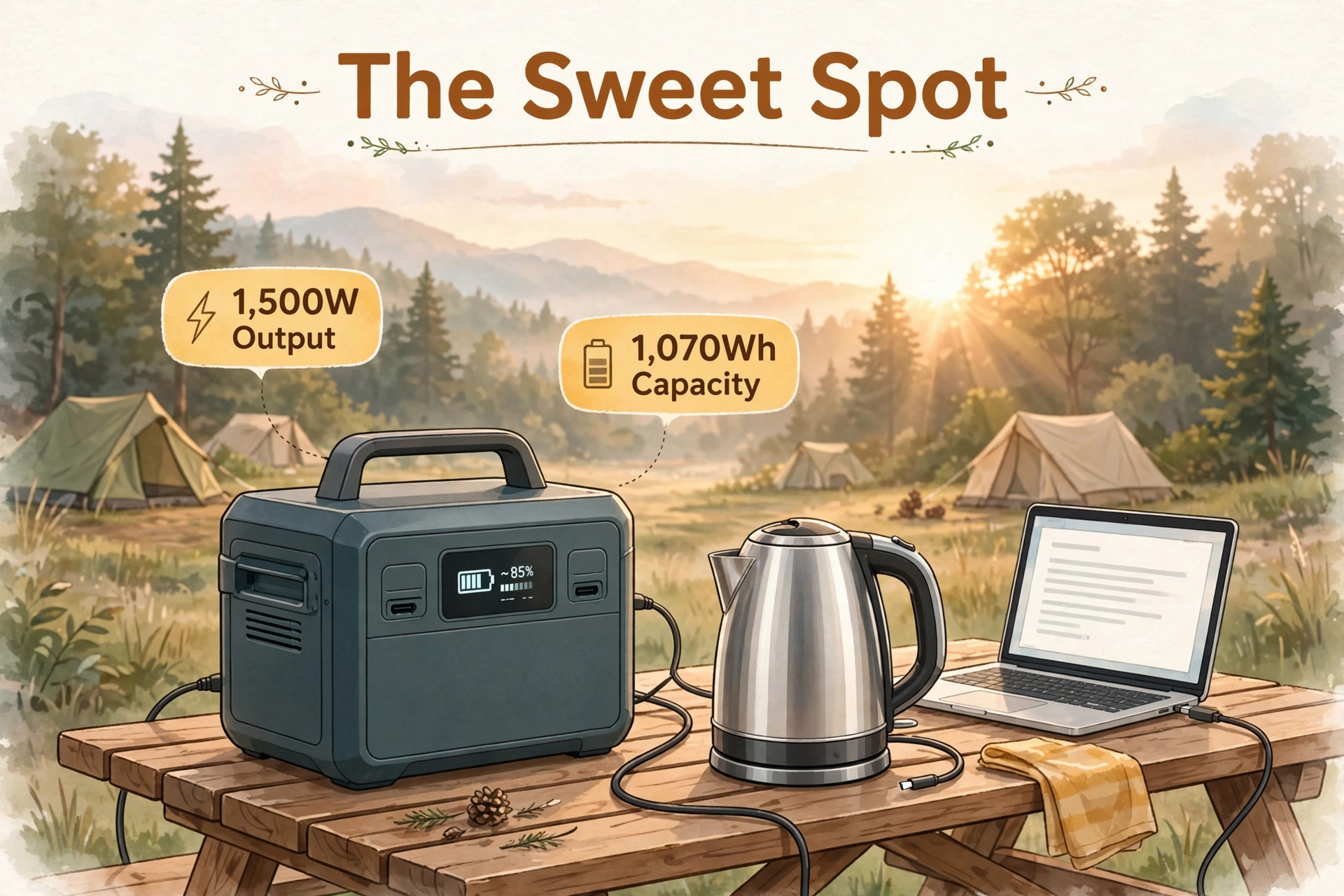
This is the model we recommend to most people. As a result, the Explorer 1000 v2 packs 1,070Wh of LiFePO4 battery and 1,500W of continuous AC output (3,000W surge) into a 23.8-pound box with a foldable handle. In contrast, that 1,500W output is the key number: it crosses the line where real appliances work — electric kettles, microwaves, coffee makers, and portable air conditioners all run without tripping the inverter.
Charging is equally modern. Similarly, Jackery rates a full AC charge at about 1.7 hours, and an app-activated emergency mode can push that to roughly 1 hour when you are in a hurry. Specifically, solar input tops out at 400W, which refills the unit in a few hours of good sun with a pair of 200W panels. The battery is rated for 4,000 cycles to 70% capacity, which Jackery describes as 10+ years of regular use, and the warranty runs 3 years standard with 2 extra years when you buy direct.
Ports are generous for the size: three AC outlets, two USB-C (one 100W, one 30W), one 18W USB-A, and a 12V car port. However, a 20ms UPS mode keeps a computer or router alive through short blips, and the Jackery app handles monitoring and settings over Wi-Fi and Bluetooth. For the full deep dive, read our Jackery Explorer 1000 v2 review.
At around $500–$700 — check current price — it undercuts most 1kWh-class rivals while matching them on the specs that matter. In addition, if you only buy one Jackery, buy this one.
Explorer 2000 v2 and 2000 Plus: Serious Home Backup
Step up to the 2kWh class when a single kilowatt-hour is not enough — typically for multi-day outages, RV life, or running a full-size fridge plus extras. Furthermore, both models hold 2,042Wh of LiFePO4 battery, but they aim at different buyers.
The Explorer 2000 v2 is the portable one of the pair. Moreover, its 2,200W output (4,400W surge) runs nearly any single household appliance, and at around 39.5 pounds one strong adult can still carry it. Also, think of it as the Explorer 1000 v2’s bigger brother: same idea, double the runtime, still grab-and-go.
The Explorer 2000 Plus is the expandable one. First, its 3,000W output handles heavier combined loads, and you can add extra battery packs to stretch capacity up to 12kWh — genuine partial-home backup territory. Second, the trade-off is weight: around 61.5 pounds means it lives where you put it. This is the model for buyers who want a modular system that grows, not a box they carry to the campsite.
Prices run around $1,500–$2,200 for the 2000 v2 and around $2,000–$3,000 for the 2000 Plus depending on bundles — check current price in both cases. If you are cross-shopping brands at this size, our EGO Nexus portable power station guide covers a modular alternative with swappable batteries.
SolarSaga Panels: The Other Half of a Solar Generator
A Jackery portable power station becomes a “solar generator” when you pair it with SolarSaga panels. The current lineup centers on 100W and 200W folding panels, and Jackery also sells bifacial 200W versions that collect light from both sides for a modest boost. Meanwhile, they fold into a briefcase shape, set up with built-in kickstands, and connect with a simple cable — no wiring skills needed.
Match the panel wattage to your station. Nevertheless, the Explorer 1000 v2 accepts up to 400W of solar, so two 200W panels max it out and refill it in roughly 4–6 hours of strong sun. In fact, the 300 Plus tops out lower, so a single 100W panel is plenty. Bigger stations like the 2000 Plus accept far more solar, which is where multi-panel setups make sense for off-grid cabins.
Solar charging is slower than wall charging — that is physics, not a flaw. As a result, panels only produce their rated wattage in direct midday sun; morning, evening, clouds, and bad angles all cut output. In contrast, treat solar as a way to extend your runtime indefinitely during the day, not as a race to 100%. Panels typically add around $250–$300 per 100W-class panel to a bundle — check current price.
Which Jackery Model Should You Buy?
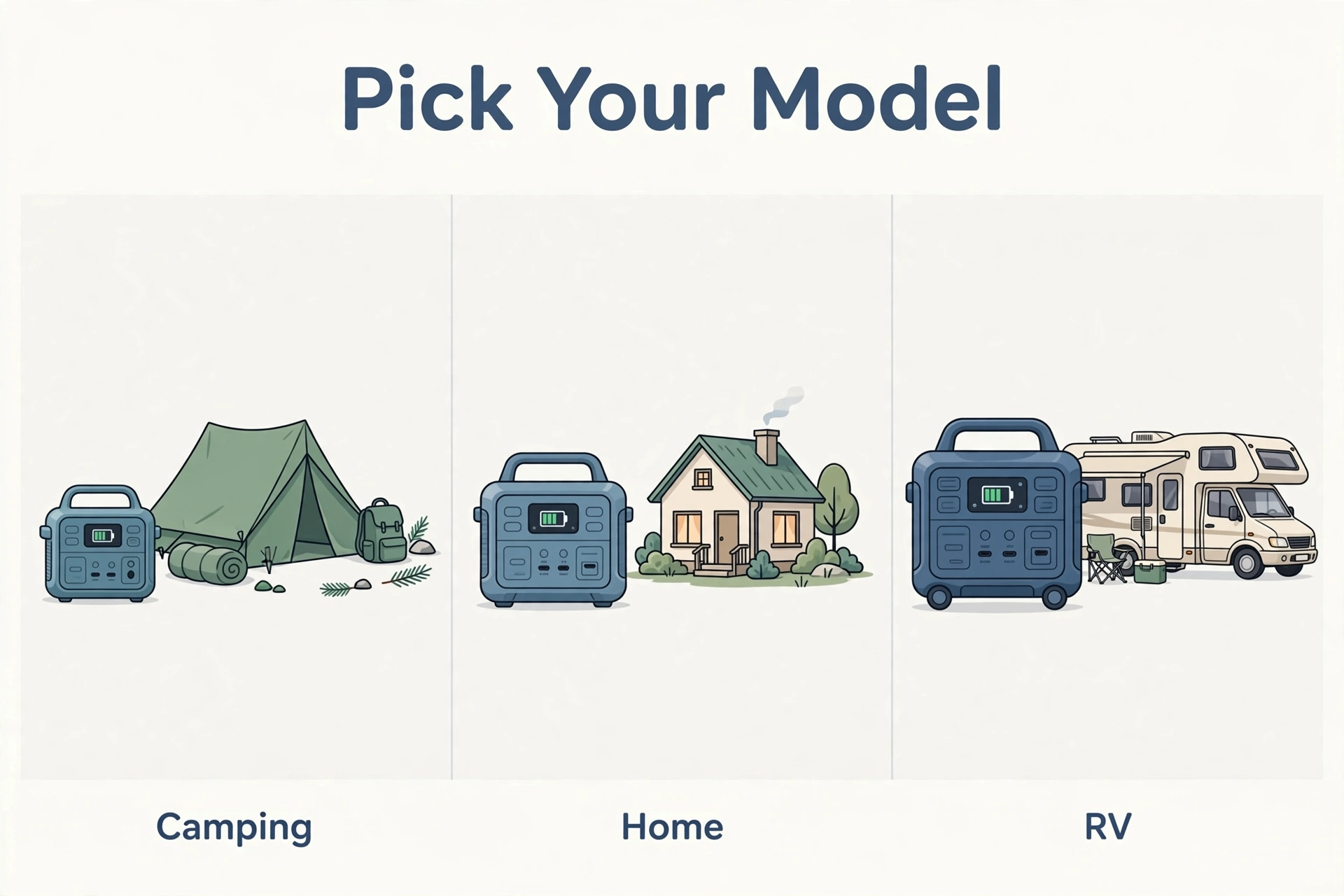
Forget the spec sheets for a moment. Similarly, match the model to the job, and the choice gets simple. Specifically, below are the three buyer profiles we see most, with the model that fits each.
For Camping and Day Trips
Buy the Explorer 300 Plus if you mostly charge small electronics, or the Explorer 1000 v2 if you cook at camp. However, the dividing line is heat: anything with a heating element — kettle, coffee maker, electric grill — needs the 1,500W output of the 1000 v2. For example, if your camping is phones, lights, and a fan, the 300 Plus saves you 16 pounds and a few hundred dollars.
For Home Backup and Outages
Buy the Explorer 1000 v2 for short outages (it keeps a fridge cold, phones charged, and the Wi-Fi alive for a day), or the Explorer 2000 Plus for multi-day resilience. In addition, the honest rule: add up the watts of what you must keep running, multiply by the hours of outage you want to survive, and buy the capacity that covers it with margin. Furthermore, most suburban homes land on the 2000 Plus with an extra battery.
For RV and Van Life
Buy the Explorer 1000 v2 as a flexible second power source, or the 2000 v2 as your main off-grid battery. Van lifers love the 1000 v2 because it charges from the alternator while driving, from panels while parked, and from shore power at campgrounds — three fuel sources, zero installation. If you run a 12V fridge full-time, size up to the 2000 v2 for the extra days of autonomy.
Jackery vs the Competition
Jackery’s main rival is EcoFlow, and the comparison is genuinely close. Moreover, ecoFlow’s X-Stream charging is faster on wall power — a DELTA 2 refills noticeably quicker than an equivalent Jackery — and EcoFlow tends to pack more ports and higher solar input per dollar. Also, Jackery counters with simpler operation, very quiet fans, and a track record that stretches back further. Neither brand is clearly “better”; they trade blows by model.
Bluetti and Anker round out the big four, usually competing on price or bundled features rather than core quality. Our advice is the same regardless of brand: pick the capacity and output you need first, then compare the two or three models that meet it. For the whole market in one place, see our best portable power station roundup.
Frequently Asked Questions
Are Jackery power stations worth it?
For most buyers, yes. Second, you pay a small brand premium over no-name units, and in return you get proven battery management, honest capacity ratings, a real warranty, and customer support that answers the phone. Finally, in a category where a bad battery can be a fire risk, that premium buys peace of mind — not just a logo.
How long does it last on a charge?
The newer LiFePO4 models (300 Plus, 1000 v2, 2000 v2, 2000 Plus) are rated for about 4,000 charge cycles to 70–80% capacity, which Jackery describes as 10+ years of regular use. Meanwhile, the older NMC models are rated for roughly 800 cycles. Nevertheless, cycle life is the single biggest reason to prefer the Plus and v2 models over discounted older stock.
Can a Jackery run a refrigerator?
Yes. In fact, a full-size fridge draws roughly 100–200W while the compressor runs, so even the Explorer 1000 v2 handles it easily — Jackery’s own runtime guide suggests around 15 hours for a 60W portable fridge. As a result, for multi-day outage coverage of a full-size fridge, step up to the 2000-class models.
Can you use a Jackery while it charges?
Yes, pass-through charging works on current models: you can draw power from the outlets while the station refills from the wall or solar. In contrast, the 1000 v2 even offers a 20ms UPS mode that keeps sensitive gear like computers and routers running through brief power blips.
What is the difference between the Explorer 1000 and the 1000 v2?
Almost everything important. Similarly, the v2 jumps from 1,000W to 1,500W output, grows capacity from 1,002Wh to 1,070Wh, switches from NMC to long-life LiFePO4, charges far faster (about 1.7 hours vs most of a day), and adds app control — in a smaller, lighter box. Specifically, unless the original is nearly free, the v2 wins on every count.
The Bottom Line
Jackery’s lineup is refreshingly simple once you see the pattern: the Explorer 300 Plus for light portable power, the Explorer 1000 v2 as the do-everything sweet spot, and the 2000-class models for serious home backup. Buy the newest generation you can afford — the LiFePO4 battery alone is worth it — and size up one step beyond what you think you need, because power needs always grow. Check the official Jackery Explorer 1000 v2 page for current bundles and pricing before you buy, since sale prices move often.
