

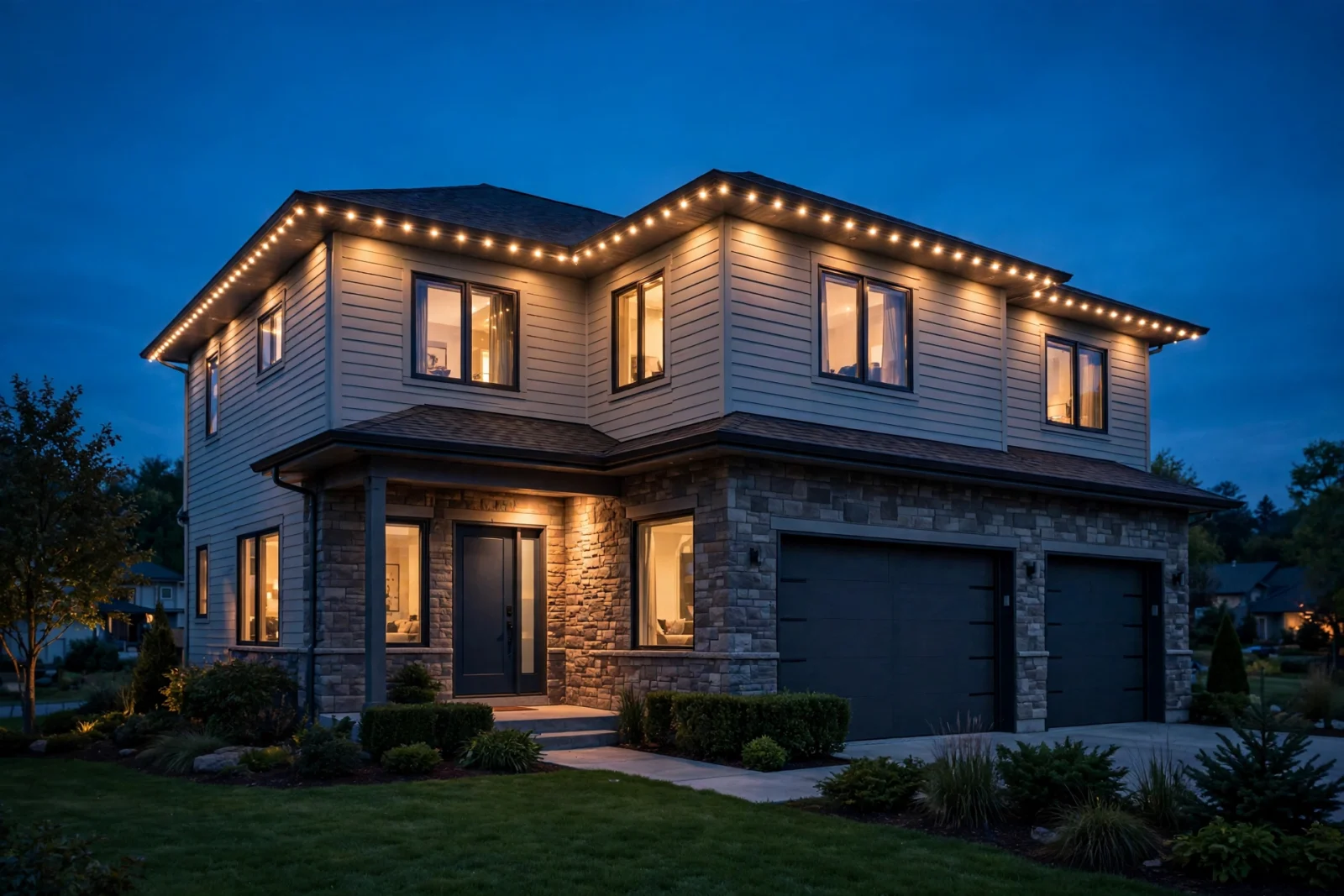
If you are asking about Govee permanent lights cost, here is the short answer: a typical DIY Govee permanent-light setup costs you roughly $300–$900 once, and then costs almost nothing year after year. Traditional holiday lights, on the other hand, cost most people $150–$1,000 every single year — in replacement lights, storage, your time, or a pro installer you hire each November. However, over five years, the permanent lights almost always win on money.
But the answer changes a little depending on which Govee model you pick, whether you install it yourself or hire help, and how you decorate today. However, this guide breaks down every dollar. In fact, with real, current prices I checked on 2026-11-07 — so you can do your own math.
Cost honesty note: every figure below is labeled. Verified store prices come from my 2026-11-07 check. Anything marked “typical” or “estimate” is a common industry range, not a quote. Prices move, especially around sales season.
What Do Govee Permanent Lights Cost?
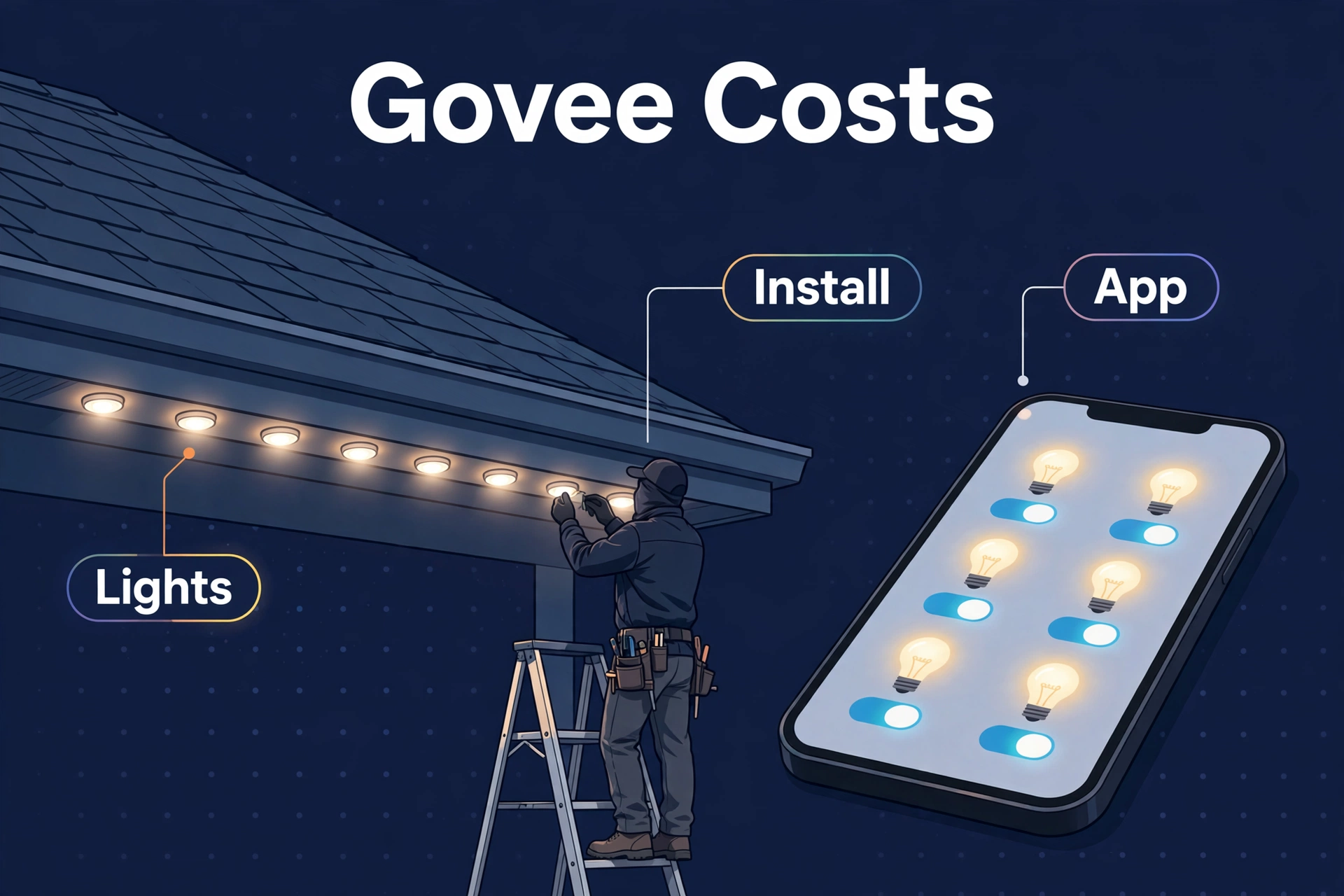
Govee sells three main permanent outdoor light lines, and the price difference between them is real. For example, the entry models are basic RGBIC color lights. In addition, the Pro line is brighter, cuttable for tricky rooflines, and has better whites. Here is what I found when I checked prices on 2026-11-07:
Table 1: Govee permanent outdoor light models and typical prices (verified 2026-11-07; sale prices change often)
| Model | Brightness per puck | 100 ft price | 150 ft price | 200 ft price |
|---|---|---|---|---|
| RGBIC Permanent Outdoor Lights (H705, original) | 25 lumens | Discontinued | Discontinued | n/a |
| Permanent Lights 2 / Elite (H705D/E/F) | 40 lumens | ~$280 | ~$420 | n/a |
| Permanent Lights Pro (H706) | 50 lumens | ~$440 (sale ~$350) | ~$600 (sale ~$480) | ~$760 (sale ~$600) |
A few notes on these numbers. First, Govee discounts these kits aggressively — the prices above are list prices I verified on the official Govee store, and right now the Pro kits are on sale at about $350 (100 ft), $480 (150 ft) and $600 (200 ft). Deeper cuts show up around big sale events: the 150 ft Pro was $390 during October’s Prime event. The original H705 is no longer sold on Govee’s own store, so it has no current price here. Second, most average American homes need the 150 ft kit for a standard front roofline, so that is the size I will use for the math below.
The kit price is only half the story: installation
The kit is DIY-friendly — every puck sticks on with VHB adhesive and clips, and the app walks you through setup. But sticking 90 pucks along your roofline on a ladder in summer heat is real work, so installation breaks down into three paths:
- True DIY (adhesive clips, included in box): $0 extra. Total all-in cost = kit price only, typically $300–$760 depending on model and sales.
- DIY with upgrades: screw-in mounting clips (~$20–$45 for a bag of 80), maybe isopropyl alcohol for surface prep and a decent ladder if you do not own one. Typical all-in: $350–$950.
- Professional installation: independent installers typically charge $800–$1,700 in labor on top of the kit, putting total cost at roughly $1,500–$2,500 for a typical home. Complex two-story homes or steep rooflines can push past $4,000–$5,000 (estimate, get local quotes).
One thing that trips people up: aluminum mounting tracks. They give the install a cleaner, more professional look and protect the wiring, but they are a separate purchase (~$150–$300 for a 150 ft kit, typical). Nice to have, not required.
What Do Traditional Holiday Lights Cost Each Year?
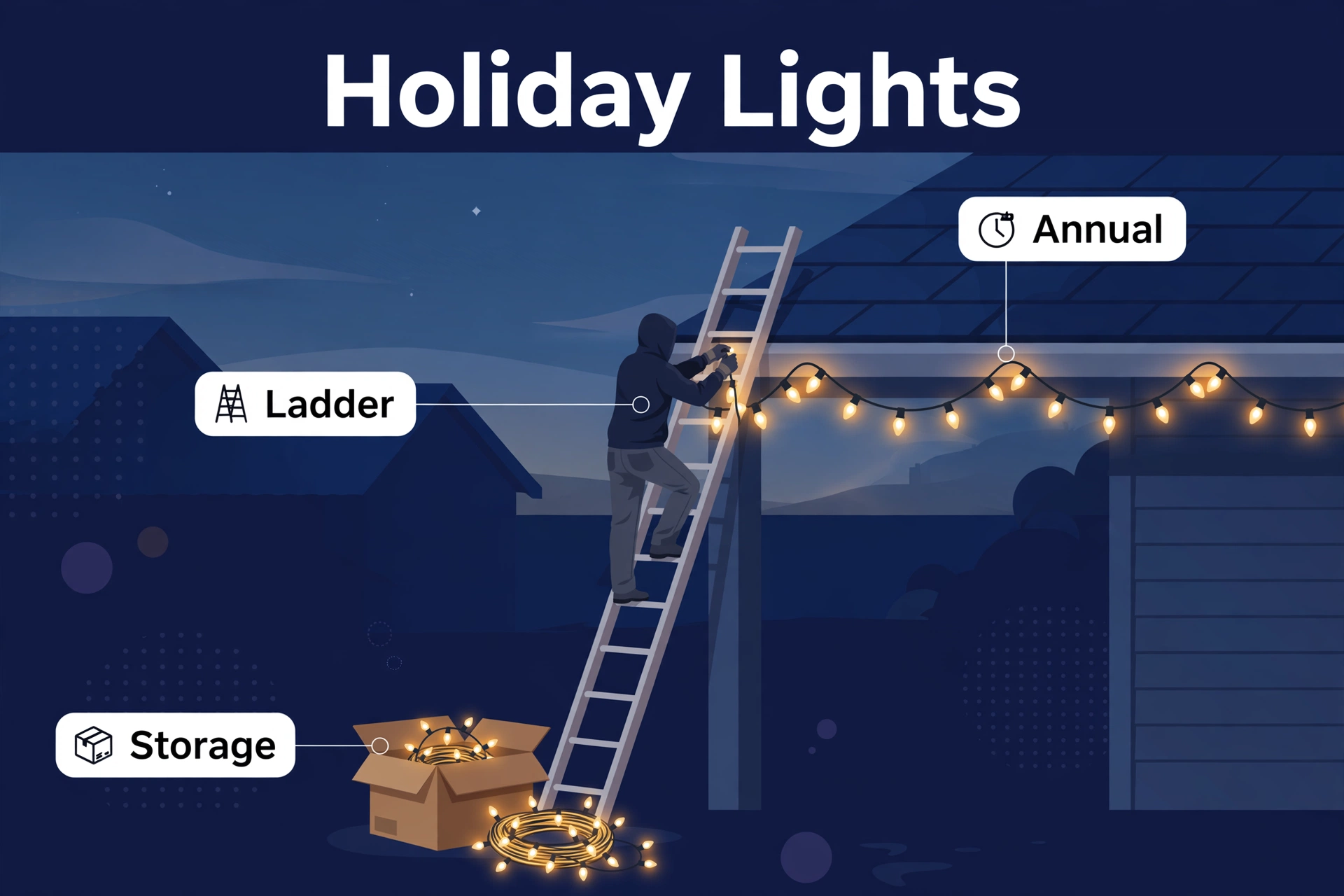
This is the side of the comparison most people underestimate, because the cost leaks out in five different places instead of one receipt.
Table 2: Typical annual cost of traditional holiday lights (typical ranges, estimates — not quotes)
| Cost item | DIY homeowner (typical) | Pro-installed display (typical) |
|---|---|---|
| New LED string lights | $100–$200 (a good set lasts 2–3 seasons) | Included in service / $0 |
| Hang + takedown labor | $0 (your own 4–8 hours on a ladder) | $500–$1,000+ per year |
| Replacements and repairs | $30–$60 per year | $0–$100 per year |
| Storage (bins, garage space) | $20–$40 (one-time, then free) | $0 (installer stores them) |
| Electricity (Dec–Jan) | $2–$10 per season | $2–$10 per season |
| Total per year (typical) | ~$180–$250 in year one, ~$50–$100 after | ~$500–$1,100 per year |
Let us walk through each line so nothing hides.
The lights themselves
A decent set of outdoor-rated LED string lights costs $100–$200 for enough strands to do a house front. LED strings last much longer than the old incandescents — most people get 2–3 seasons out of a set, though a bad storm or cheap clips can end them faster. Budget another $30–$60 a year for replacement strands and blown fuses, because something always fails.
Your time (or a pro’s)
This is the big one. Hanging lights yourself takes a typical homeowner 4–8 hours spread over a weekend, plus another few hours to take them down in January — on a ladder, in the cold, untangling strands you swore you would wrap neatly last year. You do not pay cash for it, but it is real cost.
Hiring it out is a different story. Professional Christmas light installers commonly charge $500–$1,000 or more per season for a single-family home, and the fancy animated or rooftop displays go much higher. You pay that every year. Forever.
Storage
Small line item, but it annoys everyone: $20–$40 in plastic bins, plus a corner of the garage you cannot use for 10 months. Pro installers usually store the lights for you as part of the service.
The 5-Year Math: Govee vs Traditional Holiday Lights

Now let us put it together. Furthermore, i built three scenarios for a typical single-story home that needs about 150 ft of lights. Moreover, all figures are estimates — your house, your rates, your results. The corner cell in each row is the year.
Table 3: 5-year cost comparison — Govee permanent lights vs traditional holiday lights (all figures are estimates, not quotes)
| Year | Govee (DIY, 150 ft Pro kit, sale price) | Govee (professionally installed) | Traditional (DIY each year) | Traditional (pro hang each year) |
|---|---|---|---|---|
| Year 1 | ~$530 (kit + clips) | ~$2,300 (kit + installer) | ~$230 (lights + bins) | ~$750 |
| Year 2 | ~$5 (electricity) | ~$5 (electricity) | ~$60 (replacements) | ~$750 |
| Year 3 | ~$5 (electricity) | ~$5 (electricity) | ~$130 (new strands) | ~$750 |
| Year 4 | ~$5 (electricity) | ~$5 (electricity) | ~$60 (replacements) | ~$750 |
| Year 5 | ~$5 (electricity) | ~$5 (electricity) | ~$130 (new strands) | ~$750 |
| 5-year total | ~$550 | ~$2,320 | ~$610 | ~$3,750 |
Read the totals:
- Govee DIY beats DIY traditional — but only just, and only in year 5: the gap narrows every year after year one, because your cost after year one is basically zero.
- Govee with pro installation beats pro-hung traditional by a mile. You pay the installer once (~$2,300 total) versus paying ~$750 every single year (~$3,750 over five). The permanent system pulls ahead in year 4 even in this worst-case setup.
- The break-even point for DIY Govee against DIY traditional is around year 5 — faster if you decorate for more than just Christmas, because every holiday you run the Govee lights is another season you did not buy new strings.
Two honest caveats. If you decorate very minimally today — say, one $40 strand on the porch — your annual spend is tiny and the break-even stretches out. And if you buy the top Govee Pro kit at full price and hire the most expensive installer, year one is real money; you are betting on the long game.
Do Not Forget the Electric Bill
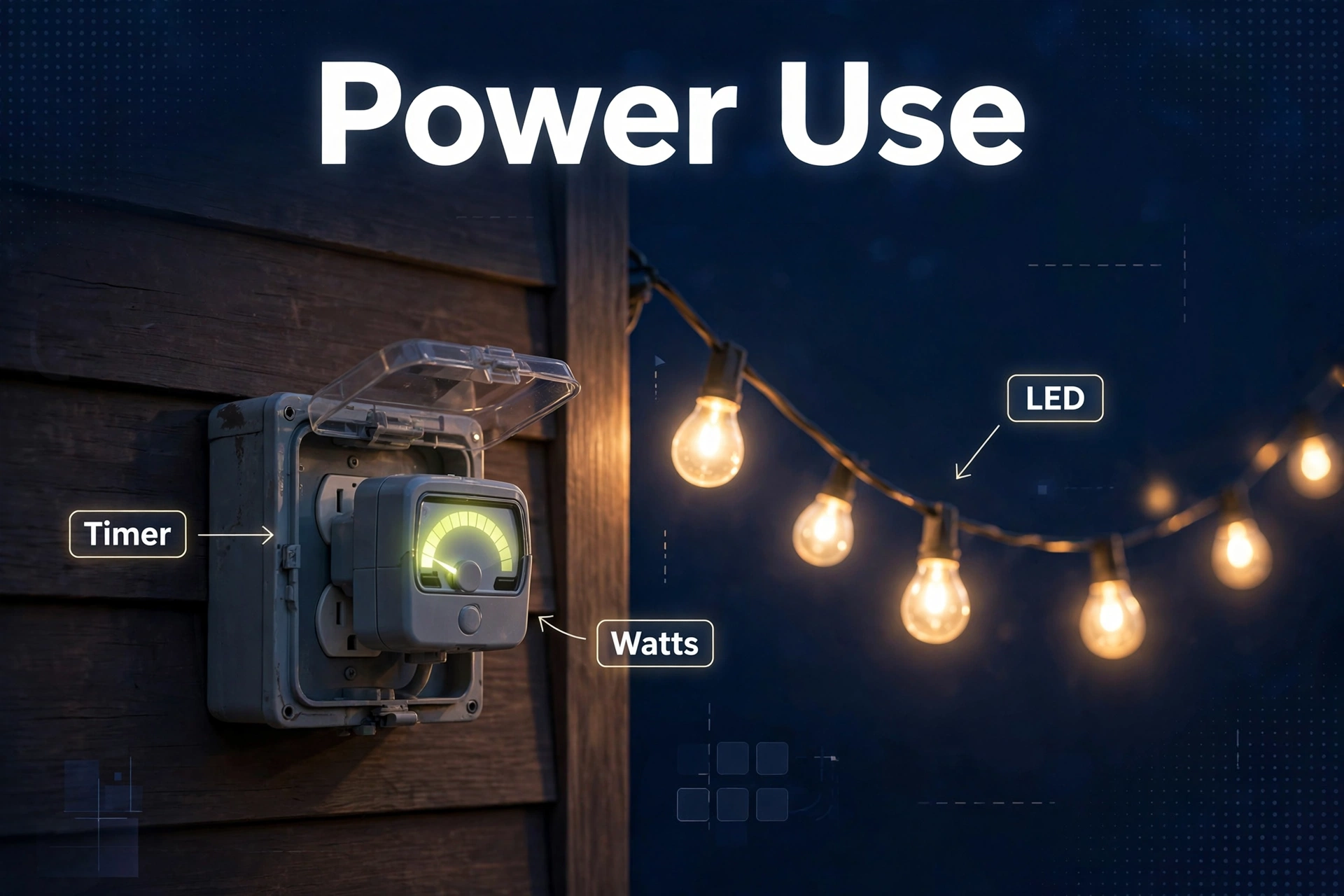
Electricity is the smallest line in this whole comparison, but people ask about it constantly, so let us settle it.
Govee permanent lights are LED, and LED pucks draw very little power — typically well under a watt each, so a 150 ft kit stays in the ~30–60W range when fully lit (estimate; Govee does not publish a headline wattage). Run that 5 hours a night for a 40-night holiday season and you use about 6–12 kWh, or roughly $1–$2 at typical US electricity rates. First, practically invisible on your bill.
Furthermore, traditional holiday lights depend entirely on bulb type. Second, a 100-bulb string of old incandescent mini-lights pulls around 40 watts; the LED equivalent pulls 4–5 watts — about one-tenth. Finally, run 15 incandescent strings 6 hours a night through December and you are looking at roughly $15–$25 for the month; with LEDs it drops to about $2. That is why most installers and articles — including the energy-efficiency breakdown on LED holiday lights — push LED strings so hard. Also, if you still have incandescent strands, switching bulbs is the cheapest energy win available.
Net verdict on electricity: both options are cheap in LED form. It should not decide your purchase — but it is one more reason the Govee running cost after year one is essentially nothing.
Other Cost Factors Worth Weighing
Money is not the only math. These do not show up in a spreadsheet, but they affect what the total deal is actually worth to you.
Year-round use
This is where permanent lights earn their keep. Traditional lights come down in January and sit in a bin. Govee lights stay up and work for Halloween orange-and-purple, July 4th red-white-and-blue, birthday parties, game nights, and plain white everyday accent lighting. If you use them even a few extra times a year, the effective cost per use collapses.
Convenience
No ladder. No cold. No tangled strands. You tap a scene in the app — Christmas, Diwali, Eid, Valentine’s — and the house changes. For a detailed look at which permanent outdoor light system fits your home, our best permanent outdoor lights roundup compares Govee against the alternatives. If you are pairing the lights with wider outdoor lighting, our low-voltage landscape lighting install guide covers the wiring side.
Smart control and scheduling
Govee runs schedules, timers, music sync, and voice control through Alexa and Google (some models add Matter). Traditional setups need separate plug-in timers — another $15–$30 — and you are the scheduler. If you already run smart home scenes, pairing permanent lights with your setup is natural; for example our Philips Hue vs Wiz comparison shows how color-lighting ecosystems differ, and you can automate outdoor lighting alongside everything else with a Home Assistant setup.
HOA rules
Some homeowners associations restrict or ban seasonal decorations but allow permanent “architectural” lighting — or the reverse. Check your HOA’s rules before buying either way. Govee’s daytime profile is fairly discreet (small white pucks under the eave), which is one reason they pass rules that ban big C9 strings.
Lifespan and resale
Govee rates the LED pucks for tens of thousands of hours (the original line claims up to 50,000 hours) and backs them with a multi-year warranty. If you move, permanent outdoor lighting is increasingly a small plus in listing photos. Traditional strings have zero residual value the day you take them down.
Govee Permanent Lights Cost FAQs
How much does a Govee permanent light setup cost for a typical home?
Plan on $300–$950 for a DIY installation (kit at or below list price plus clips and supplies) or $1,500–$2,500 professionally installed for a typical 150 ft roofline. Prices I verified 2026-11-07: 100 ft kits from ~$280 (Lights 2) to ~$440 (Pro list, ~$350 on sale), 150 ft from ~$420 (Lights 2) to ~$600 (Pro list, ~$480 on sale), 200 ft Pro ~$760 list (~$600 on sale). Govee’s current sale takes about 20% off the Pro kits; deeper cuts of 30–40% showed up during October’s Prime event.
Is Govee permanent outdoor lighting cheaper than hiring someone to hang Christmas lights every year?
Yes, by year 4 in most cases. Professional Christmas light hanging typically costs $500–$1,000+ per season (typical estimate), while a professionally installed Govee system is a one-time $1,500–$2,500 (typical). After that, your annual lighting cost drops to a few dollars of electricity.
Can I install Govee permanent lights myself to save money?
Yes — that is the whole pitch. The kits include adhesive clips and the app has step-by-step guidance; most single-story installs take a weekend. Be honest about ladder comfort and roofline complexity first. Multi-story homes, steep pitches, or complex rooflines that need the Pro line’s cut-and-splice wiring are where a pro earns their fee.
How long do Govee permanent outdoor lights last?
The LEDs are rated for up to 50,000 hours (per Govee’s specs), which at typical evening-only use is far longer than most people own a home. The realistic weak points are the adhesive mounts — heat, cold cycles, and storms can loosen them over the years, which is why many owners upgrade to screw-in clips. Govee backs the line with a multi-year warranty, and their support is generally reported as responsive on replacements.
Do Govee permanent lights use a lot of electricity?
No. A full 150 ft kit draws roughly 30–60W (estimate) — comparable to one or two old incandescent bulbs. A full holiday season of nightly use costs about $1–$2 in electricity at typical rates. They cost less to run than the timer you’d buy for traditional lights.
Are Govee lights worth it if I only decorate for one holiday?
Probably still yes over five years — the math in the table above assumes one holiday a season. But if you truly decorate minimally (one cheap strand), break-even stretches beyond year 5. The value case gets much stronger if you use the lights for multiple holidays or year-round accent lighting, which is the whole point of a permanent system.
The Bottom Line
On pure cost, Govee permanent lights win the 5-year comparison in almost every scenario: ~$550 all-in DIY versus ~$610 for careful DIY traditional, and ~$2,320 professionally installed versus ~$3,750 for annual pro hanging (all estimates, your home will vary). The DIY Govee setup is the cheapest option on this page by year 5 and stays cheapest forever.
First, buy the DIY kit if you are comfortable on a ladder and your roofline is simple. Second, hire a pro for multi-story homes or tricky rooflines. In fact, it is still a one-time cost that beats paying an installer every November. And buy during a sale: Govee discounts 30–40% around the holidays. In addition, the Black Friday price on the Pro line is usually the best of the year. Finally, whichever route you take, the real lesson is the same one traditional decorators already learned: LED is cheap to run. In addition, the labor — yours or a pro’s — is what actually costs money. Meanwhile, permanent lights just move that labor bill to year one and make it disappear.
