

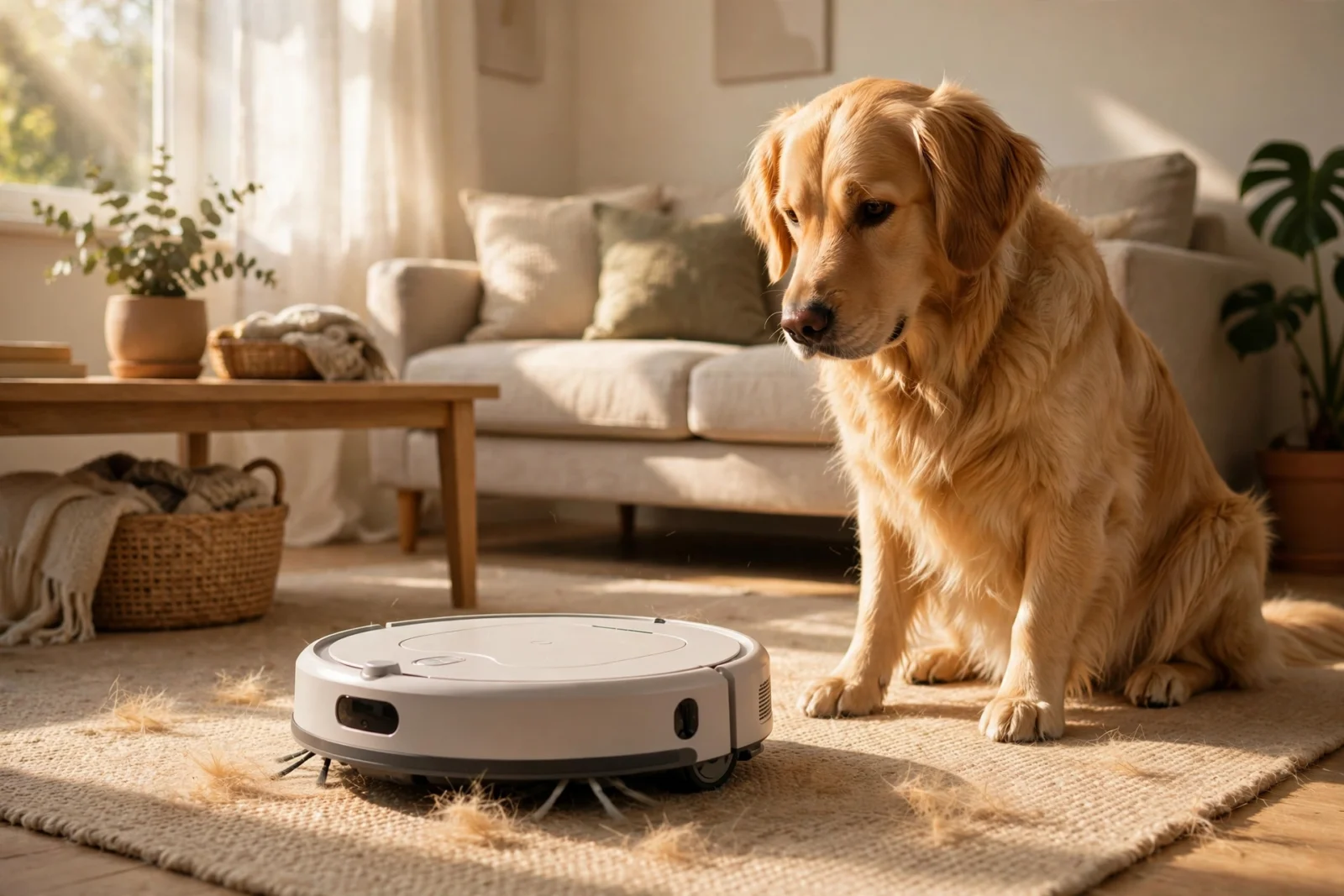
The best robot vacuum for pet hair 2026 has to offer is the Dreame X60 Max Ultra (around $1,500) — it pairs a zero-tangle brush with a fully self-cleaning dock for genuinely hands-off cleaning. On a budget, the Roborock Q7 M5+ (around $300) delivers self-emptying and 10,000 Pa suction for a fraction of the flagship price.
Pet hair is the hardest test for a robot vacuum: it wraps around brushes, fills bins in a day, and migrates into carpet pile. Below: what actually matters for pet owners (brush design beats raw suction), five top picks for 2026 across budgets, and whether you need mopping too.
What Actually Matters for Pet Hair
Ignore the marketing and judge every candidate on four things.
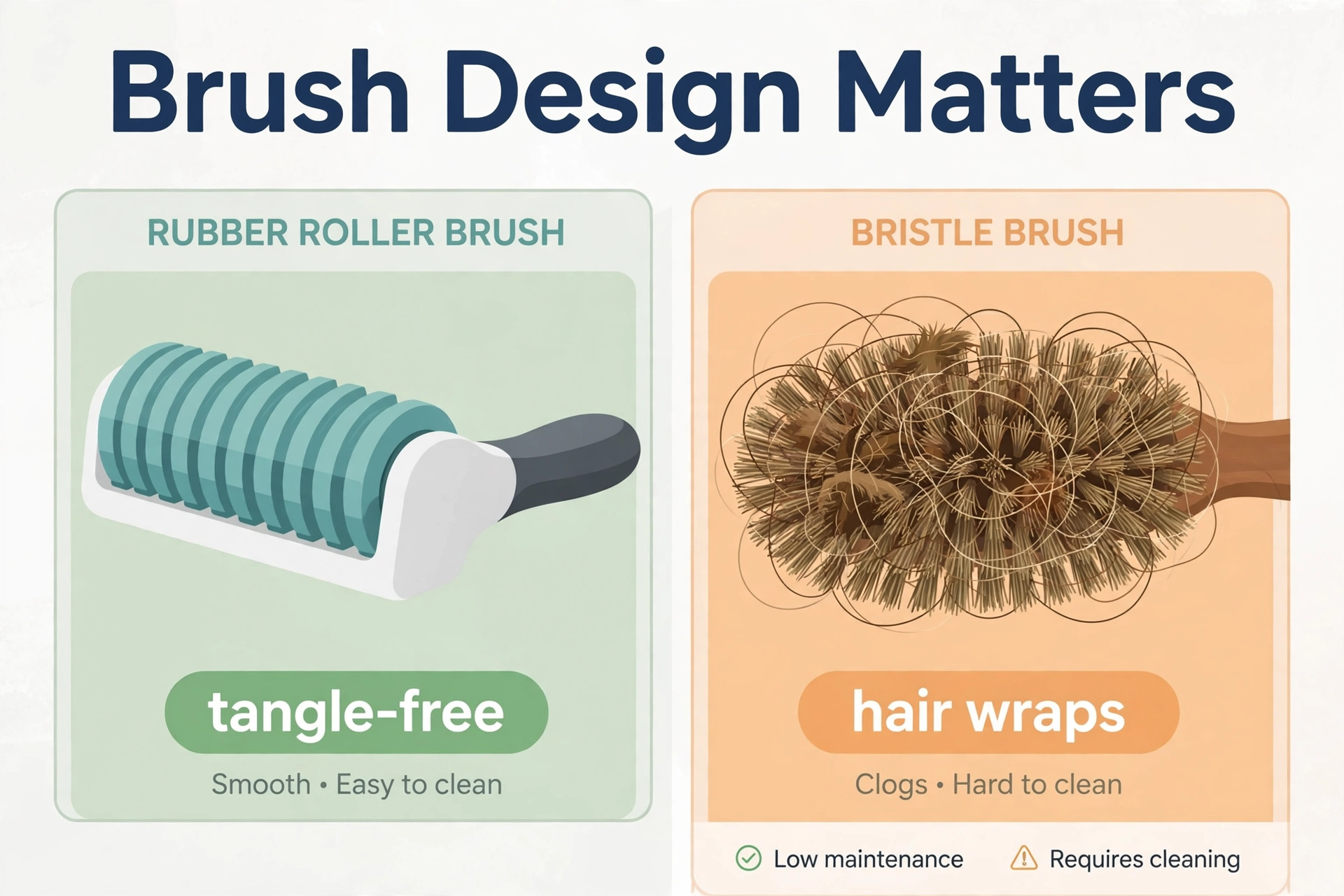
1. Anti-tangle brush design. This is the single most important feature. Bristle brushes turn into hair dreadlocks within a week; rubber or dual-spiral anti-tangle brushes let hair pass straight into the bin. If you have a long-haired dog or multiple cats, a certified zero-tangle brush saves more time than any other feature.
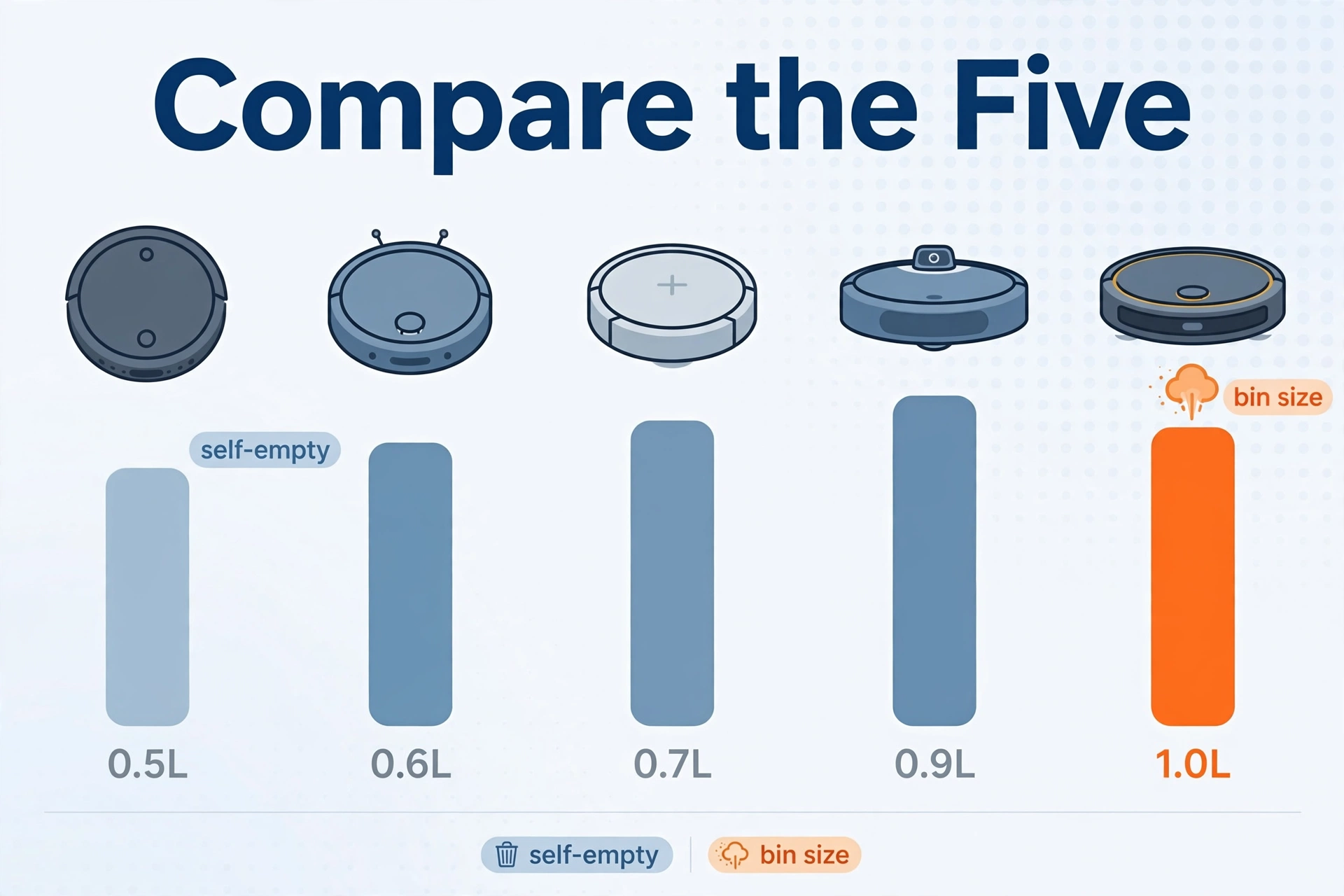
2. Self-emptying dock. A heavy shedder fills a robot’s onboard bin in one or two runs. A self-emptying base holds 60 to 120 days of debris in a sealed bag, which also keeps dander and odor locked away — a real plus for allergy households.
3. Suction on your floor type. Hard floors need far less suction than carpet. Anything above ~8,000 Pa handles hard floors and low-pile carpet; thick carpet and rugs reward the 15,000+ Pa flagships. Suction numbers are not everything — brush design and airflow matter as much.
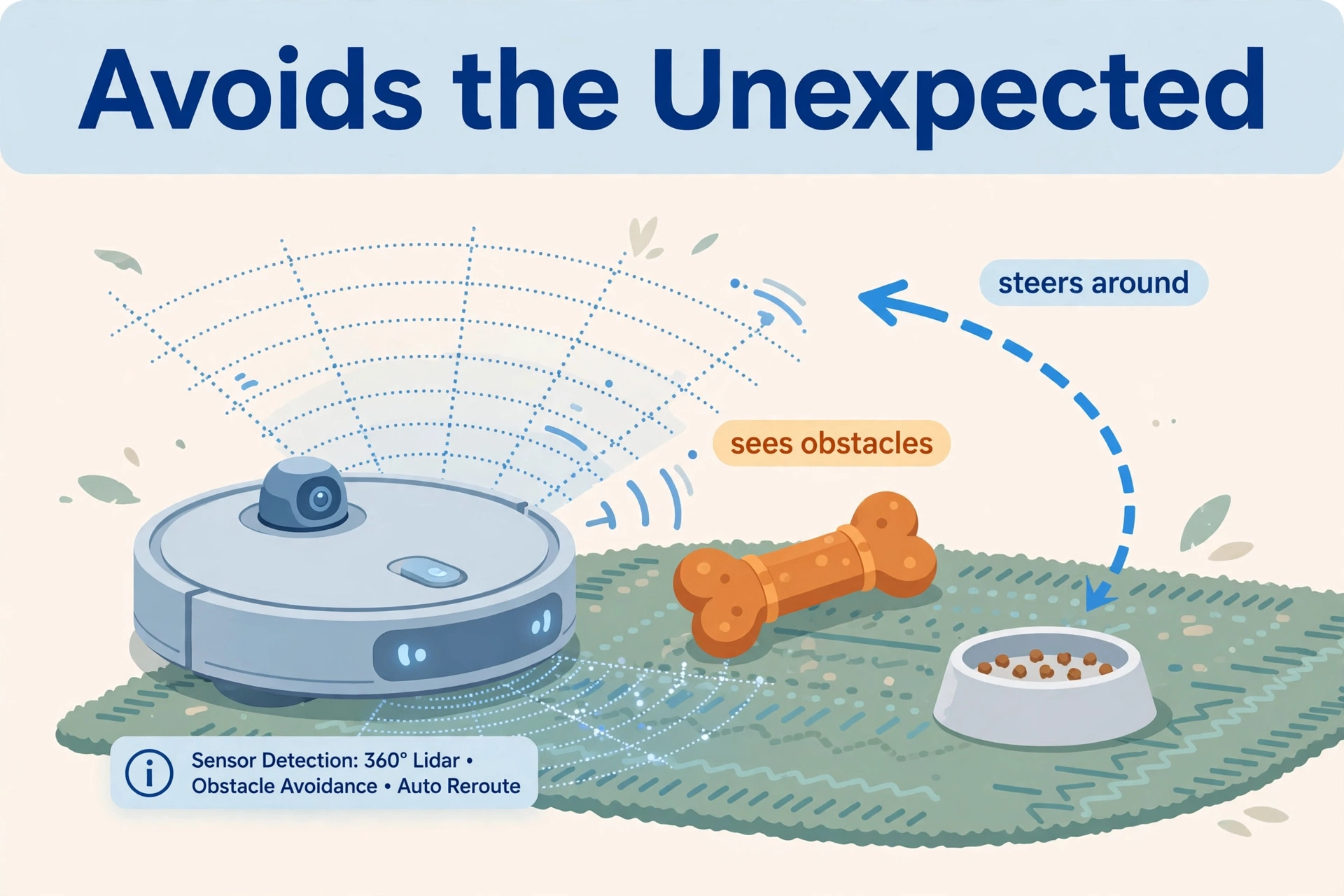
4. Obstacle avoidance. Pet homes have toys, bowls, cords, and occasionally accidents. Camera or structured-light avoidance that steers around pet waste is worth real money — one bad encounter with a lesser robot will convince you.
Best Robot Vacuum for Pet Hair 2026: The 5 Top Picks
1. Dreame X60 Max Ultra — Best Overall
The X60 Max Ultra is the complete package for pet homes: a zero-tangle brush design, top-tier pickup scores on both hard floors and carpet, and a fully autonomous dock that empties dust, washes mops with hot water, and dries them — around 60 days of debris capacity. Independent testing has given it perfect pet hair pickup scores, which is rare air.
It is a flagship, priced around $1,500 — check the current price, as Dreame discounts run often. For that money you get the closest thing to forgetting pet hair exists: schedule it daily and empty the dock every couple of months.
Best for: Multi-pet homes that want maximum automation and the best cleaning performance.
Watch out for: Flagship price; large dock needs real floor space.
2. Roborock Q7 M5+ — Best Budget Self-Emptying
The Q7 M5+ is the value shock of this list: a self-emptying dock with a 2.7-liter bag (roughly 7 to 9 weeks between changes), 10,000 Pa of rated suction, PreciSense LiDAR navigation, and a dual anti-tangle brush design — for around $300 or less. That is self-emptying convenience at a price where competitors still make you empty the bin by hand.
Trade-offs are honest: it is louder than average (rated around 65 dB), battery life is shorter than flagships, and the mopping is basic rather than auto-washing. But for pure pet hair pickup per dollar, little touches it. Roborock’s app and mapping remain among the best in the business.
Best for: Pet owners who want self-emptying without paying flagship money.
Watch out for: Louder operation; basic mopping; shorter battery life in large homes.
3. iRobot Roomba j7+ — Best Obstacle Avoidance
The j7+ is famous for one thing pet owners care about deeply: it reliably avoids pet waste. Its front-facing camera with AI obstacle recognition steers around accidents, toys, cords, and bowls instead of plowing through them. The dual multi-surface rubber brushes resist tangles far better than bristle designs and need only weekly rather than daily cleaning.
The 60-day Clean Base uses sealed AllergenLock bags, and smart mapping supports room-specific schedules (“clean the living room after dinner”). Suction is lower than the Chinese flagships on paper, but the j7+ has a long reputation for real-world reliability and strong support. It usually sells for around $600 to $800 — check the current price.
Best for: Homes where accident avoidance matters more than spec-sheet suction.
Watch out for: No mopping; camera navigation prefers some light; premium price for the suction class.
4. eufy X10 Pro Omni — Best Mid-Range Value
The X10 Pro Omni hits the sweet spot around $500 to $600 (often $500 on sale): self-emptying dock, LiDAR navigation, anti-tangle brush design, and mopping — a genuine all-rounder at less than half the flagship price. It is consistently among the best-selling robot vacuums in its class, which means deep owner feedback and mature software.
It does not match the X60’s raw pickup scores or the j7+’s obstacle avoidance, but for a typical one-or-two-pet home on mixed floors, it covers every base that matters without the flagship tax.
Best for: The most capability per dollar in the mid-range.
Watch out for: Not the best at any single thing; check current sale pricing.
5. Roborock Q5 Max+ — Best Under $500
At around $450, the Q5 Max+ combines a self-emptying base, 4,000 Pa suction, and a tangle-free rubber brush — the three things pet owners actually need, with nothing you will not use. It is the pick for anyone who wants to stop thinking about pet hair for the smallest sensible outlay.
Navigation and app are classic Roborock: reliable LiDAR mapping, room scheduling, no-go zones. If your budget is firm and your home is mostly hard floors and low-pile carpet, this is where the smart money stops.
Best for: Maximum pet hair automation under $500.
Watch out for: Weaker on thick carpet than pricier picks; no mopping to speak of.
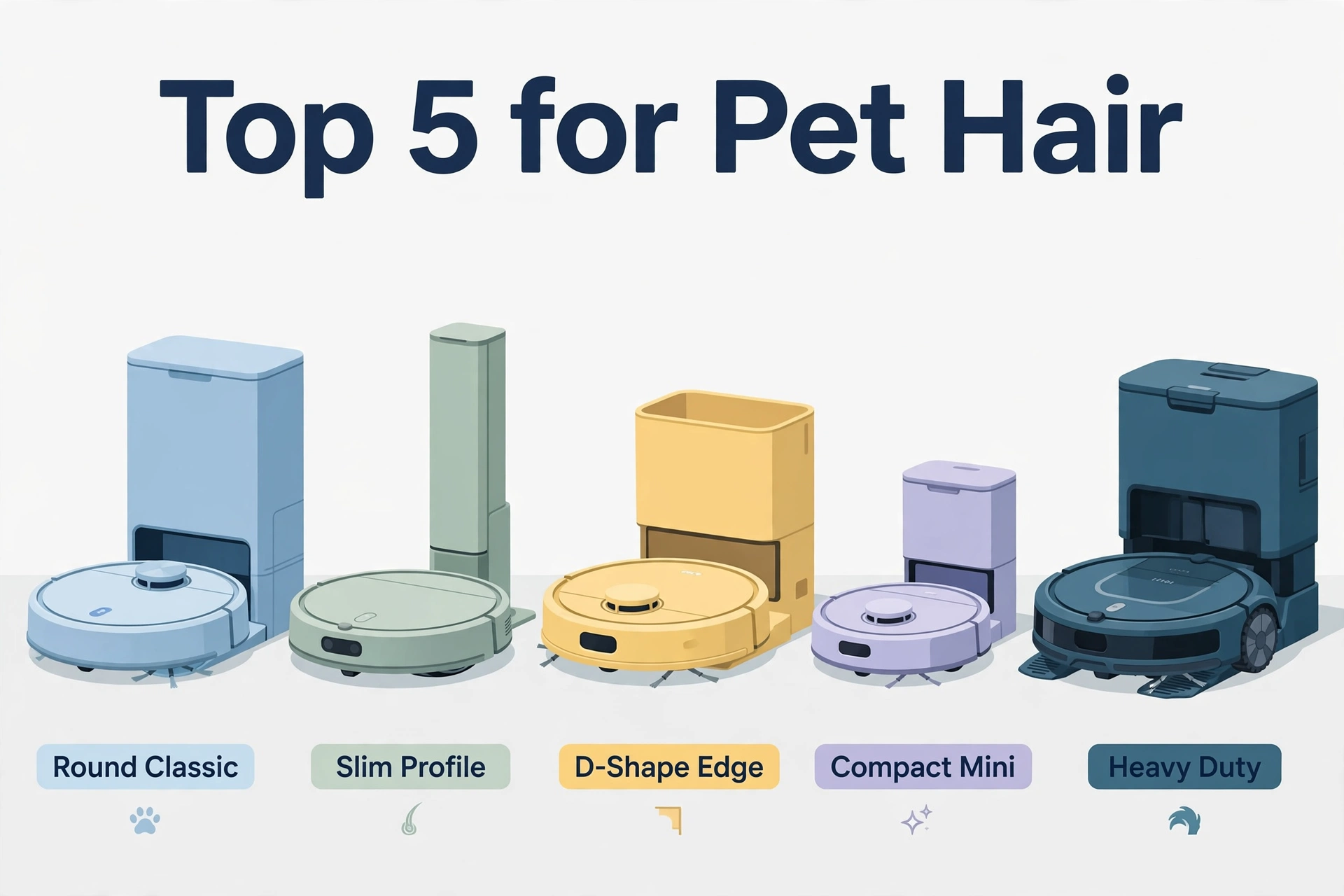
Table: The 5 best robot vacuums for pet hair compared (2026)
| Feature | Dreame X60 Max Ultra | Roborock Q7 M5+ | Roomba j7+ | eufy X10 Pro Omni | Roborock Q5 Max+ |
|---|---|---|---|---|---|
| Anti-tangle brush | Zero-tangle | Dual anti-tangle | Dual rubber | Anti-tangle | Tangle-free rubber |
| Self-empty capacity | ~60 days | 7–9 weeks | 60 days | ~60 days | ~7 weeks |
| Price range | Around $1,500 | Around $300 | Around $600–$800 | Around $500–$600 | Around $450 |
| Mopping | Auto-wash + dry | Basic | No | Yes | Minimal |
| Obstacle avoidance | Advanced | LiDAR-based | Best in class (pet waste) | Good | LiDAR-based |
| Standout trait | Best cleaning | Best budget self-empty | Avoids accidents | Best mid-range value | Best under $500 |
Roborock or Roomba for Pet Owners?
This is the brand question every pet owner asks. Short version: Roborock wins on suction, mopping, navigation tech, and value; Roomba wins on obstacle avoidance maturity and support. If your priority is avoiding pet waste disasters, Roomba’s camera-based avoidance has the longest track record. If your priority is cleaning performance per dollar, Roborock’s lineup is stronger at every price point.
For the full brand-level breakdown — history, app ecosystems, and which lineup fits which home — read our Roborock vs Roomba comparison.
Do You Need Mopping Too?
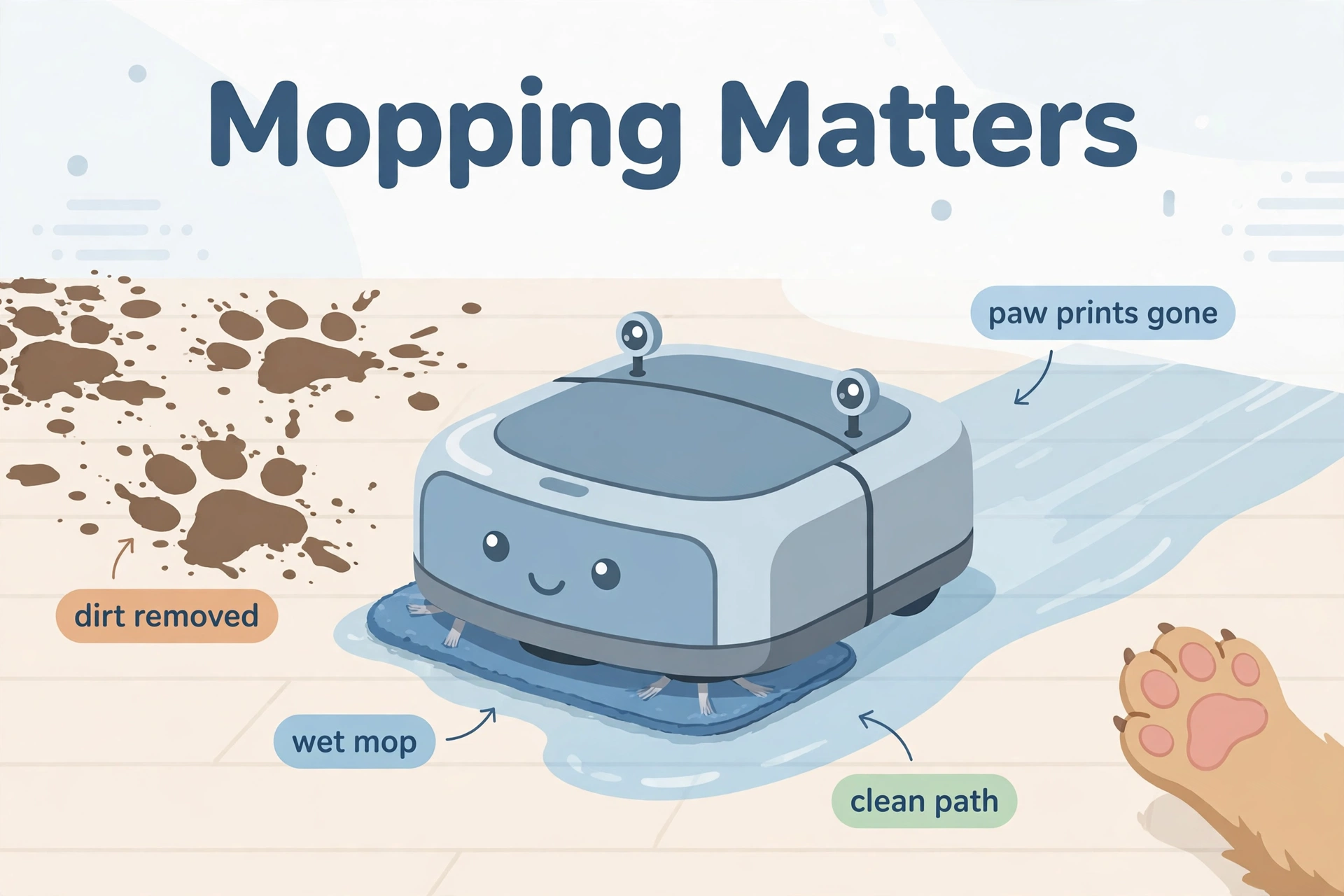
Pet homes benefit from mopping more than most: muddy paws, drool, and food spills are daily events. But be honest about which kind you need. Basic mopping (a damp pad dragged behind the vacuum, as on the Q7 M5+) handles light paw prints. Auto-wash docks (X60 Max Ultra, X10 Pro Omni) actually clean the mop during the run and dry it after — a different league for real messes.
If mopping matters as much as vacuuming in your home, compare dedicated combos in our best robot vacuum mop combo roundup, which weighs mop washing, pad lifting, and edge cleaning head to head.
Maintaining a Robot Vacuum in a Pet Home
Even a zero-tangle robot needs some care in a pet household. A five-minute weekly routine keeps performance high and extends the machine’s life well past the warranty.
- Check the brush monthly, not daily. Anti-tangle designs still collect some hair at the ends. A quick pull every few weeks beats letting it build up.
- Rinse or replace the filter on schedule. Pet dander clogs filters faster than ordinary dust. A clogged filter quietly kills suction — if pickup seems worse, the filter is the first suspect.
- Wipe the sensors and camera. Nose prints and dust on cliff sensors or the camera window cause navigation errors and false drop warnings. A dry microfiber cloth once a week is enough.
- Budget for bags and brushes. Self-empty bags last 1–2 months in pet homes; buy them in multi-packs to cut the per-bag cost. Side brushes wear out every 3–6 months with daily runs — they are cheap, keep a spare.
- Empty the mop water. On auto-wash docks, stagnant dirty water starts smelling in a day or two. Rinse the dirty-water tank weekly even if the dock does everything else itself.
One More Thing: Your WiFi Matters
Robot vacuums live on your WiFi — app control, scheduling, live maps, and camera models all need a stable 2.4 GHz connection. If your robot constantly shows “offline” in the app or loses its map, the vacuum is rarely the problem; a congested network is. Our guide to the best mesh WiFi for smart home setups explains how to give 40+ smart devices the stable signal they need.
Frequently Asked Questions
Do robot vacuums really work for pet hair?
Yes — modern anti-tangle designs handle daily shedding well on hard floors and low-to-medium carpet. They do not replace a deep clean on thick pile, but they keep hair from accumulating between manual vacuums. Daily scheduling is the key: 15 minutes a day beats an hour on Saturday.
How often do you have to empty a self-emptying robot vacuum?
With one or two pets, a 60-day dock typically lasts 4 to 8 weeks; heavy multi-pet homes may fill it faster. Sealed bags also trap dander and odor, which matters for allergy households. Budget for replacement bags in the running cost.
Are rubber brushes really better than bristle brushes for pet hair?
Overwhelmingly yes for maintenance. Bristle brushes trap long hair and need cutting out weekly; rubber and anti-tangle designs let hair pass into the bin. Every pick on this list uses a tangle-resistant brush for exactly this reason.
Can a robot vacuum avoid pet poop?
The good ones can. The Roomba j7+ pioneered AI-based pet waste avoidance, and current flagships from Dreame, Roborock, and eufy include similar obstacle recognition. It is the feature most worth paying for if your pets have accidents — one miss with a blind robot is unforgettable.
Is 10,000 Pa suction enough for pet hair?
Yes for hard floors and low-pile carpet, which covers most homes. Thick carpet and rugs benefit from 15,000+ Pa flagships, but brush design and seal matter as much as the raw number — a well-designed 8,000 Pa robot out-cleans a sloppy 20,000 Pa one.
Should I run the robot vacuum every day with pets?
Yes. Daily runs keep hair from embedding in carpet and rugs, where it becomes much harder to extract. Self-emptying docks make daily schedules truly hands-off — that is the whole point of paying for one.
How long does a robot vacuum last in a pet home?
Expect 3 to 5 years with basic maintenance. Pet hair is abrasive, so brushes and filters wear faster than in pet-free homes — replacing the brush set yearly and the filter every few months keeps cleaning performance close to day one. The battery is usually the first major part to fade; most brands sell replacements, and a fresh battery in year three is far cheaper than a new robot.
Conclusion
The best robot vacuum for pet hair in 2026 depends on your budget and your biggest pain point. Want the best clean money can buy? Dreame X60 Max Ultra. Want self-emptying for around $300? Roborock Q7 M5+. Terrified of pet waste encounters? Roomba j7+. Best mid-range balance? eufy X10 Pro Omni. Hard $500 cap? Roborock Q5 Max+.
Whatever you choose, prioritize the anti-tangle brush and the self-emptying dock over headline suction numbers — those two features decide whether the robot saves you time or creates a new chore.
