

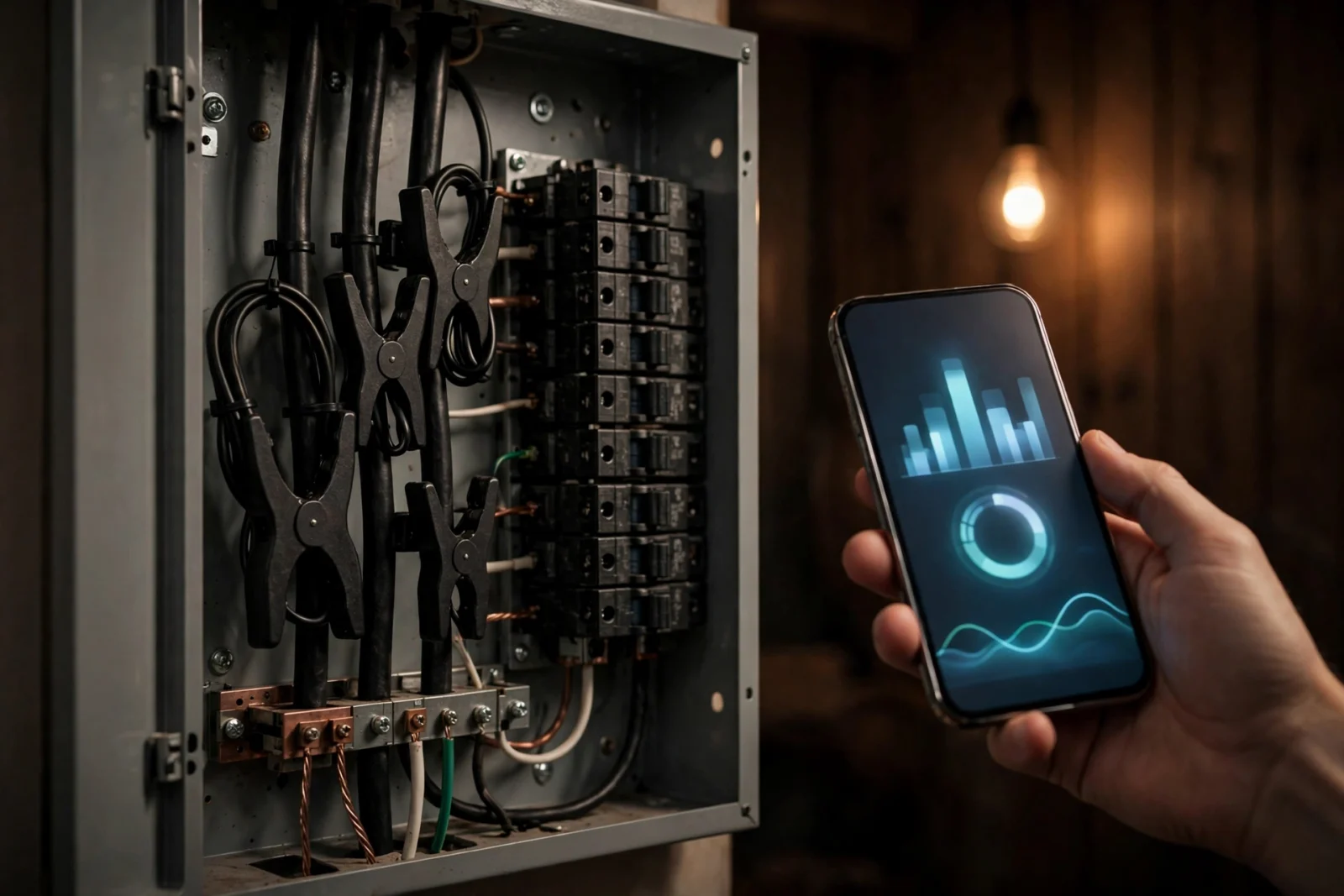
The best whole home energy monitor for most people right now is the Emporia Vue 3. It costs a fraction of what rivals charge, it measures up to 16 individual circuits, it needs no subscription, and it supports solar and net metering out of the box. If privacy matters more to you, the Refoss EM16P runs locally with no cloud required. And if you build automations in Home Assistant, the Shelly Pro 3EM is hard to beat.
One honest headline for 2026: Sense, the brand that made this category famous, stopped selling hardware at the end of 2025. This guide only recommends monitors you can actually buy today — plus the real story on Sense, since you will still see it everywhere.
The Best Whole Home Energy Monitors at a Glance
Short on time? Here is the fast version. Details on every pick are below.
Table: Best whole-home energy monitors compared (prices verified 2026-10-02)
| Monitor | Best for | Price (verified) | CT channels | Accuracy | Works without cloud | Solar support | Subscription |
|---|---|---|---|---|---|---|---|
| Emporia Vue 3 | Best overall | $149.99 (8-sensor kit) | 2 mains + up to 16 branch | ±2% | No | Yes | None |
| Refoss EM16P | Local control and privacy | $159.99 (official store) | 2 mains + 16 branch | ±1% to ±2% | Yes — local Web UI, Open API, MQTT | Yes | None |
| Shelly Pro 3EM v2 | DIY automation | €157.90 incl. VAT (Shelly EU store) | 3-phase + neutral | 1% | Yes — LAN, MQTT, REST | Yes (PV-ready) | None |
| Sense | AI device detection (legacy) | No longer sold new (was $299) | 2 mains + optional flex | ±2% | No | Yes (Solar model) | None |
| IoTaWatt | Open-source, local-first | Check official store (kit-priced) | Up to 14 inputs | ±1% to ±2% (typical) | Yes — fully local | Yes (via CT setup) | None |
A quick read of that table tells you most of the story. Every serious option here is subscription-free, and the prices are low enough that the monitor pays for itself the first time it catches an appliance misbehaving.
How We Picked These
Most monitors install the same way: clamp-on CTs go around your main service wires, and a hub sends readings to an app. From there they diverge. We judged each one on five things:
First, accuracy — utility-grade numbers matter when you are making real decisions. Second, per-circuit visibility — knowing your total is nice, knowing the water heater costs $47 a month is useful. Third, local access — some monitors keep working when the internet dies, some do not. Fourth, solar and net metering support, since more homes have panels every year. And fifth, honest availability in 2026, which is why Sense is flagged rather than ranked.
Emporia Vue 3 — Best Overall
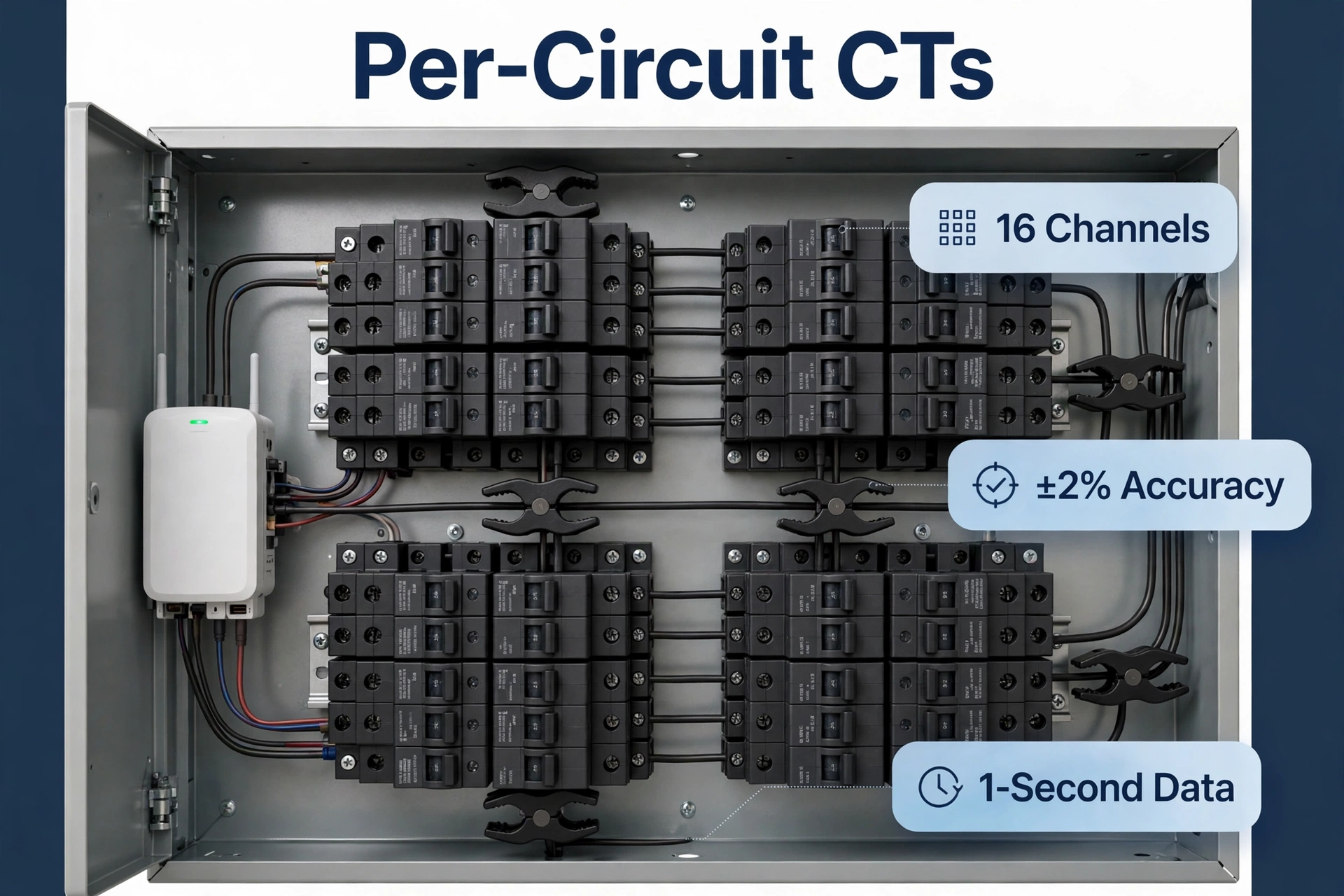
The Vue 3 is the one most people should buy. Emporia’s current-generation monitor installs inside your breaker panel with clamp-on CT sensors on the main service lines, then reports your home’s total draw every single second through the free Emporia app. Add branch sensors and you can see exactly what the HVAC, dryer, or EV charger is pulling — up to 16 circuits on the biggest kit.
Nothing important was left out, though: solar and net metering are built in, it is UL certified for panel installation, and it ties into Emporia’s ecosystem of smart plugs, EV chargers, and batteries, with automations you can drive from the app.
Why it wins
- Price: the 8-sensor kit sells for $149.99 — a whole-home base model starts around $99, and the full 16-sensor kit runs about $199.99
- 1-second real-time data in the free app, accurate to ±2% — in line with utility-grade metering
- No subscription, ever — app and cloud access are free
- Solar and net metering built in; isolated voltage channels for clean per-phase readings
- Works with Home Assistant through community integrations, and you can pair it with a smart thermostat like the ones in our Ecobee vs Nest comparison to actually act on what the monitor shows you
What to know before you buy
The catch: the Vue 3 is fully cloud-dependent — it needs 2.4 GHz Wi-Fi plus internet, with no local data storage, and no official public API (community integrations exist). Fair trade-offs at this price, but privacy-first buyers should look at the Refoss EM16P below. You can browse the Vue 3 on Emporia’s official store for current kits and bundle pricing.
Refoss EM16P — Best for Local Control and Privacy
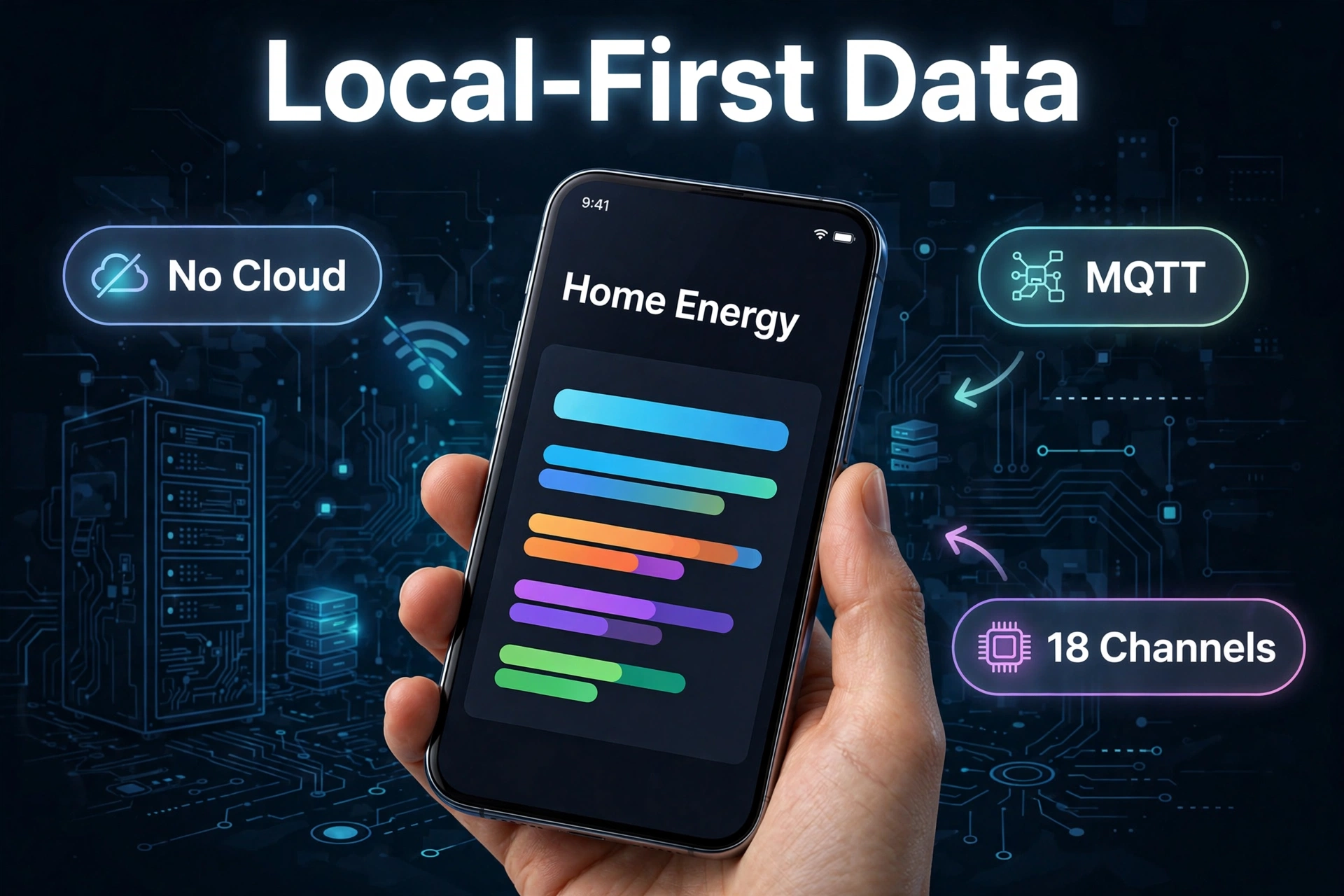
Refoss is the name DIY forums keep recommending now that Sense is gone, and the EM16P earns the hype: 18 monitoring channels (two 200A mains + sixteen 60A branch sensors), accuracy of ±1% to ±2%, and ETL certification to UL 61010 — which matters for something living inside your electrical panel.
The real reason to pick it: it works offline. A local Web UI, Open API, and MQTT mean you can poll it from your own server with no account and no cloud — or use the free cloud tier (up to five years of exportable history) for remote access. Native Home Assistant support with no firmware flashing rounds it out.
Why it wins for privacy
- Fully local operation — local Web UI, Open API, and MQTT with cloud disabled if you prefer
- 18 channels: 2× 200A mains + 16× 60A branch sensors included
- ±1% to ±2% accuracy, ETL certified to UL 61010
- Native Home Assistant support — no flashing, warranty intact; supports consumption and feed-in monitoring for solar
- Free cloud tier with up to 5 years of daily-level history you can export
What to know before you buy
At $159.99 (list $199.99) on Refoss’s official store, it costs slightly more than the equivalent Vue 3 kit — you are paying for the local-access story. The app is functional rather than polished. See the EM16P on Refoss’s official product page for current pricing and the Open API docs.
Shelly Pro 3EM v2 — Best for DIY Automation
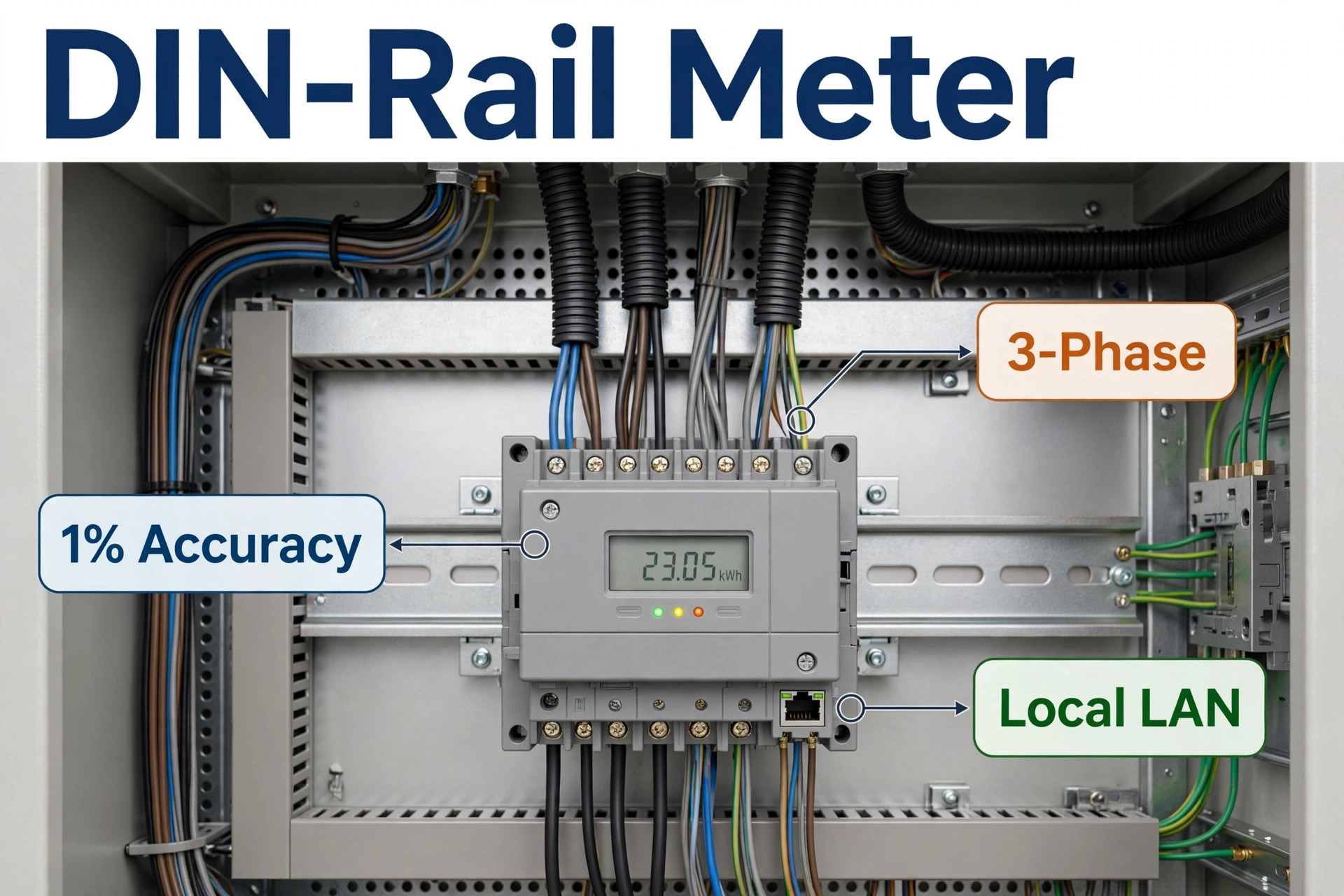
The Shelly Pro 3EM is a different animal: a DIN-rail energy meter built for automation nerds. It measures three phases plus neutral with 1% active-energy accuracy, connects over Wi-Fi, LAN, and Bluetooth, and speaks MQTT, HTTP, REST, and WebSocket — all locally, with TLS. It even stores up to 60 days of data on the device itself at one-minute resolution.
Where it shines is scripting: it can react to readings without any cloud round-trip — shed a load when solar dips, alert you when the EV charger spikes, or feed everything straight into Home Assistant. And if you followed our Home Assistant on Raspberry Pi 5 guide, it slots into that setup beautifully. The v2 model is Matter-upgradable with the latest firmware.
Why it wins for automators
- 1% measurement accuracy with 4-quadrant measurement — import and export tracked per phase
- True local device: Wi-Fi, LAN, and Bluetooth with MQTT, REST, WebSocket, and an embedded web interface
- On-device history: 60 days at 1-minute resolution in non-volatile memory
- DIN-rail mount with PV-ready 2-way metering — ideal next to the rest of your panel gear
- Deep automation: scripting, scenes with other Shelly devices, Bluetooth gateway features
What to know before you buy
This is a meter, not a friendly dashboard — the app experience is thinner than Emporia’s, and you should enjoy tinkering. It has no built-in relay, so switching loads needs a Shelly Pro add-on or a separate contactor. We verified €157.90 including VAT for the 120A v2 on Shelly’s EU store; check your local Shelly store for pricing. Best for automation households, overkill if you just want pretty graphs.
Sense — The AI Pioneer You Can No Longer Buy New
Sense deserves an honest section because it invented this category. Its trick was machine learning: listen to your home’s whole electrical signature with one set of CTs, then identify individual devices — the fridge, the dryer, the garage door — automatically, no per-circuit sensors needed. Millions of samples per second, cloud AI, and a slick app made it the default recommendation for years.
In late 2025 Sense told customers it would stop selling the monitor on December 31, 2025, folding its detection technology into next-generation utility smart meters instead. Existing owners are still supported — Sense promised continued app and firmware updates, detection improvements, and security patches.
Should you buy one anyway?
Only used, and only at a price that reflects the risk. The hardware was solid ($299 base, $349 Solar), but with no new units coming, support will wind down. The practical 2026 move is a per-circuit monitor like the Vue 3 or EM16P — exact numbers instead of educated guesses. Old “best of” lists still recommend Sense; now you know why we do not rank it.
IoTaWatt — Best Open-Source, Local-First Pick
IoTaWatt is the community favorite among people who want their data to stay in the house. It is a whole-home monitor with up to 14 CT inputs, fully local operation, and an open, community-driven design. You label your circuits, it serves real-time and historical data over your local network, and you can export everything for analysis — validating time-of-use shifting, solar self-consumption, or the payoff of an efficiency upgrade.
The trade-off: it is enthusiast gear. You buy the base unit plus CTs as a kit from the official IoTaWatt store, and the ecosystem assumes you are comfortable configuring things yourself. It runs noticeably more than a Vue 3 with equivalent sensors — the price of open, local-first engineering from a small maker.
How to Choose the Best Whole Home Energy Monitor for You
There are really three types. Disaggregation monitors like Sense listen to the whole home and guess which device is which with AI. Per-circuit monitors like the Vue 3, EM16P, and IoTaWatt clamp each circuit for exact numbers. Meters like the Shelly Pro 3EM measure precisely and focus on automation.
Want to understand your bill and find waste? Go per-circuit — exact numbers beat clever guesses. For solar, confirm net-metering support: the Vue 3, EM16P, and IoTaWatt all do, and the Shelly Pro 3EM is PV-ready. If your internet is unreliable or you dislike cloud services, rule out the Vue 3 and lean toward the EM16P or IoTaWatt. Finally, confirm your service type — most are built for standard split-phase US panels, with 400A variants for large homes.
Installation Basics
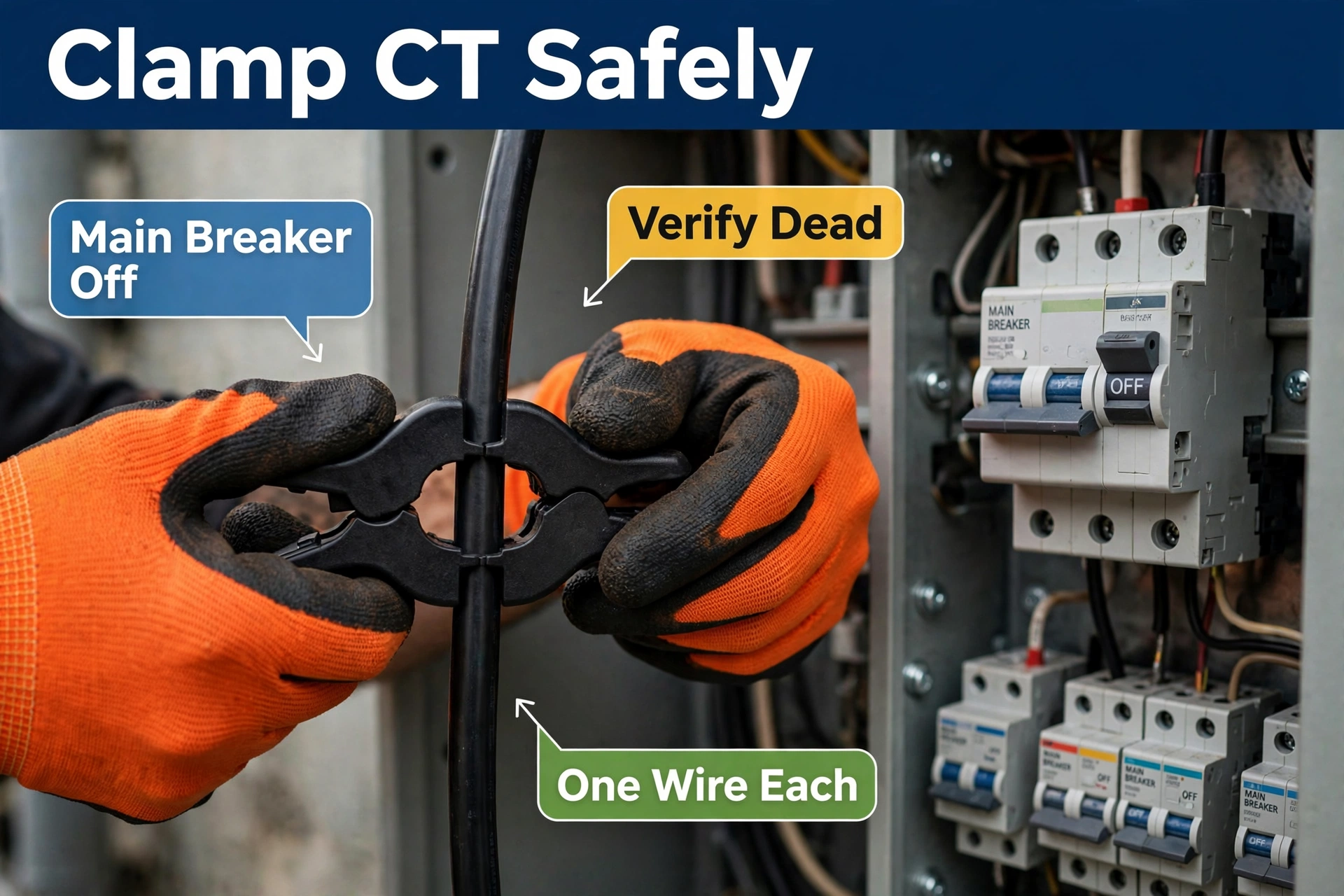
Every monitor here installs inside your breaker panel — around live electrical components. Take that seriously.
- Check compatibility first. Look at your panel: you need access to the main service wires (not just busbars), room for the hub, and 2.4 GHz Wi-Fi that actually reaches the panel location.
- Turn off the main breaker. You are working inside a panel with live lugs nearby — the main breaker kills most circuits but not the incoming feed.
- Clamp the CTs around the mains. Each clamp must wrap a single hot wire (black or red), never a whole cable containing hot and neutral together. Orient them the way the manual shows.
- Add branch CTs if included. Label every circuit as you go — “Circuit 07” is a mystery you will hate in six months.
- Power the hub and join Wi-Fi. The hub usually taps power from a breaker or a nearby circuit; follow the manual for your model.
- Set up the app and verify readings. Compare the first readings against your utility meter or a known load before trusting the data.
If any step makes you uncomfortable, call an electrician. The install typically takes a professional under an hour, and it is cheap insurance.
Do Energy Monitors Actually Save Money?
An energy monitor does not save a single watt by itself — it shows you where the watts are going, and that visibility changes behavior. The biggest win is usually heating and cooling: a monitor often reveals the HVAC or water heater dwarfing everything else, at which point upgrading to a smart thermostat built for heat pump systems becomes obvious. Other common finds: the “off” entertainment center drawing watts all night, or an aging appliance drawing more than it should.
Treat any payback math as a rough estimate, not a promise. Savings come from the changes you make after seeing the data — the monitor is the flashlight, not the fix.
Best Whole Home Energy Monitor FAQs
What is a whole-home energy monitor?
A device that installs in your breaker panel and measures your home’s electricity in real time. Most clamp CT sensors around the main service wires, then show live and historical usage in an app — broken down per circuit, or auto-identified per device.
Do I need an electrician to install one?
Not always, but it is strongly recommended. Installing CTs means working inside a live breaker panel, and the incoming feed stays energized even with the main breaker off. Many owners hire an electrician for a short visit — it is a simple job for a professional.
Will a whole-home energy monitor work with solar panels?
Yes, with the right pick. The Vue 3 and EM16P support solar and net metering directly, the Shelly Pro 3EM does 2-way (import/export) metering per phase, and IoTaWatt handles solar via its CT setup. (The Sense Solar model did too — but it is no longer sold new.)
Which energy monitor is best for Home Assistant?
All of these integrate, but the Shelly Pro 3EM and Refoss EM16P are the standouts: both are local-first with MQTT and native or first-party Home Assistant support, so they keep working when the internet is down. The Emporia Vue 3 works through well-maintained community integrations instead.
Why is Sense not the top pick anymore?
Sense stopped selling consumer hardware on December 31, 2025, pivoting to embed its technology in utility smart meters. Existing owners are still supported, but you cannot buy a new unit — recommending it as a “best” pick in 2026 would be misleading. The Refoss EM16P is the closest current alternative.
Final Verdict
The Emporia Vue 3 is the best whole home energy monitor for most people in 2026: affordable, accurate, solar-ready, subscription-free. Pick the Refoss EM16P for local-first privacy, the Shelly Pro 3EM for Home Assistant automations, or IoTaWatt for open-source local-first monitoring. And give old Sense recommendations a pass — the category has moved on.
